September 18, 2026 - Article and photos (including the header pic) by Dylan Clements
Four Seasons Safari Lodge Serengeti is a very good option for a first safari, particularly if you want to be in the middle of the Serengeti without giving up the comforts and facilities of a full-service hotel. It has 77 rooms, suites and villas, so this is much larger than many luxury safari camps, but that also gives you a large pool, several dining options, spa, Discovery Centre, villas with private pools and plenty to do when you are not out on a game drive.
Four Seasons Serengeti was part of a much bigger Africa trip for us. We started in Rwanda to see the gorillas, then flew to Zanzibar for a few days of rest and relaxation before taking a small safari plane into the Serengeti.
We visit a lot of hotels and resorts every year, but I still remember this trip incredibly clearly. Safari is just very different from checking into another city or beach hotel. From the small plane landing at Seronera to seeing animals on the drive to Four Seasons, the whole trip felt like an experience rather than just another hotel stay.
The biggest advice I would give anyone planning a safari is to use someone who knows what they are doing. The safari flights themselves are easy enough, but you need to know which airstrips to use, how the flights connect and what needs arranging before you arrive.
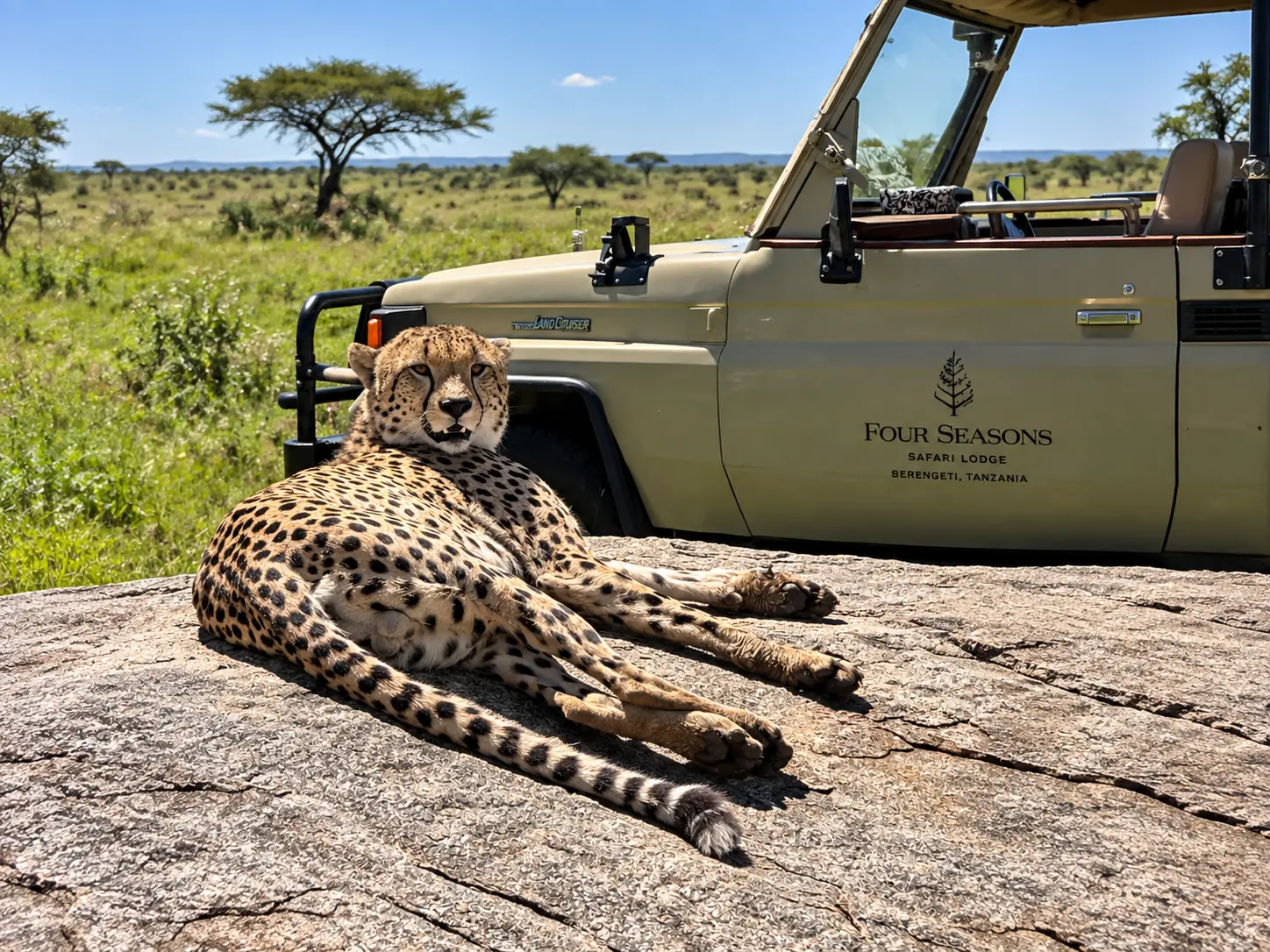
The same applies to the wildlife. If there is a particular animal you really want to see, tell your advisor beforehand. During our stay we met guests who wanted to do the rhino experience but had not realized it needed to be arranged in advance. By the time they arrived, they could not do it.
That is a very long way to travel to find out something you had been looking forward to is not available.
Room choice is also worth paying attention to. There are several different room, suite and villa categories at Four Seasons Serengeti, and some locations and views are far better than others. The villas also feel very different from staying around the main lodge.
For many people this will be a once-in-a-lifetime trip. I would spend a bit more time getting the flights, room, guide and activities sorted before leaving rather than trying to work everything out once you are already in Tanzania.
Four Seasons Preferred Partner Benefits
Clements Travel is a Four Seasons Preferred Partner, and eligible reservations at Four Seasons Safari Lodge Serengeti receive:
- Daily full breakfast for two guests per bedroom
- US$100 hotel credit per stay for guest rooms
- US$200 hotel credit per stay for suites and specialty suites
- US$200 hotel credit per bedroom per stay for qualifying villas and residences
- One-category upgrade, subject to availability
- Early check-in and late check-out, subject to availability
- Preferred Partner recognition from the hotel
- Additional help from Clements Travel with room selection, safari planning and pre-arrival arrangements
.webp)
There is no additional booking fee, and you still pay Four Seasons directly.
At Serengeti, I think there is a bigger advantage to booking with somebody who understands the hotel and safari logistics than there is at a normal resort. We can look at the room location, flights, airstrip transfers, game drives, guide requests and anything you particularly want to see before you arrive.
Getting to Four Seasons Serengeti
We flew from Zanzibar to the Serengeti on a small safari plane and really enjoyed the journey. One thing to know is that these scheduled flights are not always direct. Depending on the passengers traveling that day, the aircraft may stop at other airstrips to drop people off or pick others up.
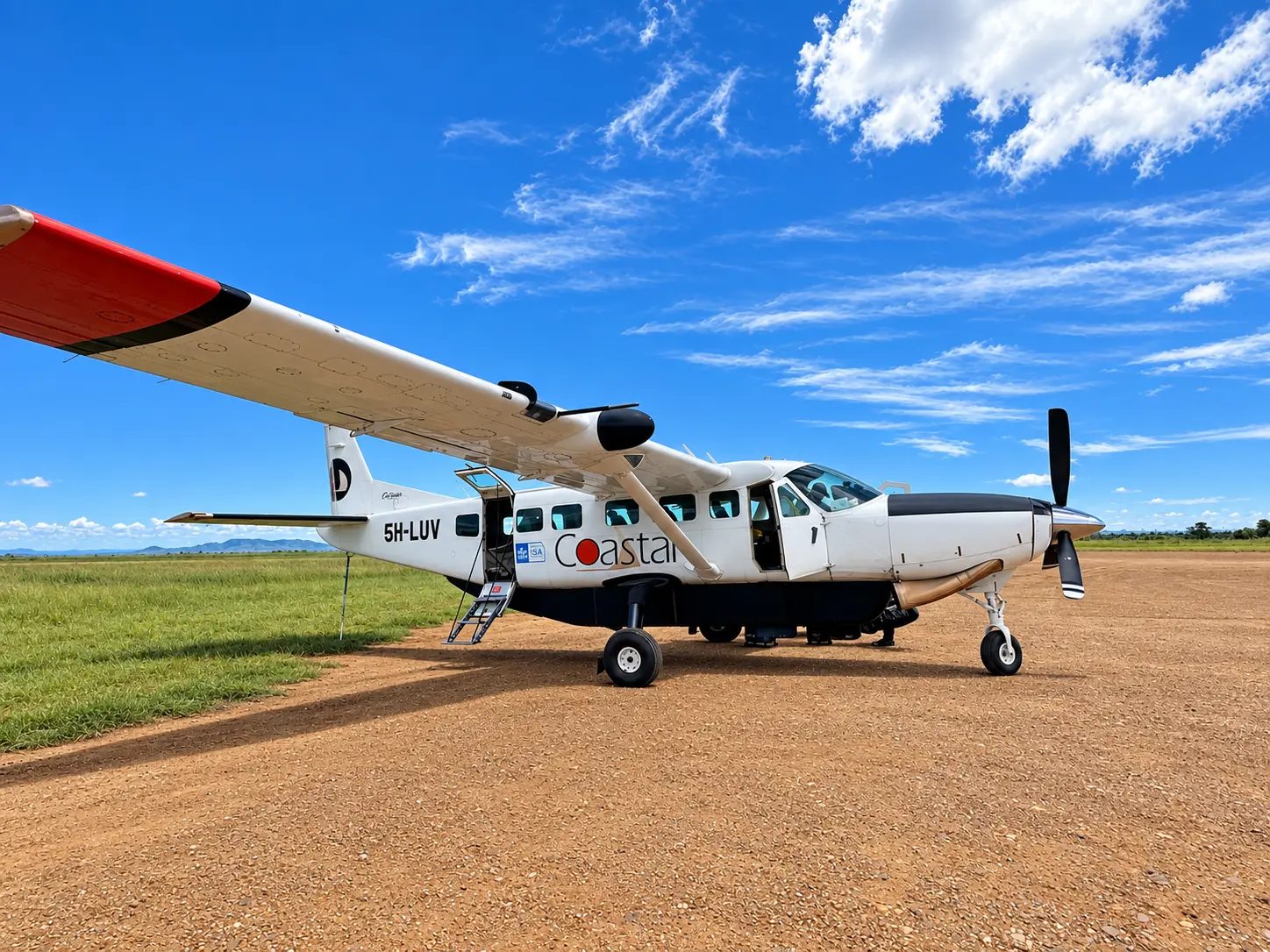
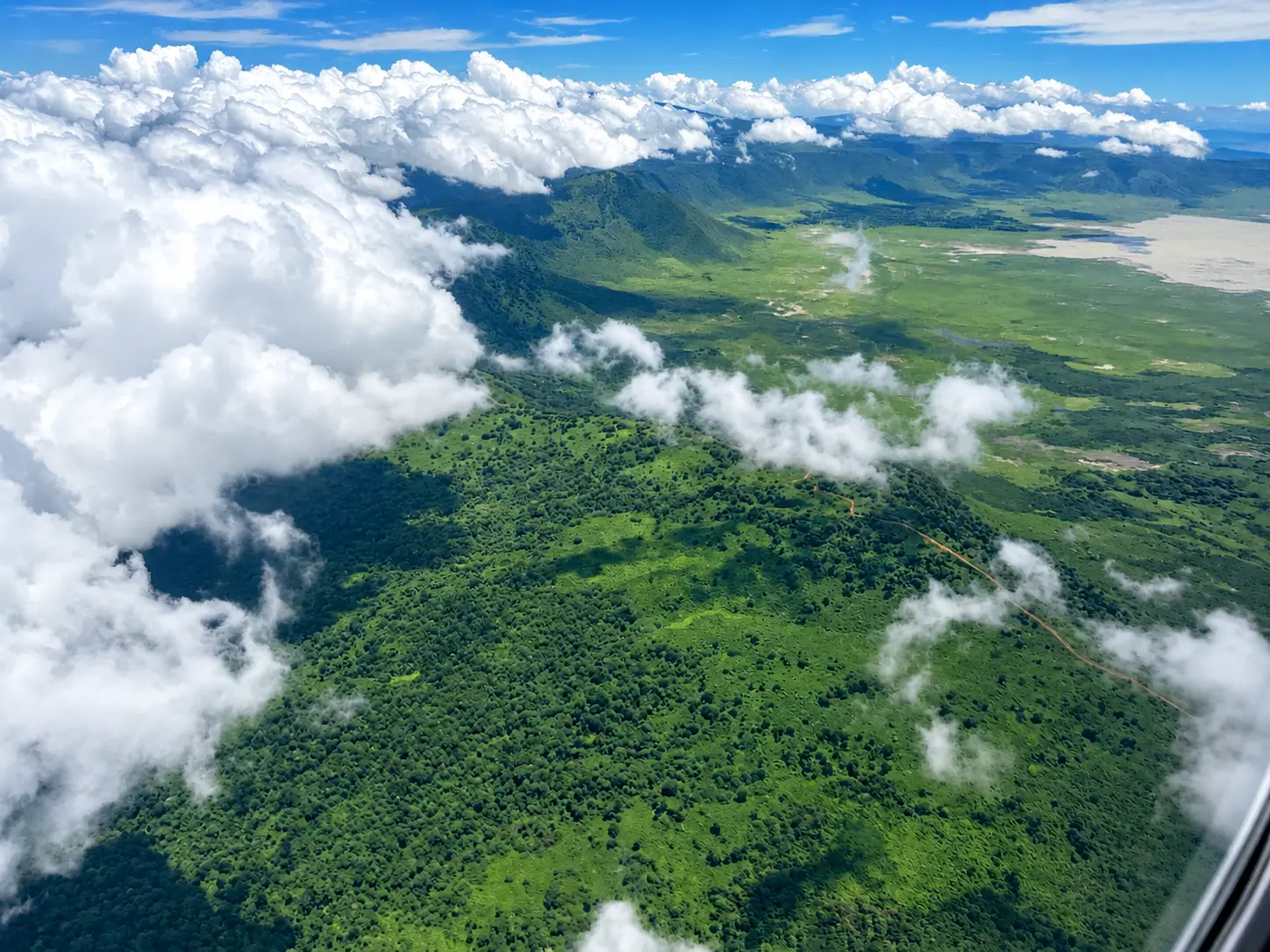
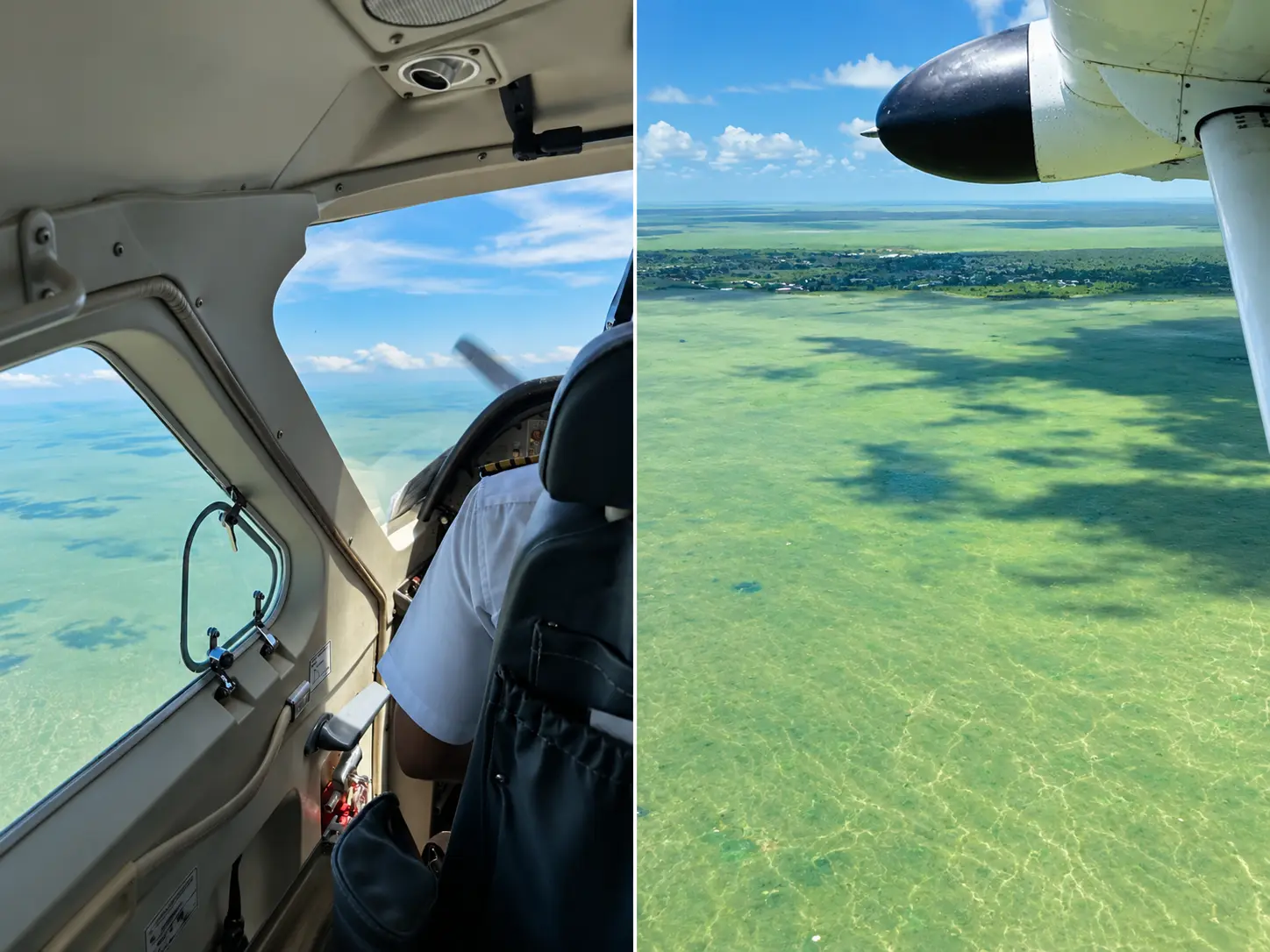
Ours stopped twice, which we actually liked. You fly fairly low, so you get a great view of different parts of Tanzania, and we even spotted buffalo and giraffes from the aircraft. Landing at the tiny airstrips made the journey feel like part of the safari rather than just a transfer.
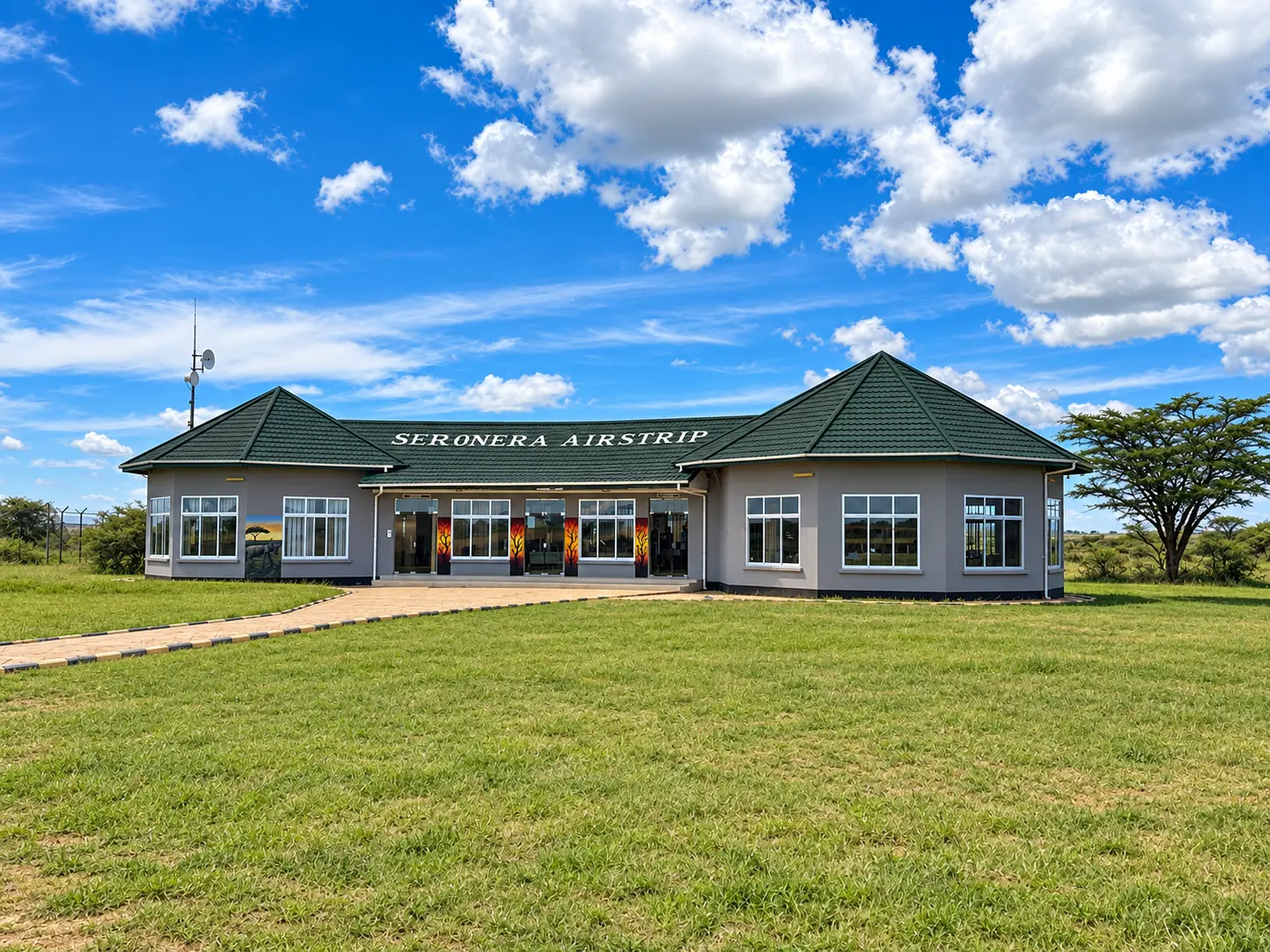
Our final stop was Seronera Airstrip in the Central Serengeti, which is the closest airstrip to Four Seasons and around a 45-minute drive from the lodge.
We have also had clients fly directly into Seronera, so the routing can vary. If you want to guarantee a nonstop flight, a private charter can be arranged, although it is considerably more expensive.
Tip: If you book Four Seasons Serengeti with us, take advantage of our complimentary Guest Experience Desk. We can help organize the safari flights, Seronera transfers and other pre-arrival arrangements for you, so the different parts of the journey are coordinated before you travel. There is no additional charge for this service when you book Four Seasons Serengeti through Clements Travel.
Transfer from Seronera Airstrip
When we stayed, the Four Seasons transfer from Seronera Airstrip cost US$350 each way, which is expensive for a drive of around 45 minutes.
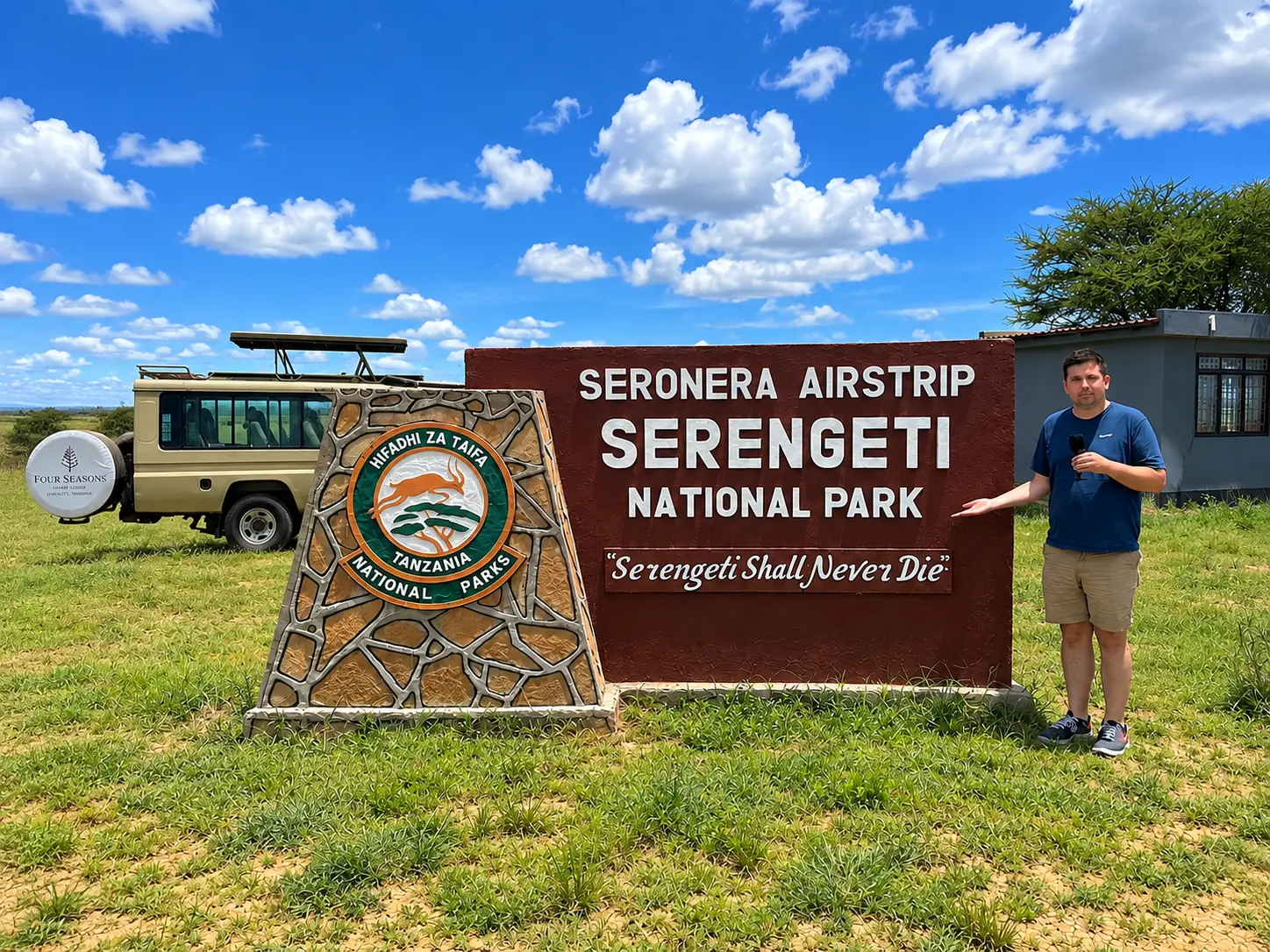
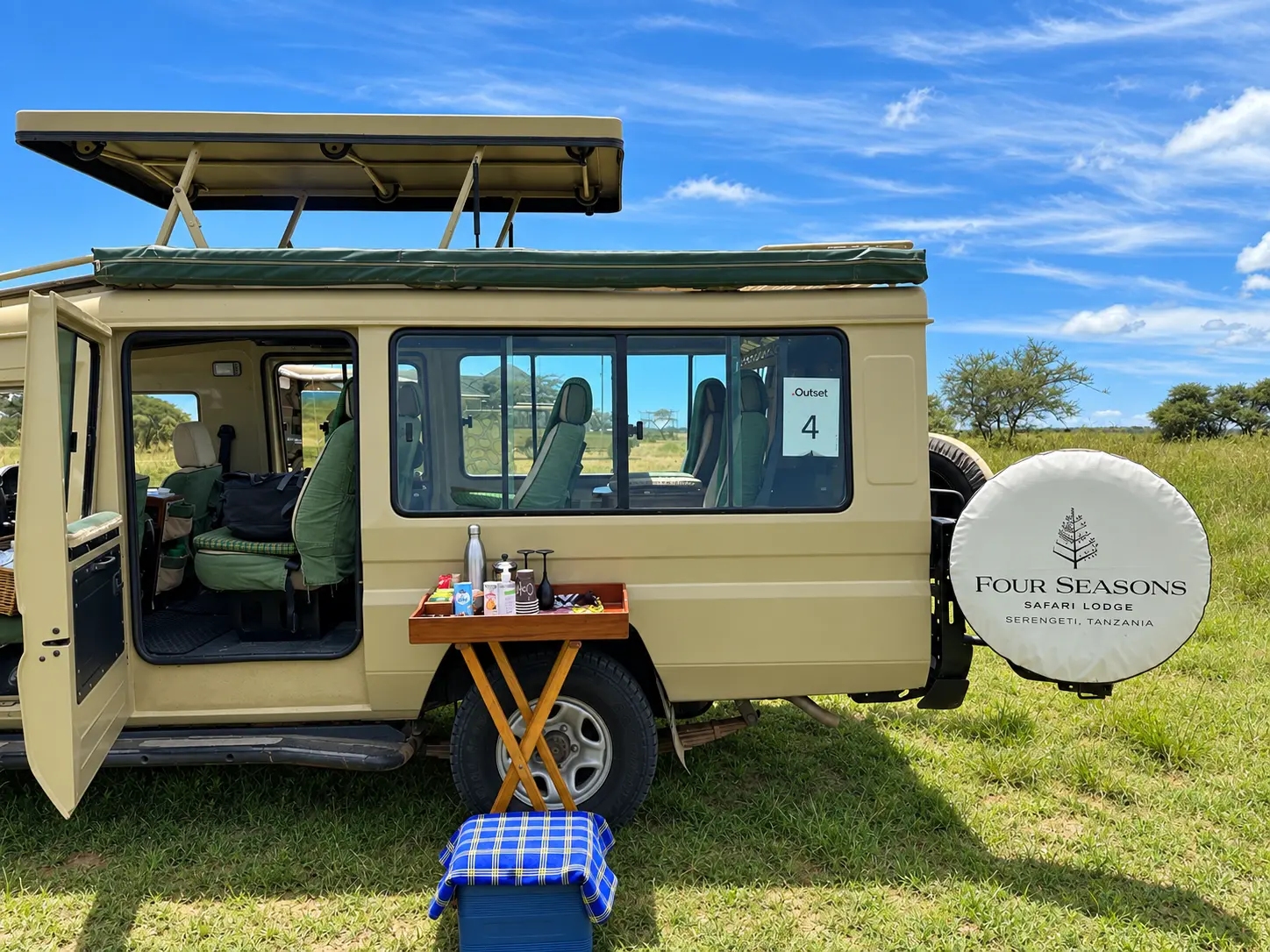
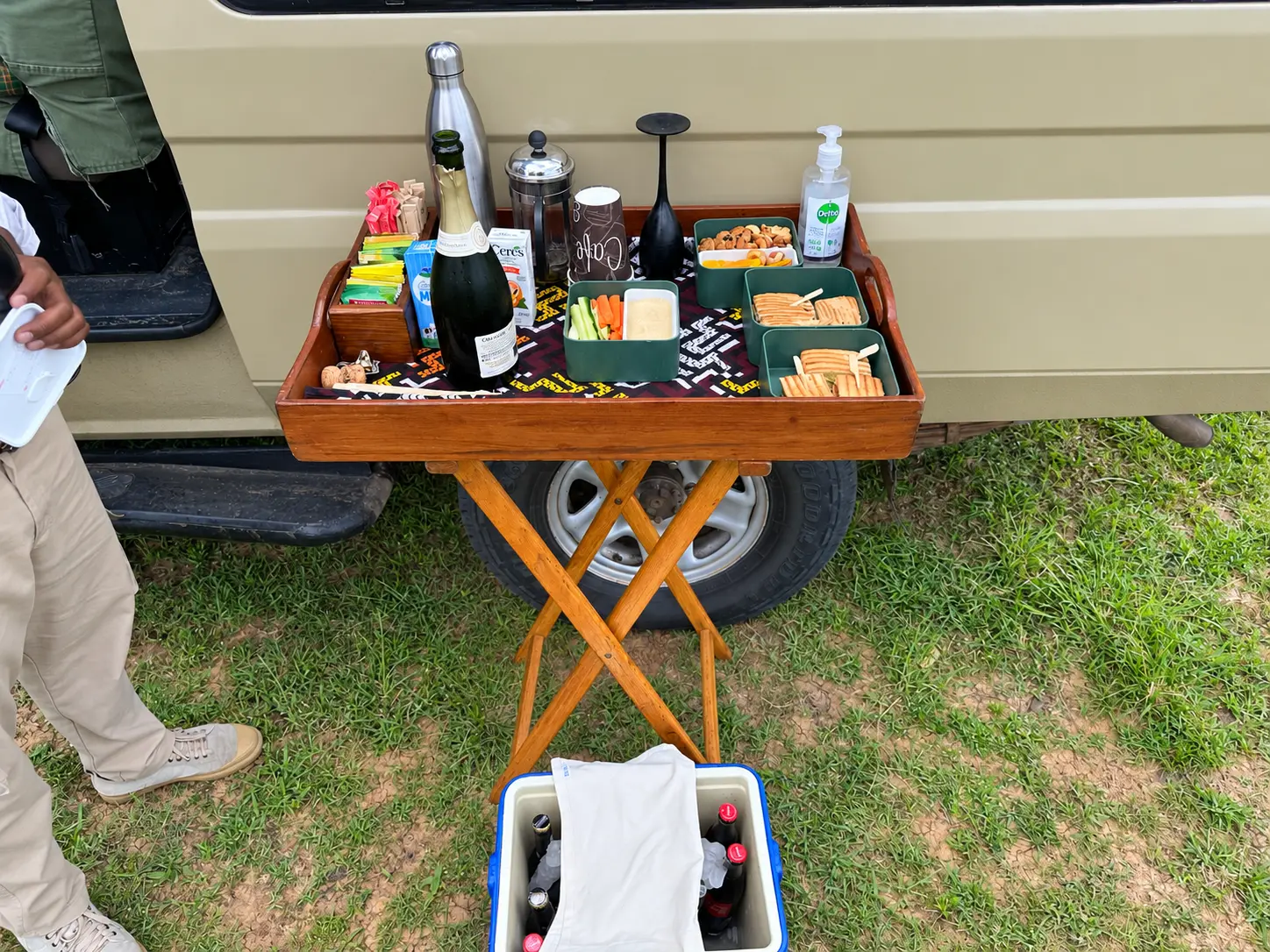
That said, this is far more than a basic airport transfer. Our driver was waiting as soon as the plane landed, and a small picnic table had already been set up beside the vehicle with snacks, sparkling wine, beer, soft drinks, juice, water, coffee and tea. It gave us a chance to have something to eat and drink while the luggage was loaded before setting off through Serengeti National Park to the lodge. You step off the aircraft in the middle of the Serengeti and, almost immediately, the safari experience begins.
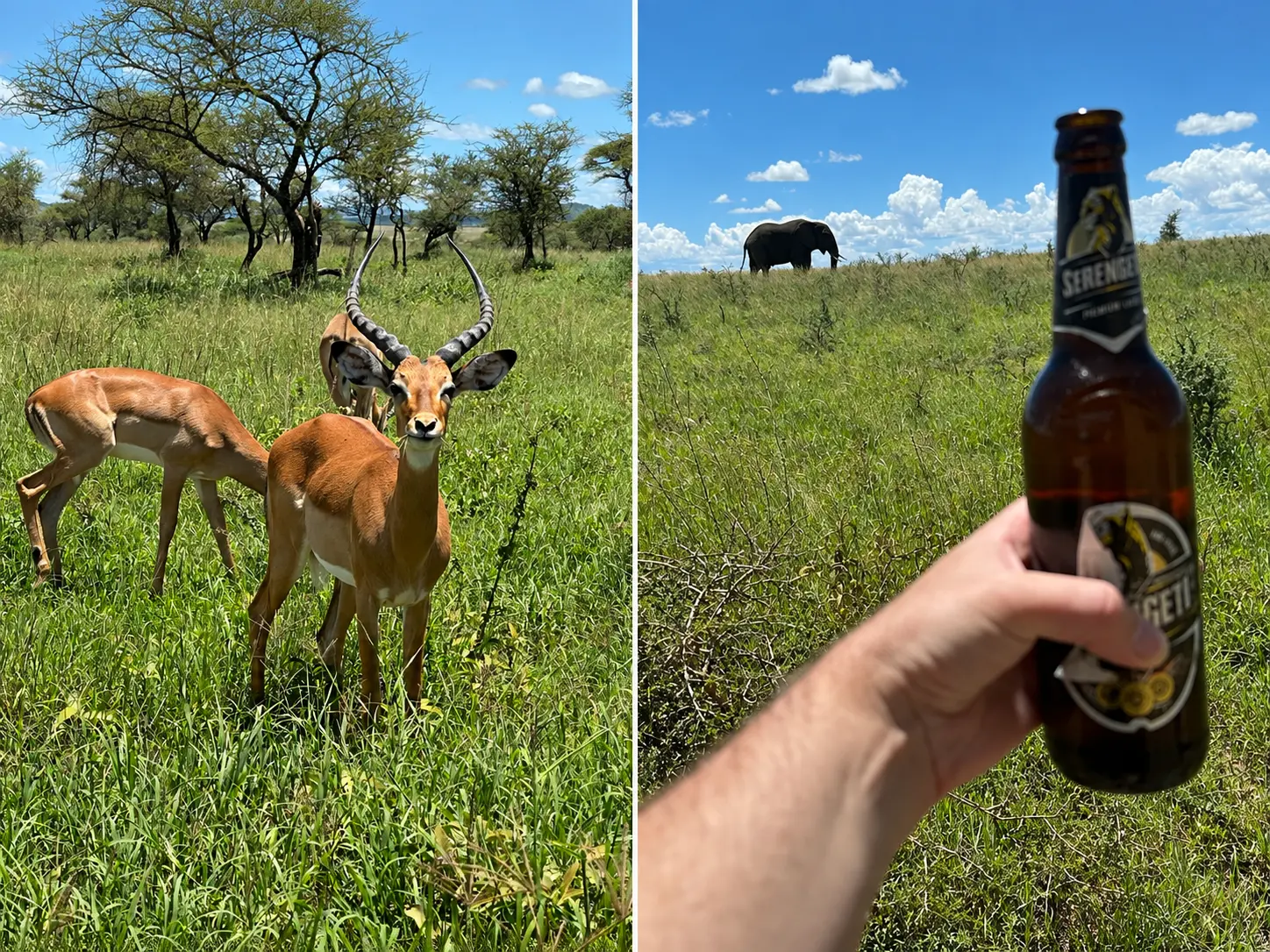
The drive also doubles as your first mini safari. Depending on what is around, you may start seeing wildlife before you have even checked in, and the driver can stop along the way if there is something worth seeing.
The transfer is expensive, but it is well organized and feels like part of the arrival experience rather than just a ride from the airstrip. Some Four Seasons packages also include the round-trip Seronera transfer, so we always check the package details before adding it separately.
Arrival at Four Seasons Serengeti
After the drive from Seronera Airstrip, arriving at Four Seasons Serengeti was very straightforward. The entrance immediately gives you a sense of how substantial the property is. This is a full Four Seasons resort, just in the middle of the Serengeti.
.webp)
We had booked through the Four Seasons Preferred Partner program and were upgraded to a One-Bedroom Villa. This was one of the larger Preferred Partner upgrades we have received at a Four Seasons property.
Eligible Four Seasons Preferred Partner benefits include:
- Daily full breakfast for two guests per bedroom
- US$100 hotel credit per stay for guest rooms
- US$200 hotel credit per stay for suites and specialty suites
- US$200 hotel credit per bedroom per stay for qualifying villas and residences
- One-category upgrade, subject to availability
- Early check-in, subject to availability
- Late check-out, subject to availability
- Preferred Partner recognition from the hotel
- Additional pre-arrival support with room location, villa requests, safari planning and guide requests
There is no additional booking fee, and guests pay Four Seasons directly.
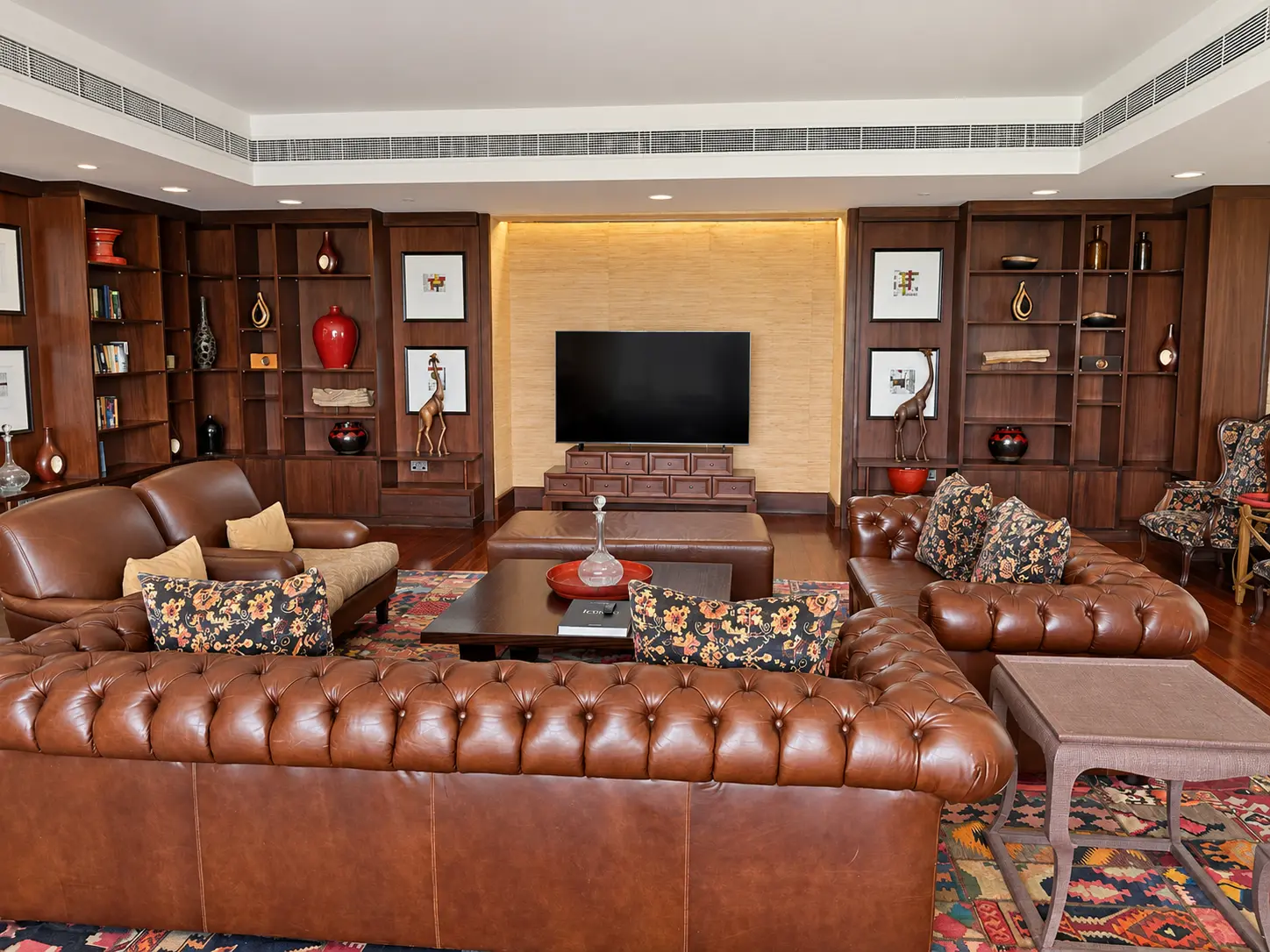
Check-in takes place in the main lobby and reception area, which has a very classic safari-lodge feel with leather seating, dark timber and large open spaces.
We had booked quite a few activities before arrival, and Four Seasons presented our full itinerary in a folder at check-in. It was a small touch, but very useful. Between game drives, dining plans and other resort activities, there can be quite a lot to keep track of over a few days.
After check-in, we were shown around the resort before being taken to our villa.
Our One-Bedroom Villa was fully private and located some distance from the main lodge buildings. We really liked that separation. It felt much quieter, and once we were there it felt far more like having our own safari house than staying in a 77-room resort.
Waiting for us in the villa was the Four Seasons Preferred Partner welcome amenity with fresh fruit, macarons, chocolates and reusable Four Seasons water bottles.
The living room was huge, with leather sofas, dark timber shelving and wide views across the Serengeti. Once we had settled in, the first thing we did was head outside and take in the view. From the villa, the plains seemed to go on forever.
Our One-Bedroom Villa at Four Seasons Serengeti
We were upgraded through Four Seasons Preferred Partner to a One-Bedroom Villa, which was a very nice surprise at check-in and one of the better upgrades we have received from Four Seasons. At 121 sqm / 1,302 sq ft, it is far more substantial than a normal hotel suite, with a king bedroom, separate living and dining areas, full kitchen, walk-in dressing room, one full bathroom, an additional half bathroom, indoor and outdoor showers, several terraces and a private infinity pool. The villa can accommodate up to three adults, or two adults and one child using the sleeper sofa.
What we liked most, however, was the location. The villas sit away from the main lodge buildings and ours felt completely private. Once we were there, you would never have guessed that Four Seasons Serengeti has 77 rooms, suites and villas. We had no neighboring doors opening onto a corridor, no people walking past and no sense that we were staying in a large resort. It felt much more like having our own small safari house in the middle of the Serengeti.
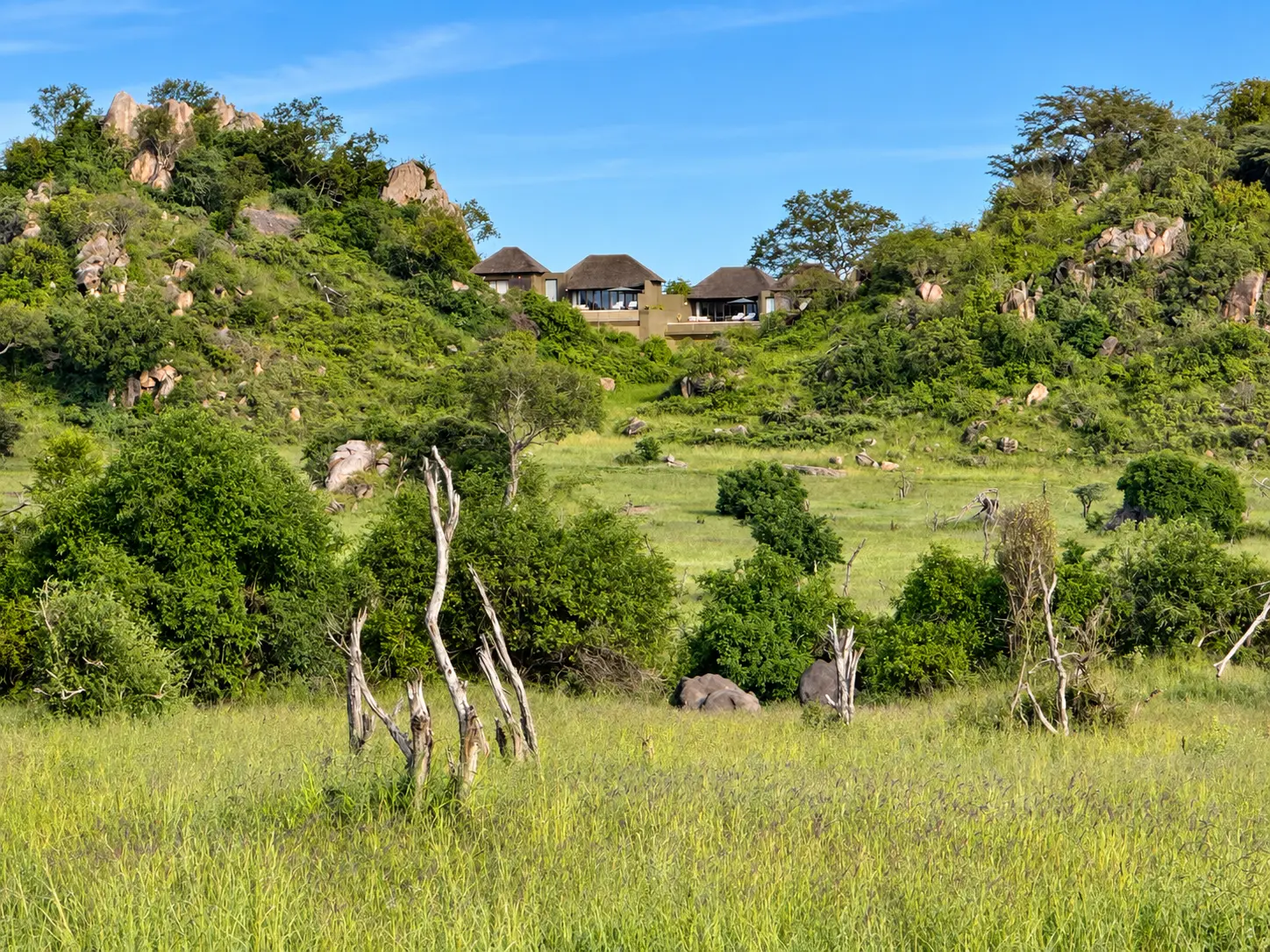
Looking back at the villa from the plains gives a much better idea of how it is positioned. It sits between rocky outcrops and vegetation above the open landscape, and despite being a large building, it blends in surprisingly well from a distance. This was one of the main reasons I preferred the villa to staying around the main lodge. You are paying for more space, but you are also paying for a much greater sense of privacy and separation from the rest of the resort.
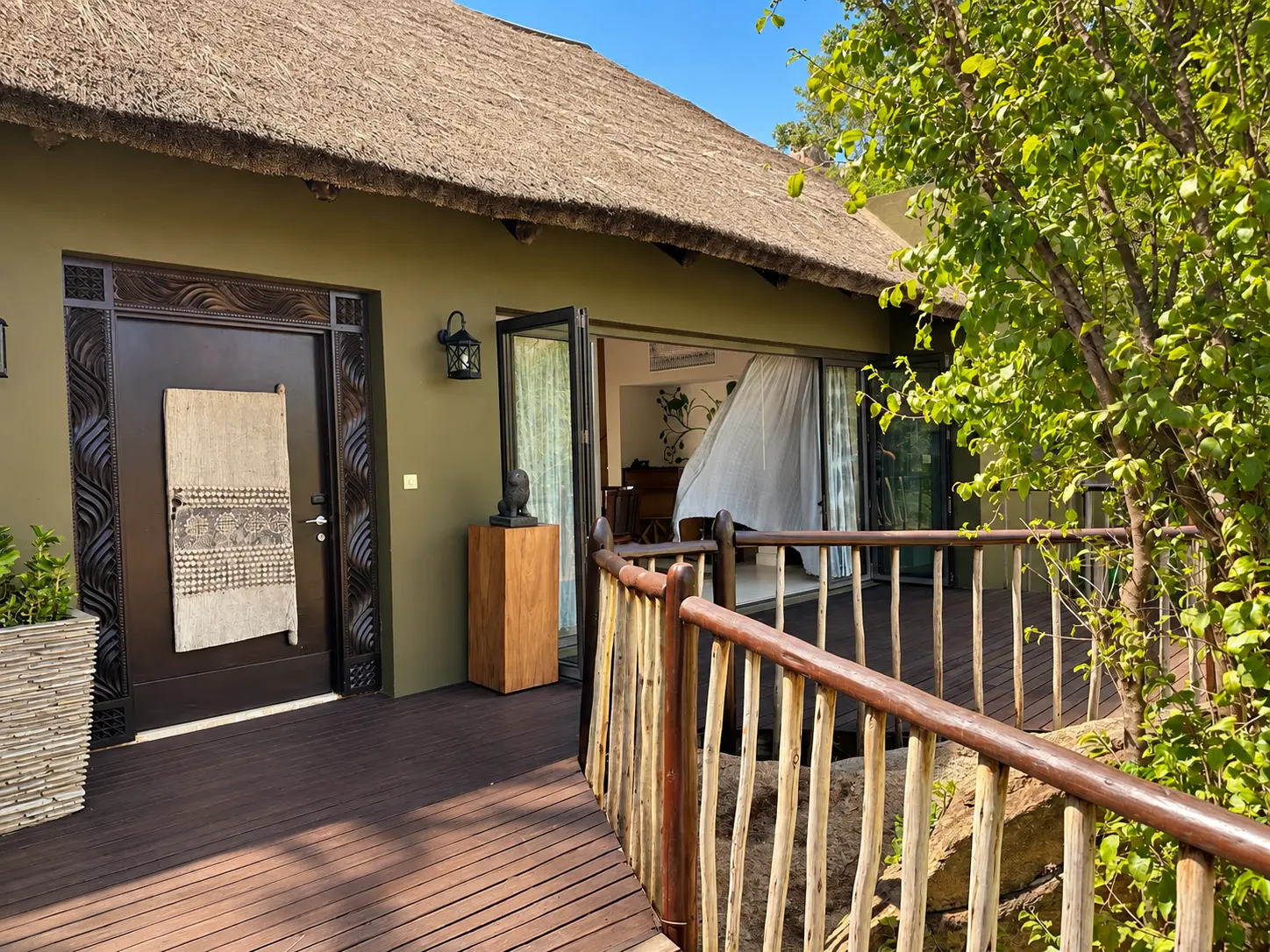
The entrance is reached by a raised wooden walkway beneath the large thatched roof. From outside, the villa looks relatively modest and gives very little indication of just how much space is behind the front door. Once you step inside, it opens into a large series of living spaces with high ceilings, plenty of natural light and doors opening out toward the Serengeti.
Living and dining area
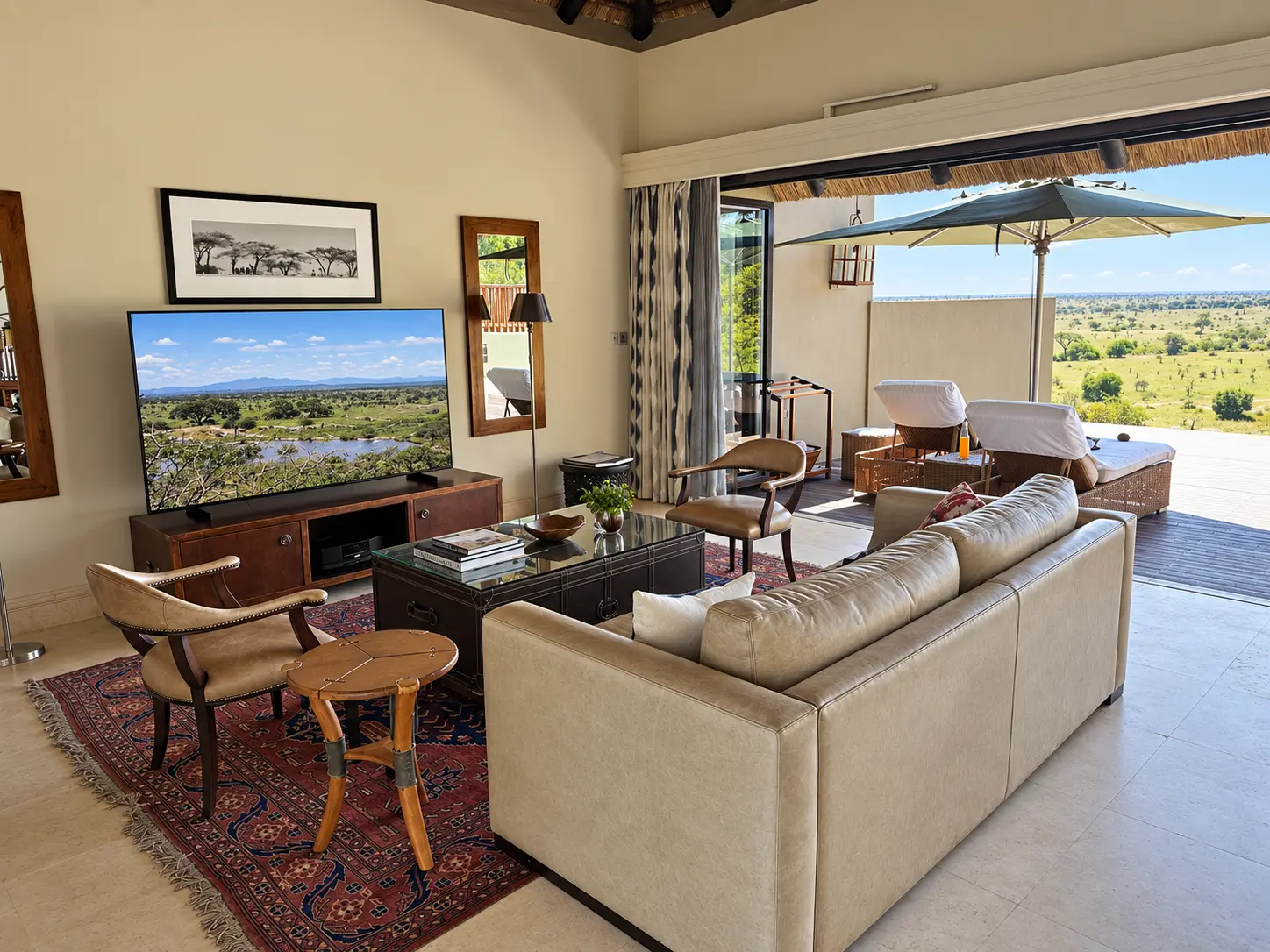
The living area is large and quite traditional in style, with leather seating, dark timber furniture, African artwork, rugs and a big television. We did not spend much time watching TV, which is hardly surprising in the Serengeti, but I liked having a real living room rather than a sofa squeezed into the corner of the bedroom and called a sitting area. There was enough room to spread out, leave cameras and bags around without them taking over the place, and come back after a game drive and sit somewhere other than the bed.
The furniture and finishes are not new and you can tell the property has been open for a while, but I did not find that especially bothersome. There is some wear, and anyone expecting a recently built Four Seasons with pristine contemporary interiors may find the villa a little dated. Personally, I would rather have had the space, privacy and position of this villa than a more recently renovated room closer to the main lodge. The older safari-lodge style also feels appropriate here, and I would be cautious about eventually renovating these villas too aggressively and stripping away their character.
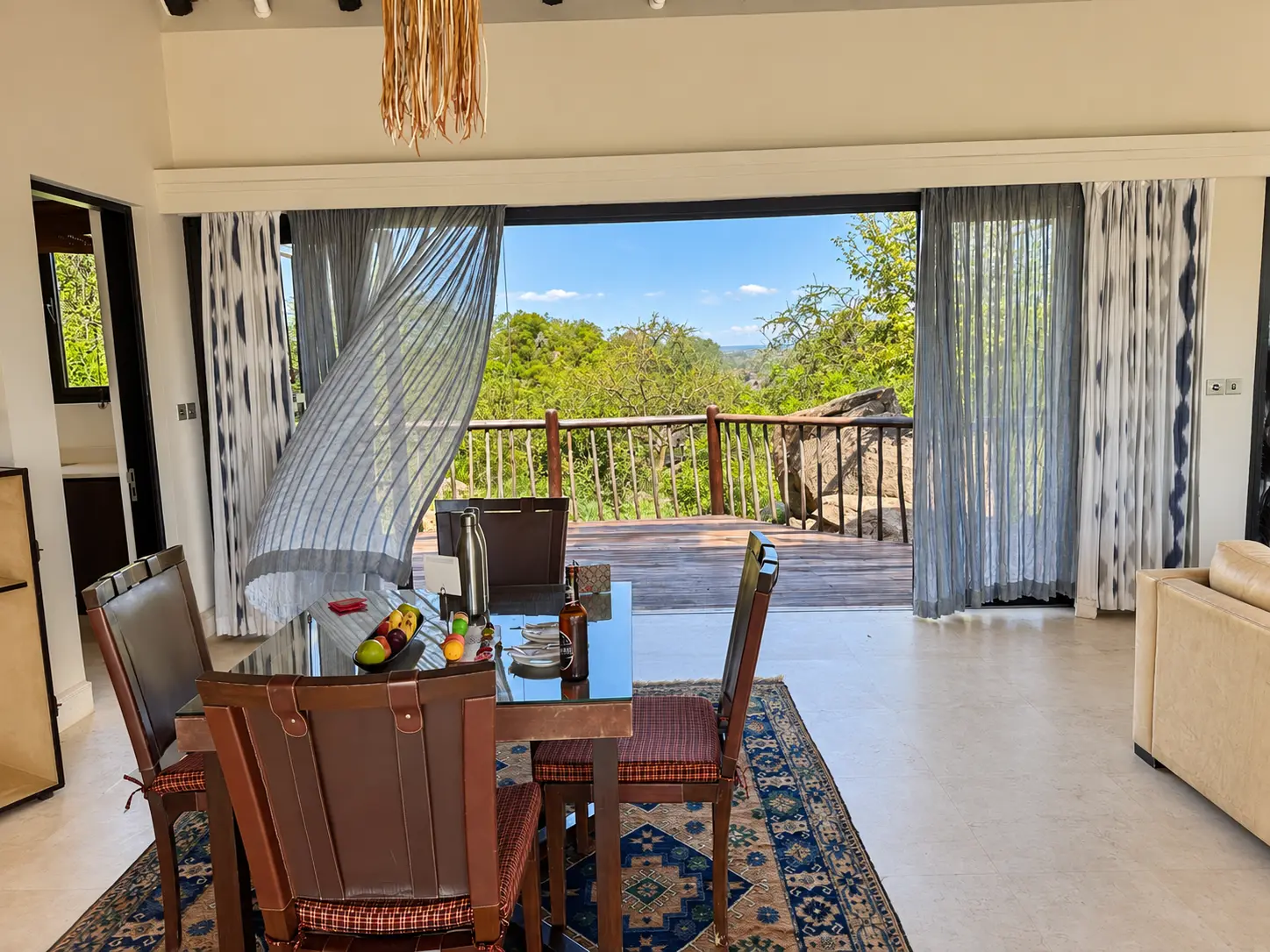
The living room flows directly into a proper dining area with a table for four, while large doors open almost the entire side of the room onto the terrace. For two people it was far more space than we needed, but that became one of the things I liked most about the villa. We had deliberately booked mostly half-day game drives rather than leaving before sunrise and returning after dark every day, so we spent a fair amount of time back at the hotel. Having somewhere comfortable to eat lunch, work for a bit or sit during the hotter part of the afternoon made the extra space useful rather than just impressive on a floor plan.
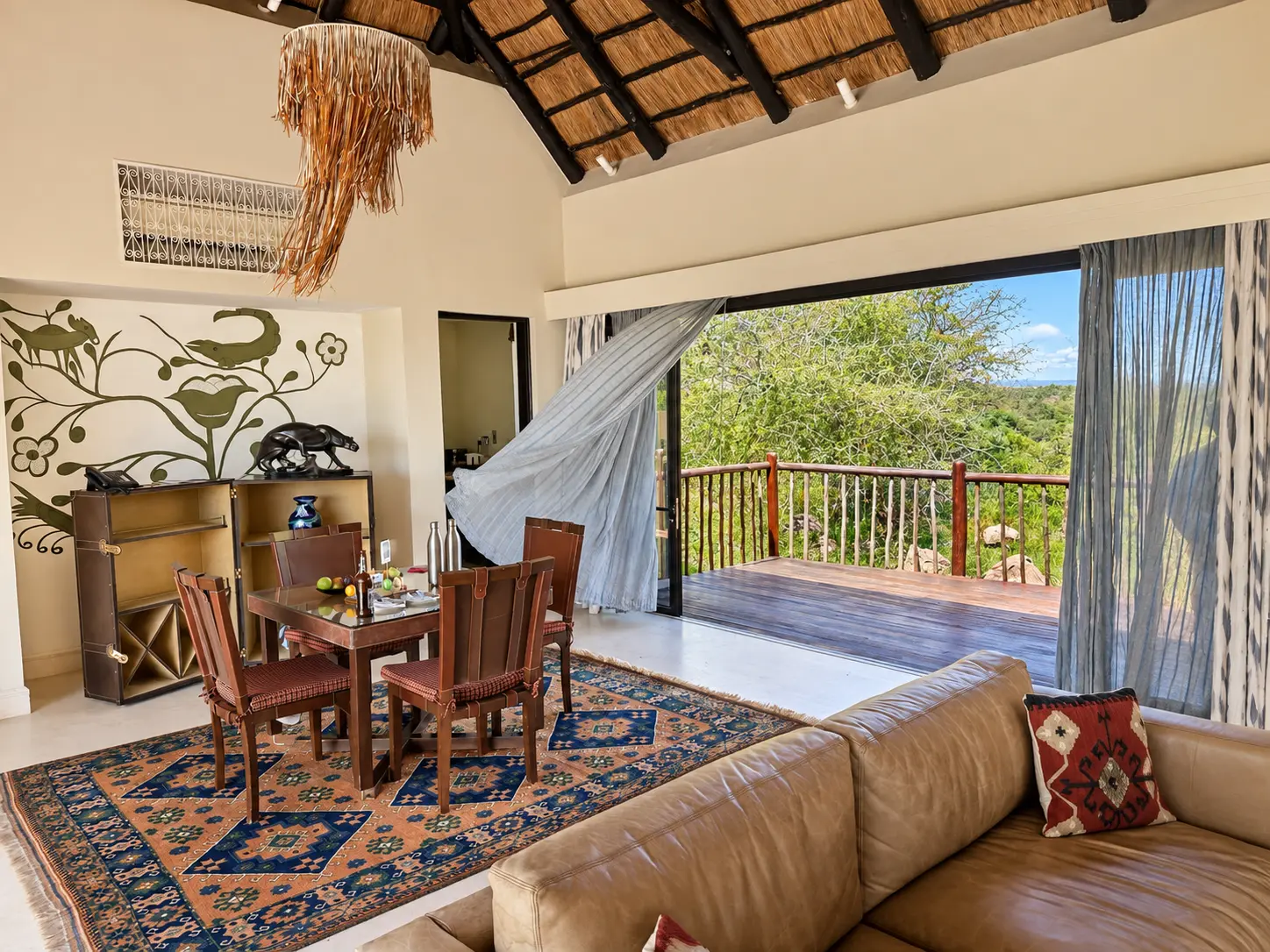
With the doors fully open, the dining room, living room and terrace effectively become one large space. This was when the villa worked best. You could sit inside in the shade and still have the breeze, sounds and views from outside, while the Serengeti was directly in front of you. It also made the villa feel much more connected to its location than a conventional hotel suite where the view is something you see through a window.
Bedroom
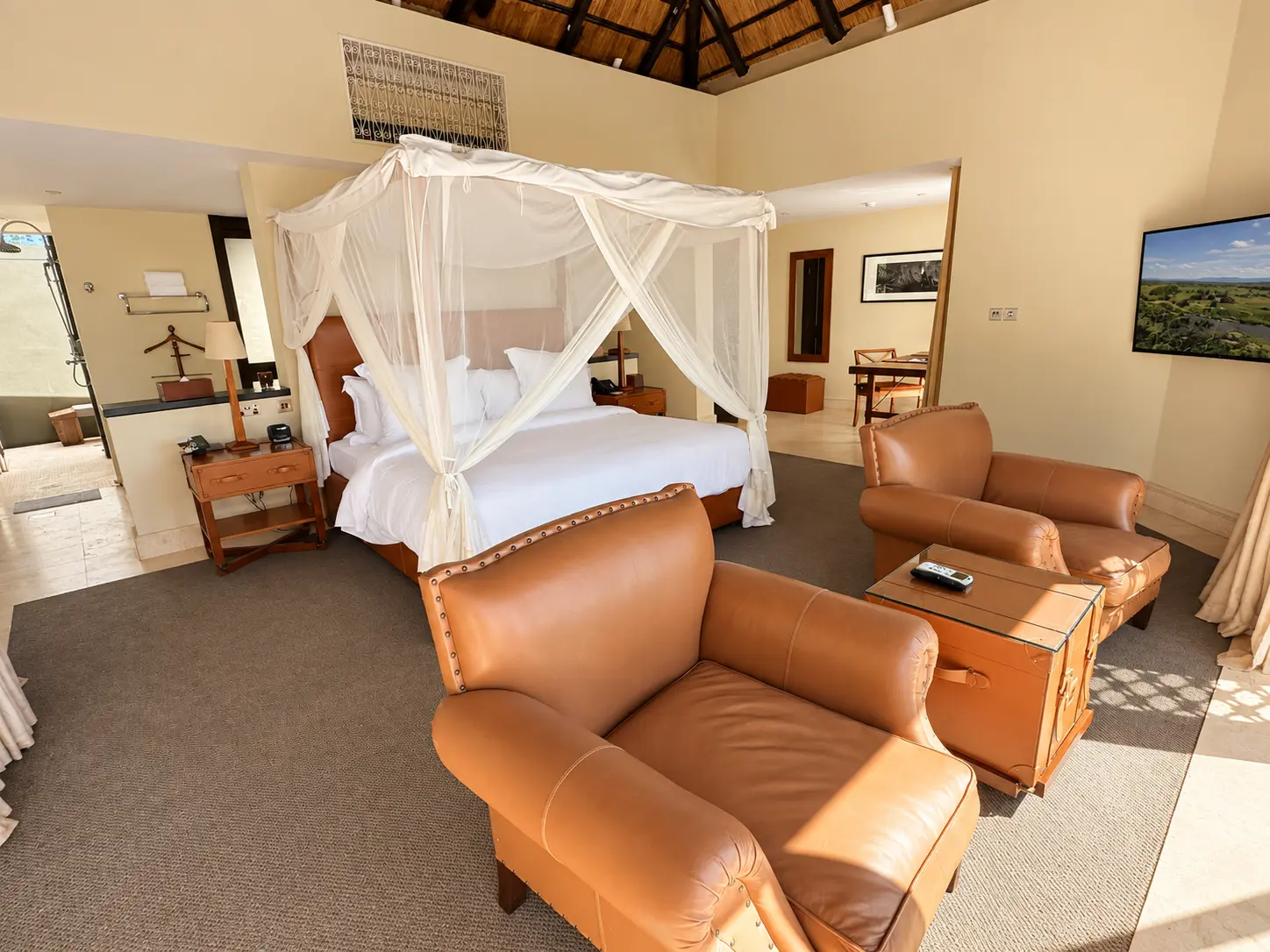
The bedroom is huge, with a four-poster king bed, mosquito netting and a very high thatched ceiling that gives the room far more character than a conventional hotel suite. There is also a sitting area at the foot of the bed with two leather armchairs and a table, so even after accounting for the separate living room there is another substantial amount of space here. The scale was one of the first things we noticed when we walked in, particularly because the ceiling height makes the bedroom feel even larger.
.webp)
The mosquito netting closes around the entire bed at night, and the darker timber, leather and safari-style furniture all work well with the setting. As elsewhere in the villa, the room shows its age in places, but I would be cautious about renovating it too aggressively. Part of what I liked was that it still felt like a safari lodge rather than another newly refurbished beige luxury hotel.
The view

The view was the best part of the villa. From our terrace, the Serengeti plains stretched as far as the eye could see, with no other hotel buildings immediately in front of us and very little to remind you that there was a large resort behind you. The landscape changed throughout the day, with softer light in the morning and a much wider sense of scale once the afternoon sun came out.
Every room and villa also has binoculars for guests to use during the stay, and we used ours regularly. There always seemed to be something moving in the distance, and at one point we spotted a male lion wandering across the plains from the villa. That was one of those moments that reminded us that even when we were sitting around the room, we were still right in the middle of the Serengeti.
Private terrace
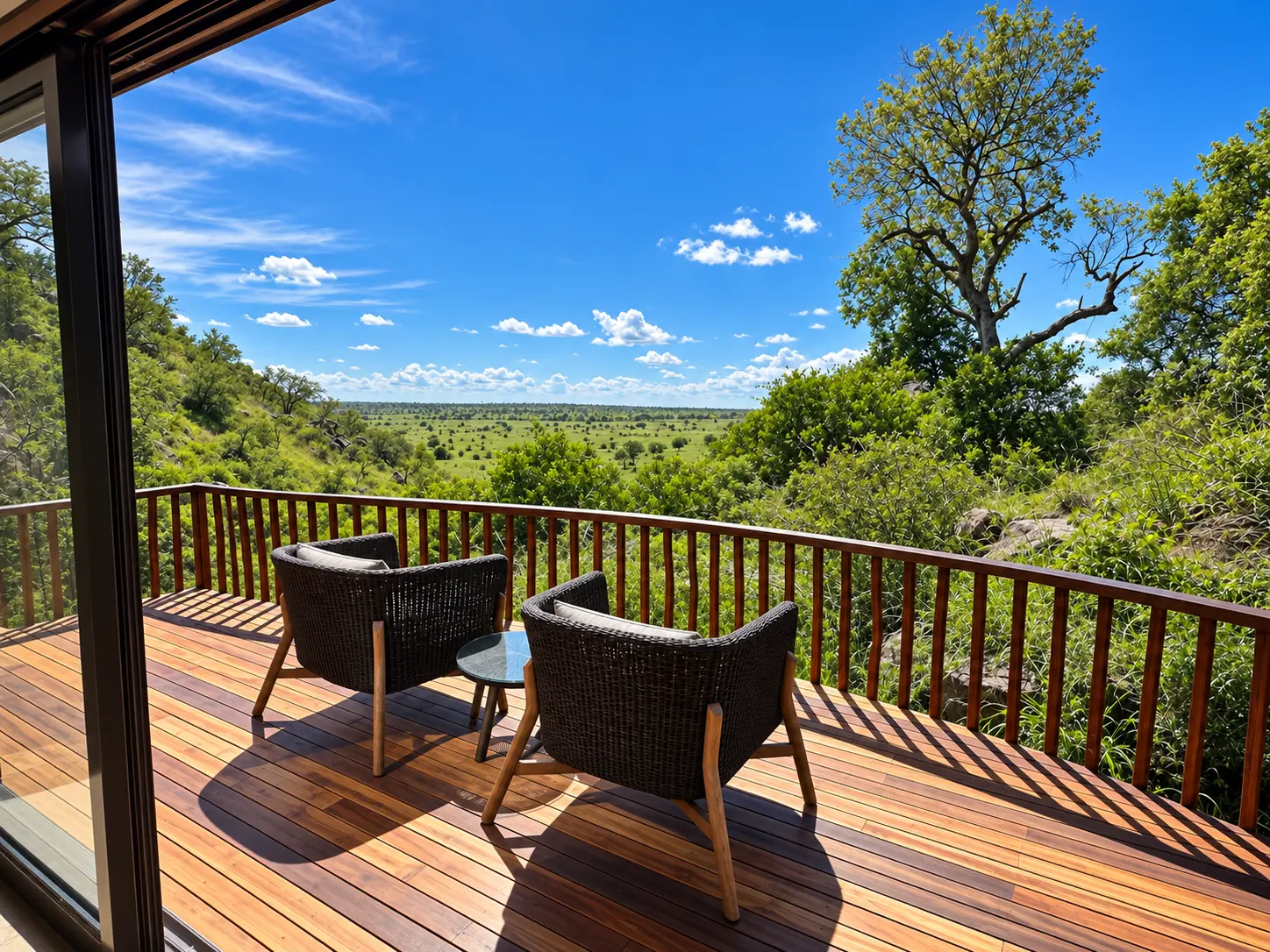
Off the bedroom was a smaller terrace with two chairs and a table overlooking the plains. This was a great place to sit in the morning with coffee or later in the afternoon with a drink, particularly because it felt very private. There was enough vegetation immediately around the villa to shield it from view, but not so much that it blocked the wider Serengeti landscape.
Private infinity pool
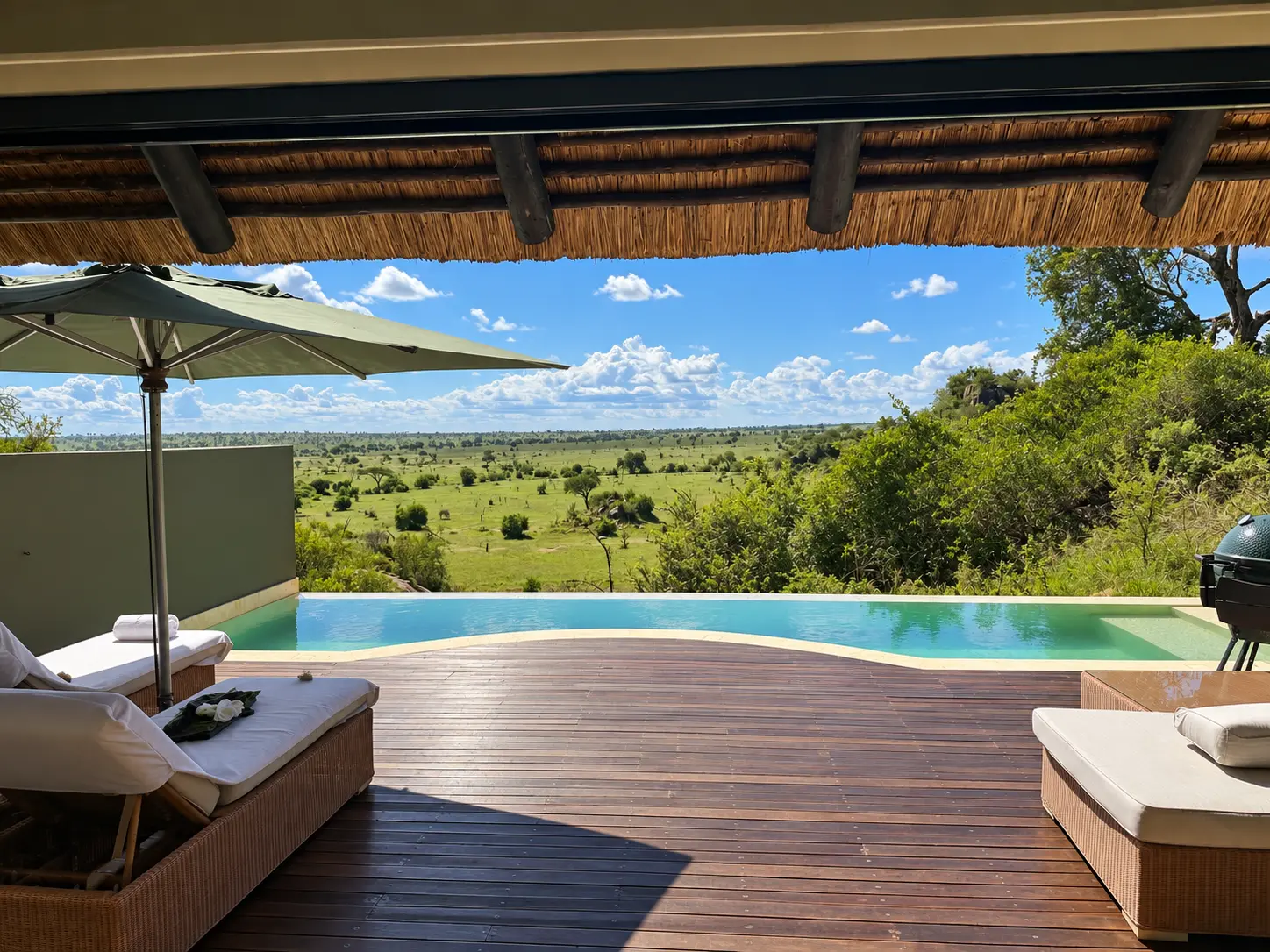
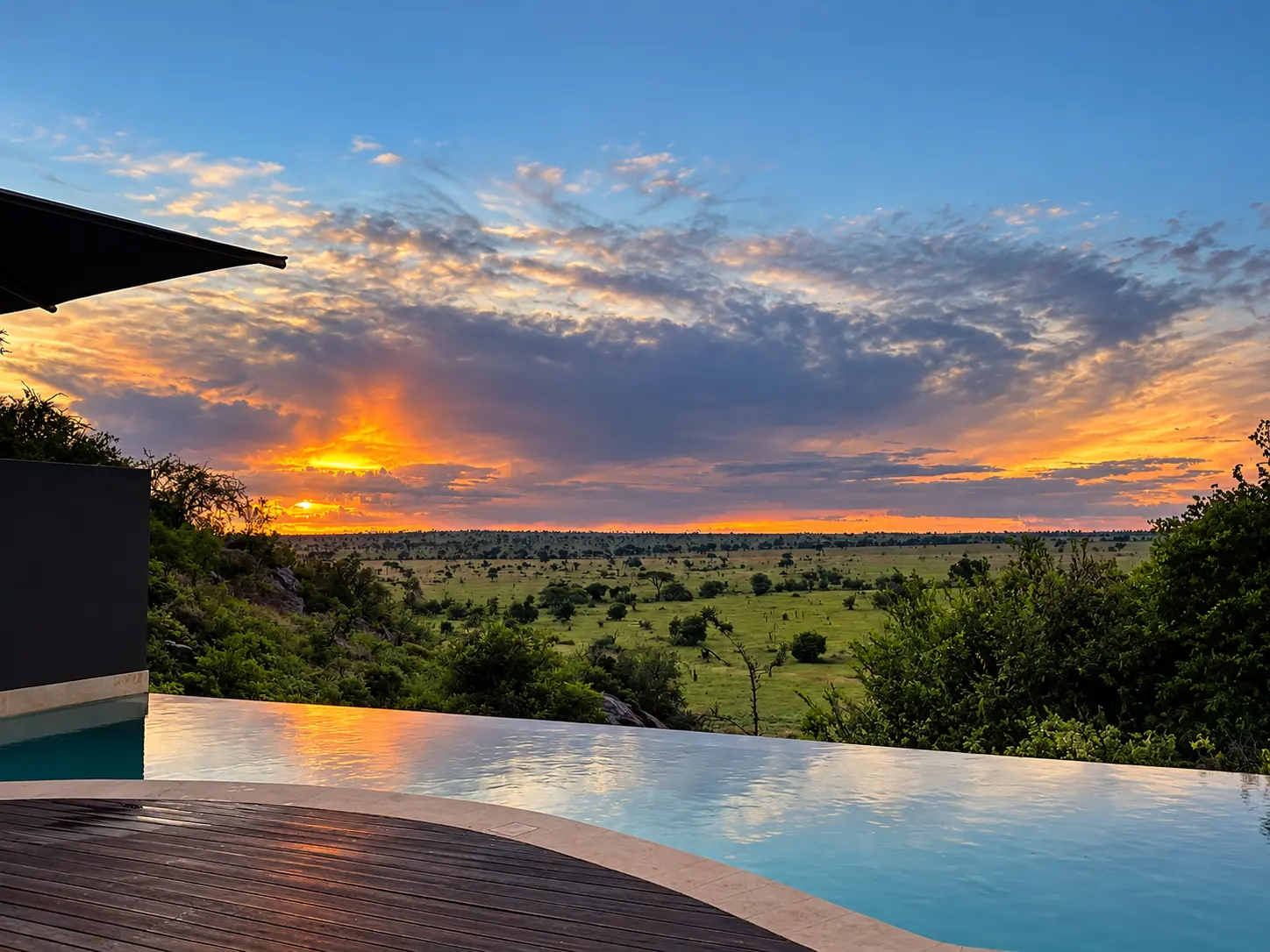
The private infinity pool sits directly in front of the villa and looks out over the plains. We used this area a lot because of the way we structured our stay. We would go out in the morning, come back to Four Seasons for lunch and then spend the afternoon at the villa rather than automatically returning to the main pool or filling the rest of the day with more activities.
There are loungers under the covered part of the terrace, so you can stay out of the midday sun while still looking across the Serengeti. For us, the pool was one of the main reasons the villa made sense. If you are planning to leave before sunrise every morning and return only for dinner, I am not sure I would spend heavily on this category because you simply will not use everything you are paying for. For the way we stayed, however, the pool and outdoor areas were a big part of the trip.
Big Green Egg and private dining
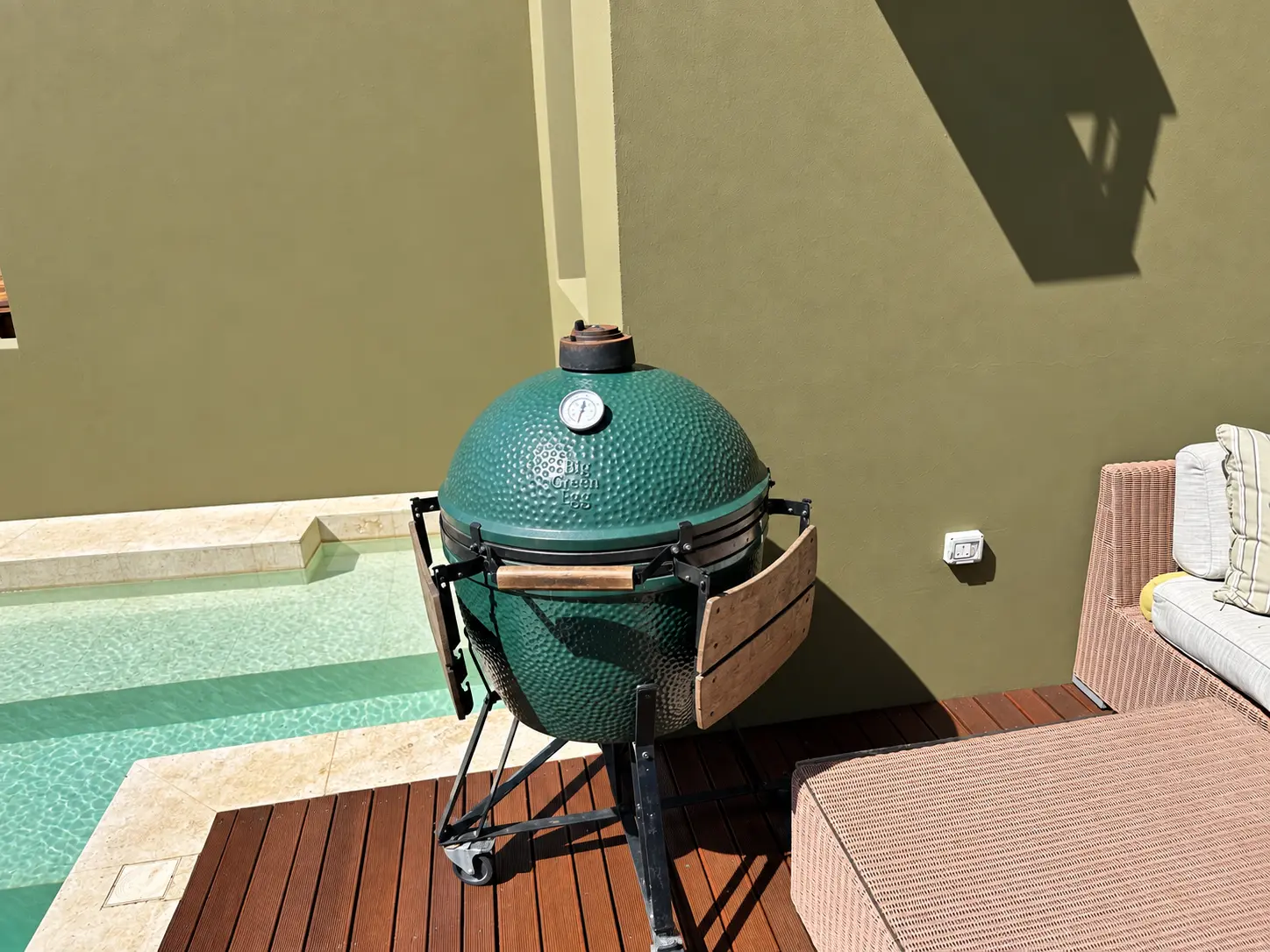
There was also a Big Green Egg on the terrace, which Four Seasons can use for customized private dining at the villa. This made a lot of sense to us because you already have a dining room, a large outdoor terrace and your own pool, so there is no need to go back to the main restaurant every evening. If I were staying several nights, I would definitely arrange at least one dinner at the villa, especially after a long morning on safari when the idea of staying put is very appealing.
Full kitchen
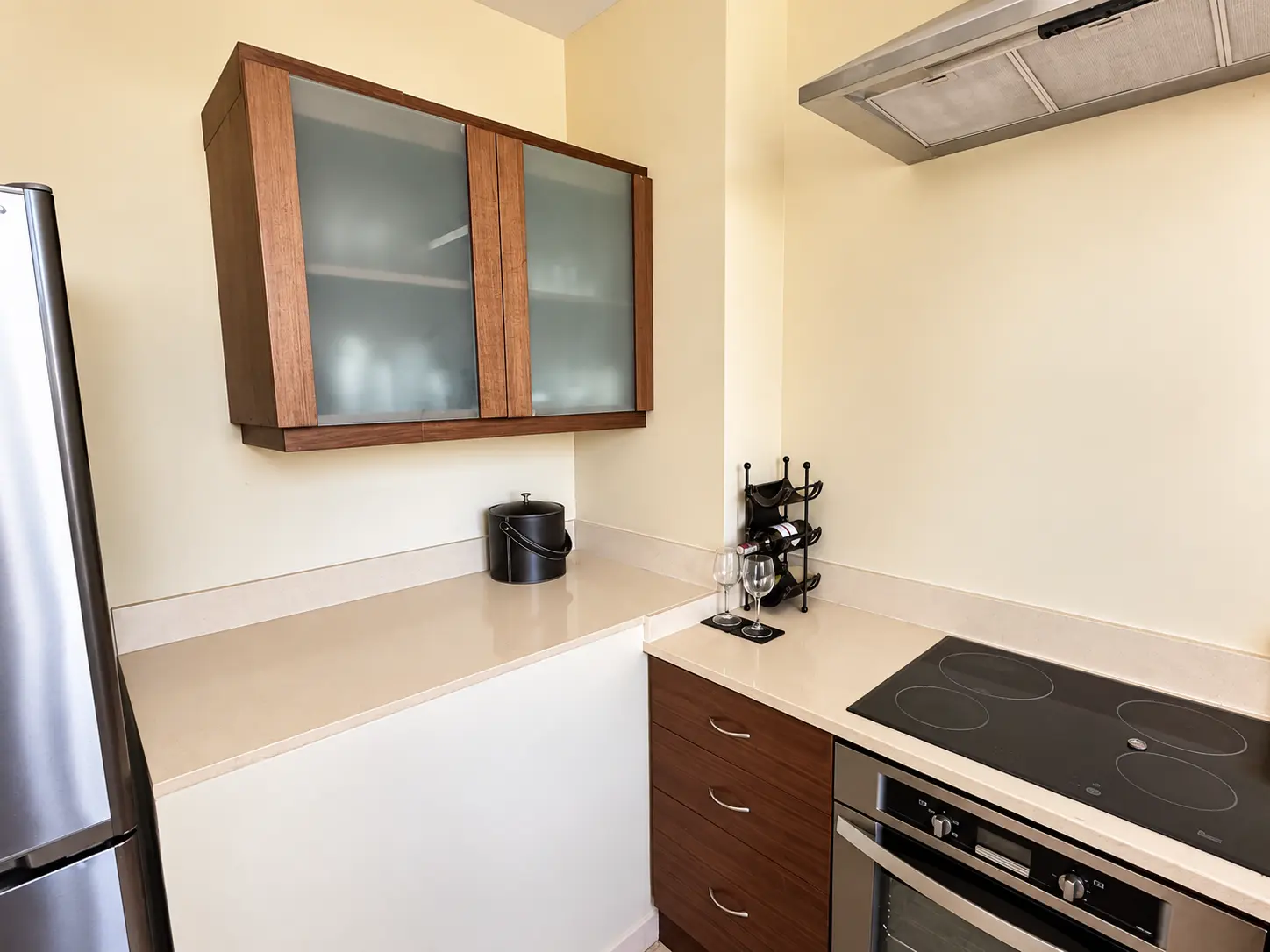
The villa also has a surprisingly substantial kitchen. This is not a small hotel kitchenette hidden behind a cupboard door. There is a full-size refrigerator, oven, cooktop, extractor hood, sink, storage and proper countertop space, making it a genuinely functional kitchen.
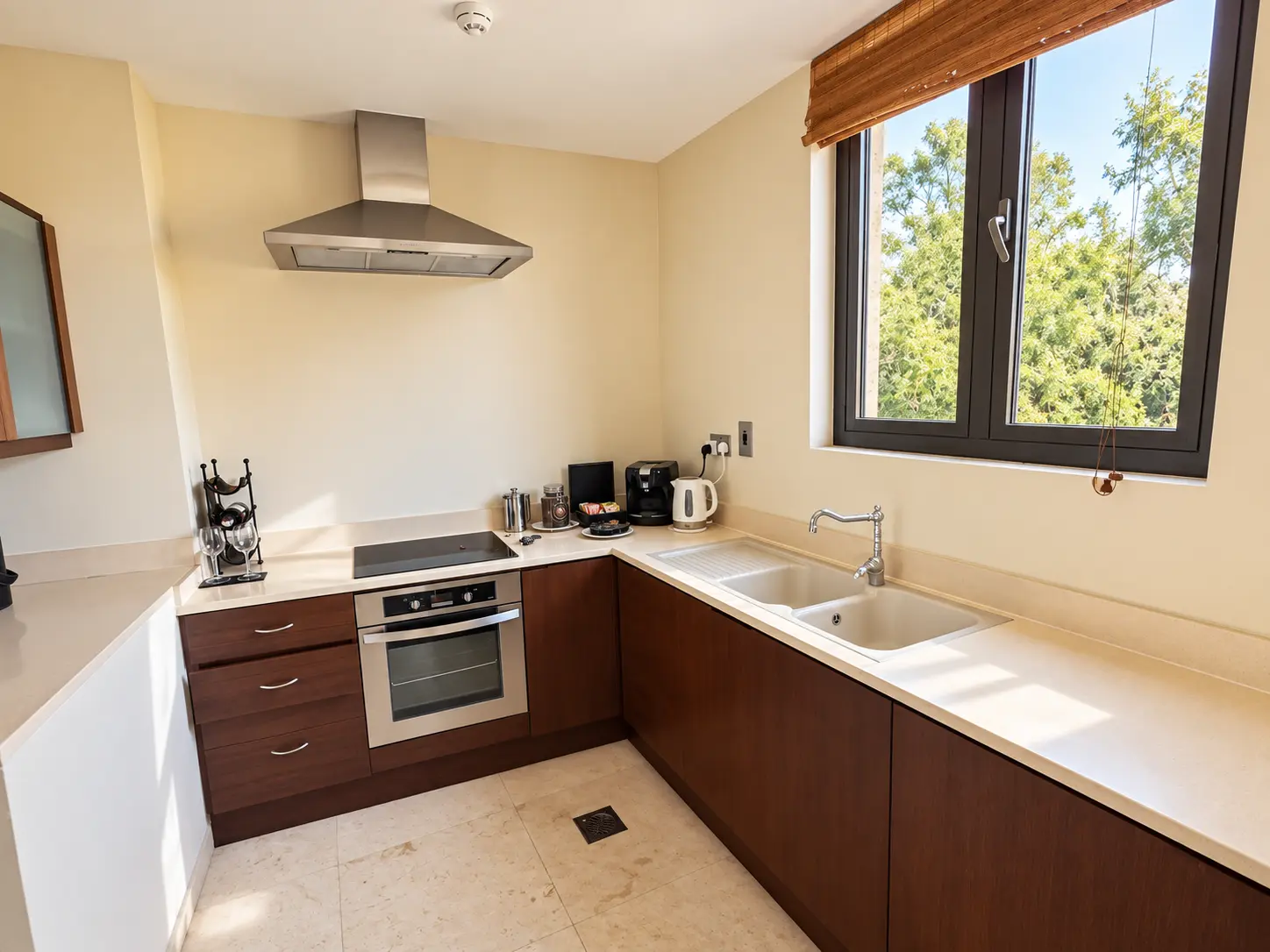
The kitchen is one of the areas where the age of the villa is more obvious, particularly in the cabinetry and appliances, but everything worked perfectly well. We had no intention of cooking for ourselves, although I can see why the kitchen would be useful for families, longer stays or guests arranging private dining. It also helps the villa feel more residential, which suits the overall setup.
Stocked refrigerator
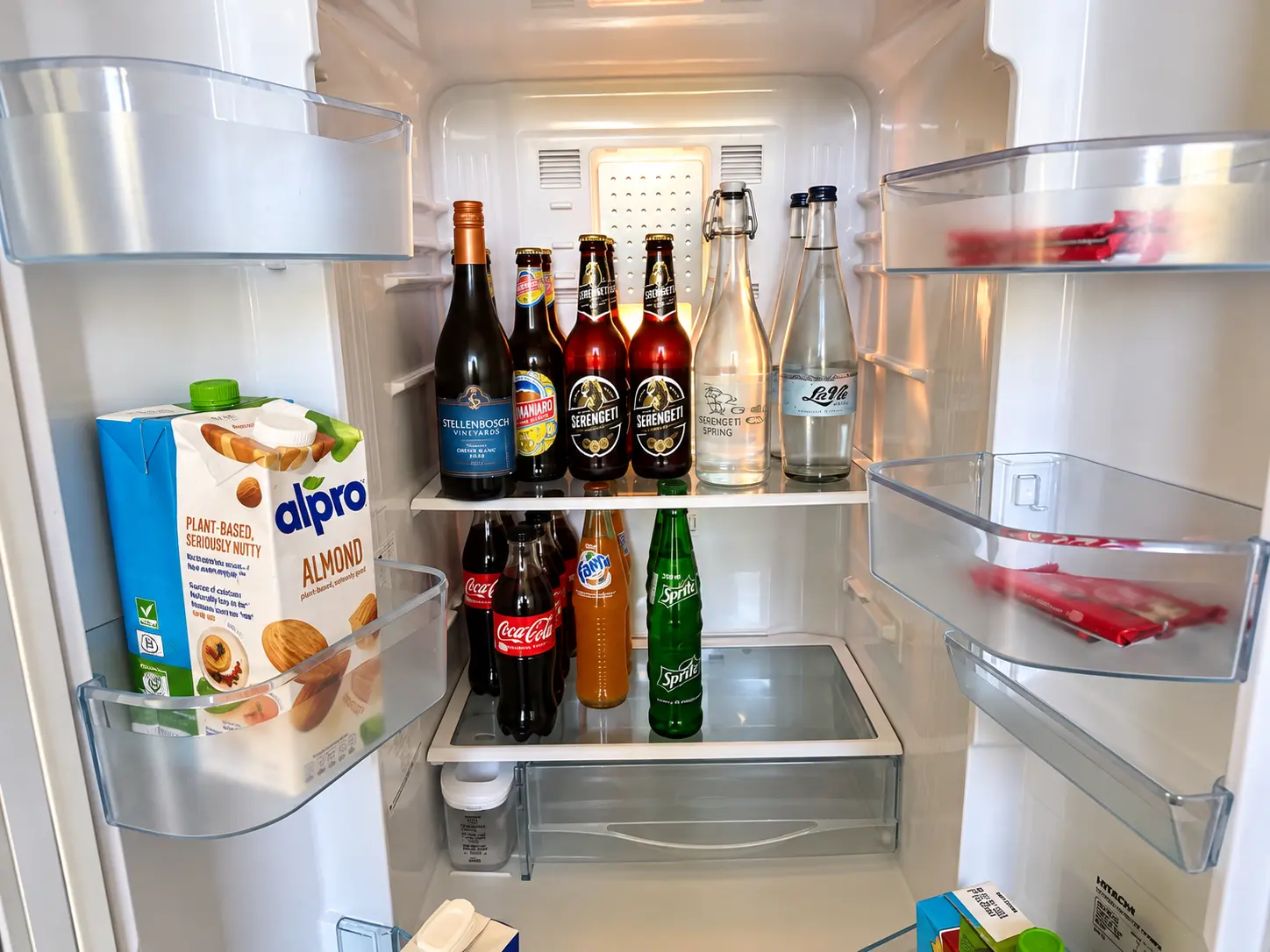
The refrigerator was stocked with complimentary beer, wine, water, soft drinks and other refreshments, and there was even almond milk. This sounds like a small detail, but I still find the logistics of Four Seasons Serengeti impressive. You are staying in the middle of a national park, yet the villa is stocked much like a city hotel. Later in the stay I asked the head of food and beverage how they managed to maintain such a wide selection of fresh food and drinks, and he explained how regularly supplies are brought in by truck.
Main bathroom
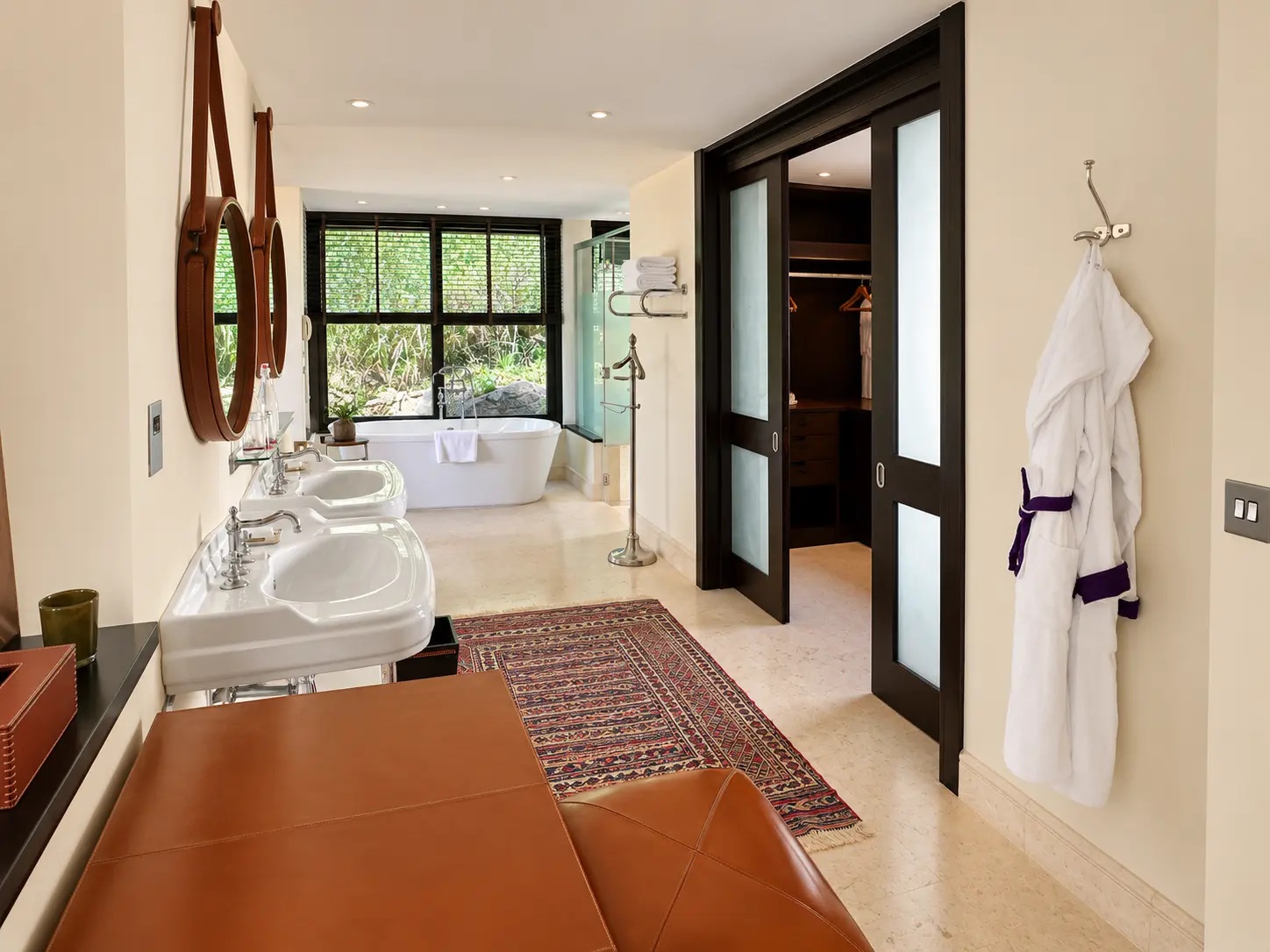
The main bathroom is very large, with two sinks, a freestanding bathtub, a large indoor shower and direct access to the outdoor shower. There is a lot of natural light and plenty of space for two people to get ready without getting in each other's way. It is also one of the areas where the property feels older, and if Four Seasons eventually renovates these villas, I think the bathroom would be one of the first areas I would update.
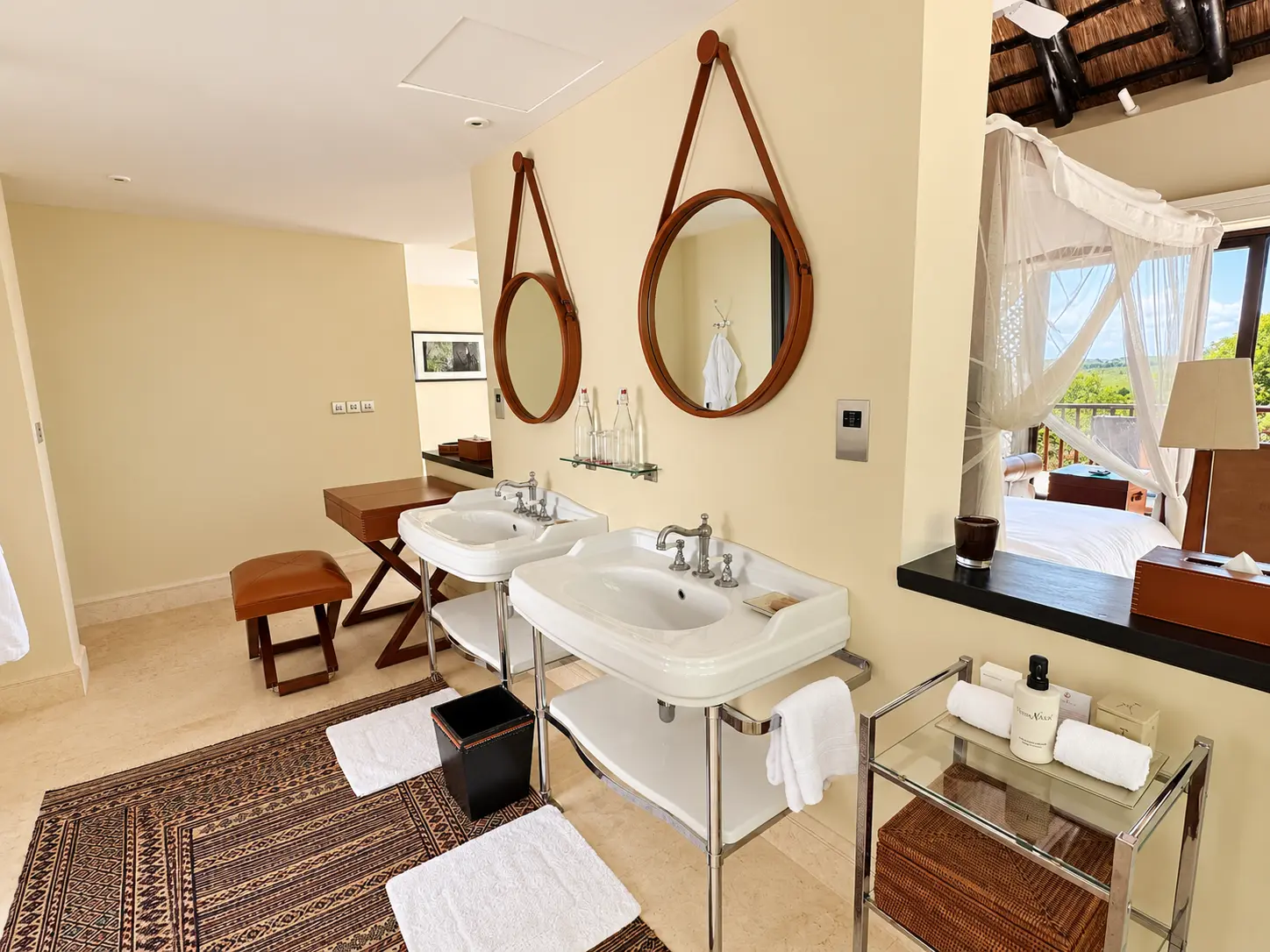
There are two separate sinks rather than one long vanity, and I liked how the bathroom connects back toward the bedroom rather than feeling like a completely separate box. The layout is practical and spacious, even if some of the finishes now look a little dated.
The bathtub

The freestanding bathtub sits beside large windows looking toward the rocks and vegetation immediately surrounding the villa. It was pleasant and private, but I do think Four Seasons missed an opportunity here. The villas have these huge views across the Serengeti, yet from the bath you are mostly looking at nearby landscaping and rock.
If the villas are ever renovated, I would love to see the bath repositioned so you could look straight across the plains. That would completely change the experience and make much better use of the location.
Indoor shower

The indoor shower is large, with a rainfall showerhead, and leads directly through to the outdoor shower. I liked the layout because you could move between the two without walking back through the bedroom or main bathroom. It was a practical setup and made the outdoor shower feel like part of the bathroom rather than a separate novelty.
Outdoor shower

The outdoor shower was fully private and completely open to the sky. I liked having it, particularly on a warm afternoon after coming back from safari, but I thought the area itself could have been done better.
It was quite bare, with high walls, stone and a wooden bench. I would have added far more planting and greenery so that the space felt softer and more connected with the surroundings. A few palms, grasses or other suitable plants would have made a big difference. As it was, the outdoor shower was useful and private, but not quite as inviting as the setting suggests it could be.
Walk-in closet
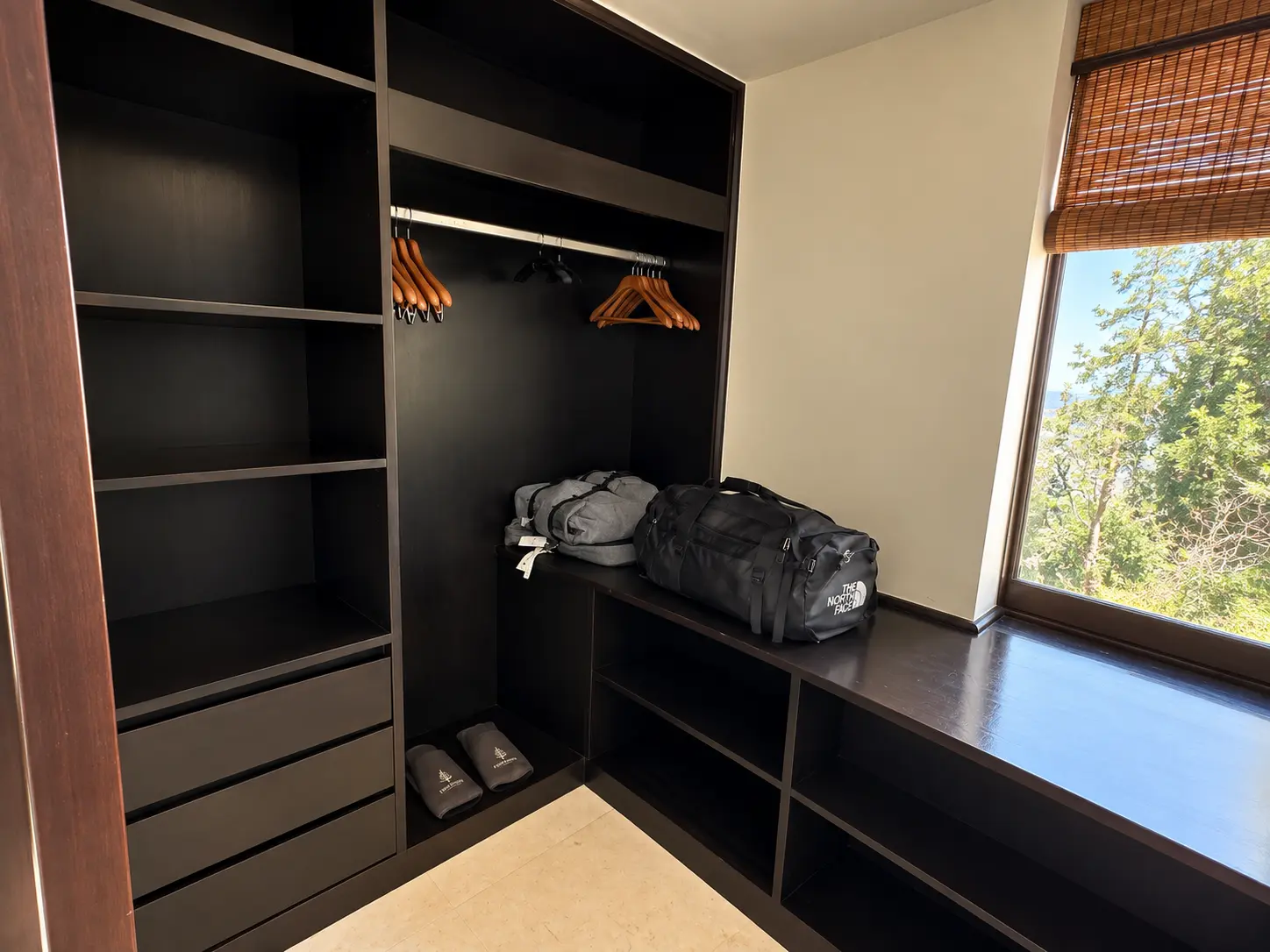
The walk-in closet was enormous for two people, with plenty of hanging space, drawers, shelves and a long area for luggage. This is particularly useful on safari because you tend to accumulate far more gear than expected, including hats, jackets, safari bags, binoculars, camera equipment and normal luggage. Being able to put all of it away kept the bedroom uncluttered.
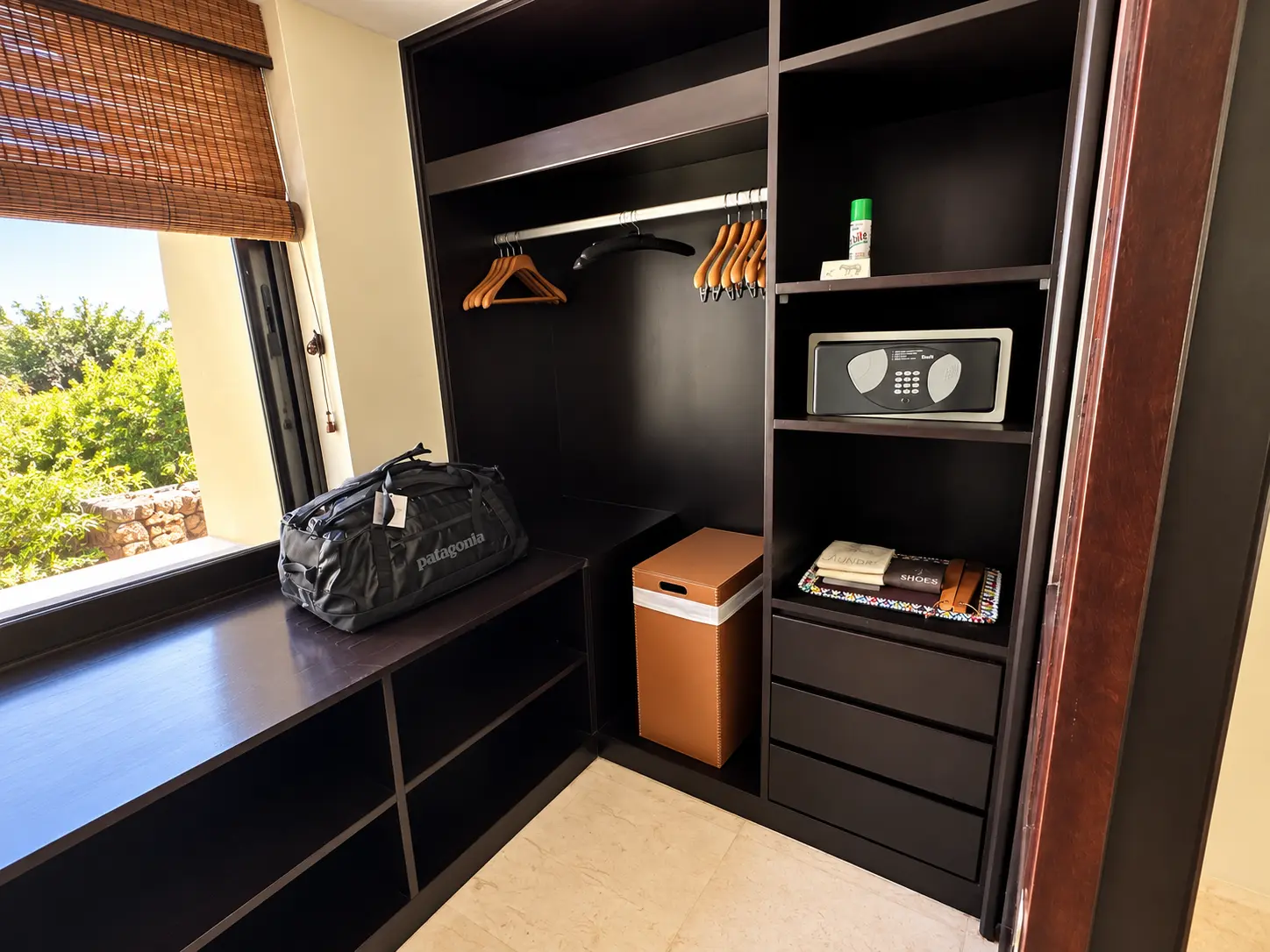
The other side had even more storage, along with the safe and laundry area. We were nowhere close to using all of it, but it is nice having too much storage rather than trying to fit everything into one small wardrobe.
Desk and workspace
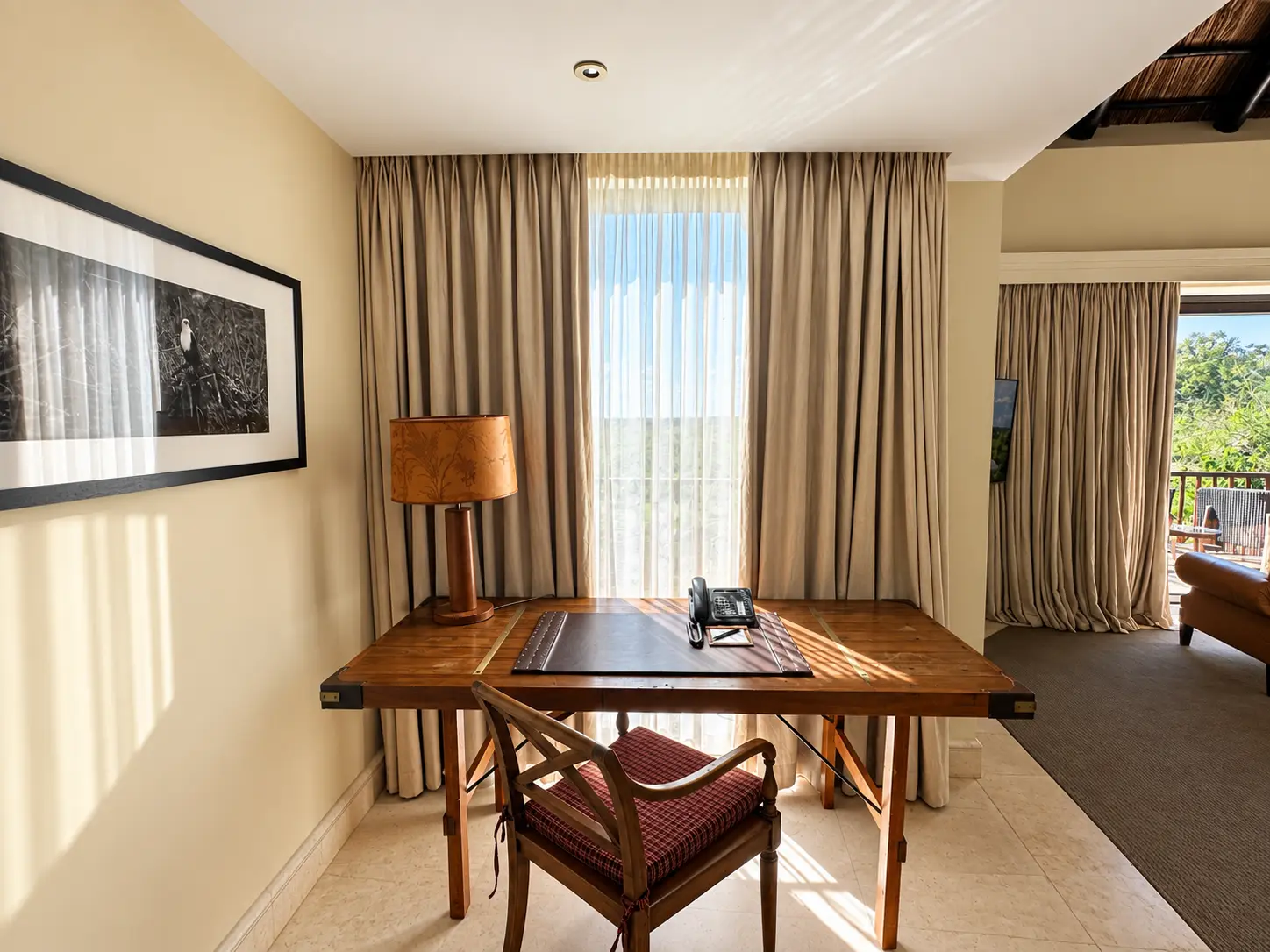
There is also a writing desk beside the window. I always appreciate this because I inevitably end up doing some work while traveling, and I would much rather have a desk than spread a laptop across the dining table.
The Wi-Fi was very good too and, surprisingly given how remote you are, we even had a mobile signal across most of the resort. It makes working from the Serengeti far easier than you might expect.
Half bathroom
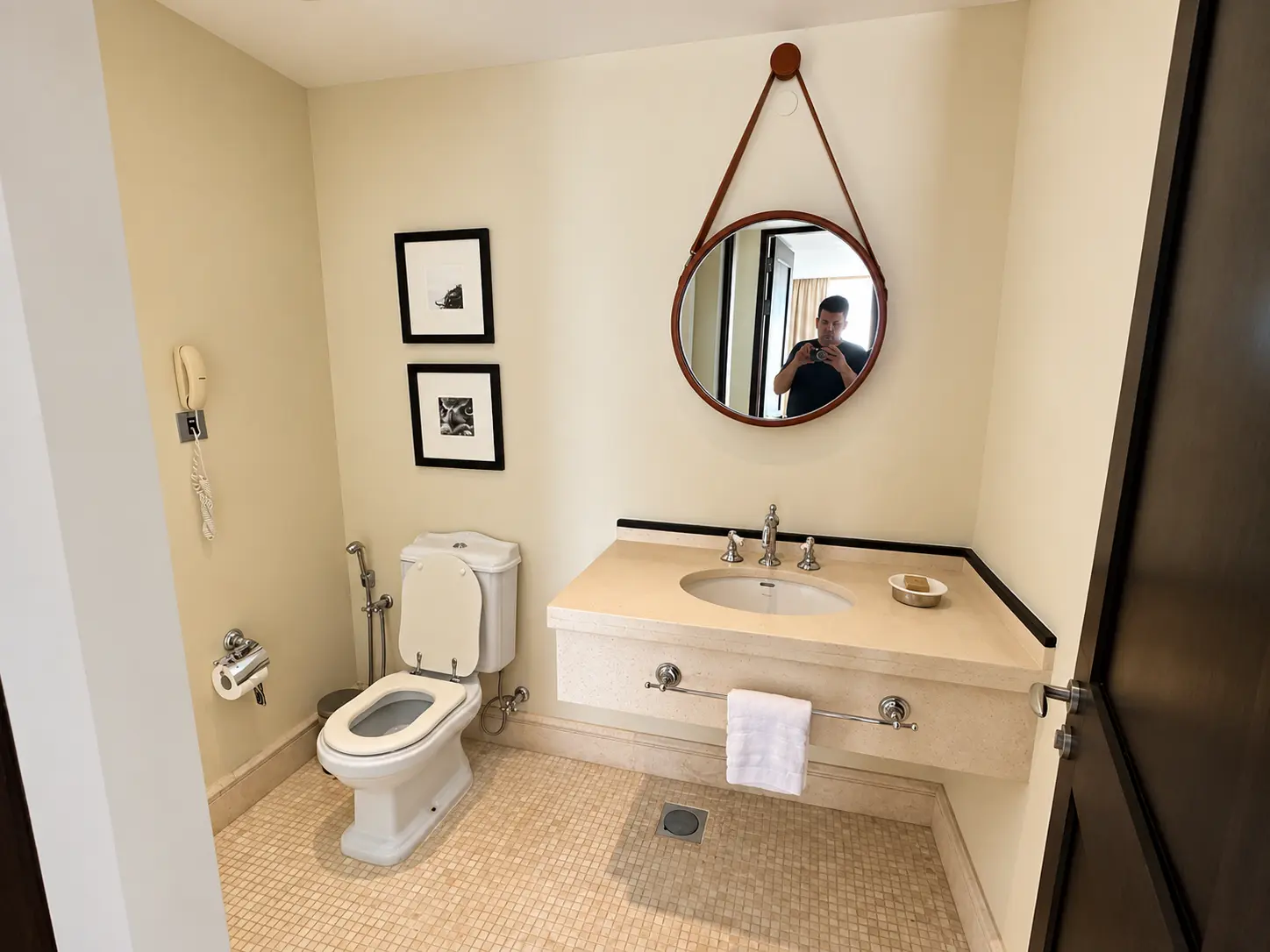
There is an additional half bathroom near the living area. For two people it initially seems unnecessary, but once you are using the villa it makes sense, particularly if you arrange private dining or have anyone visiting. Guests do not need to walk through the bedroom or main bathroom, which keeps the private parts of the villa separate.
Would We Book the One-Bedroom Villa Again?
Yes, for the way we stayed at Four Seasons Serengeti.
I would not book the villa because it has the most impressive interiors in Africa. It doesn't. Some of the cabinetry, bathroom fittings and furniture show their age, the outdoor shower could be landscaped much better, and I wish the bathtub took advantage of the Serengeti view. Those are all things I noticed during the stay.
The reason I would book it again is the privacy, space and location. We could come back from a morning game drive, close the door and effectively have our own private house overlooking the Serengeti. We had our own pool, plenty of indoor and outdoor space, somewhere to eat and views across the plains that never got old.
For the way we did safari, with mostly half-day game drives and time at the resort in the afternoons, the villa worked extremely well. If you are planning to be out from sunrise until sunset every day, I would probably save the money and book one of the better-positioned rooms instead. If you want Four Seasons itself to be a real part of the trip rather than simply somewhere to sleep between drives, the One-Bedroom Villa is the category I would look at.
Safety and wildlife around Four Seasons Serengeti
One thing you quickly realize at Four Seasons Serengeti is that you really are staying in the middle of the Serengeti. This is a full Four Seasons resort, but the wildlife around it is completely wild and animals can come surprisingly close.
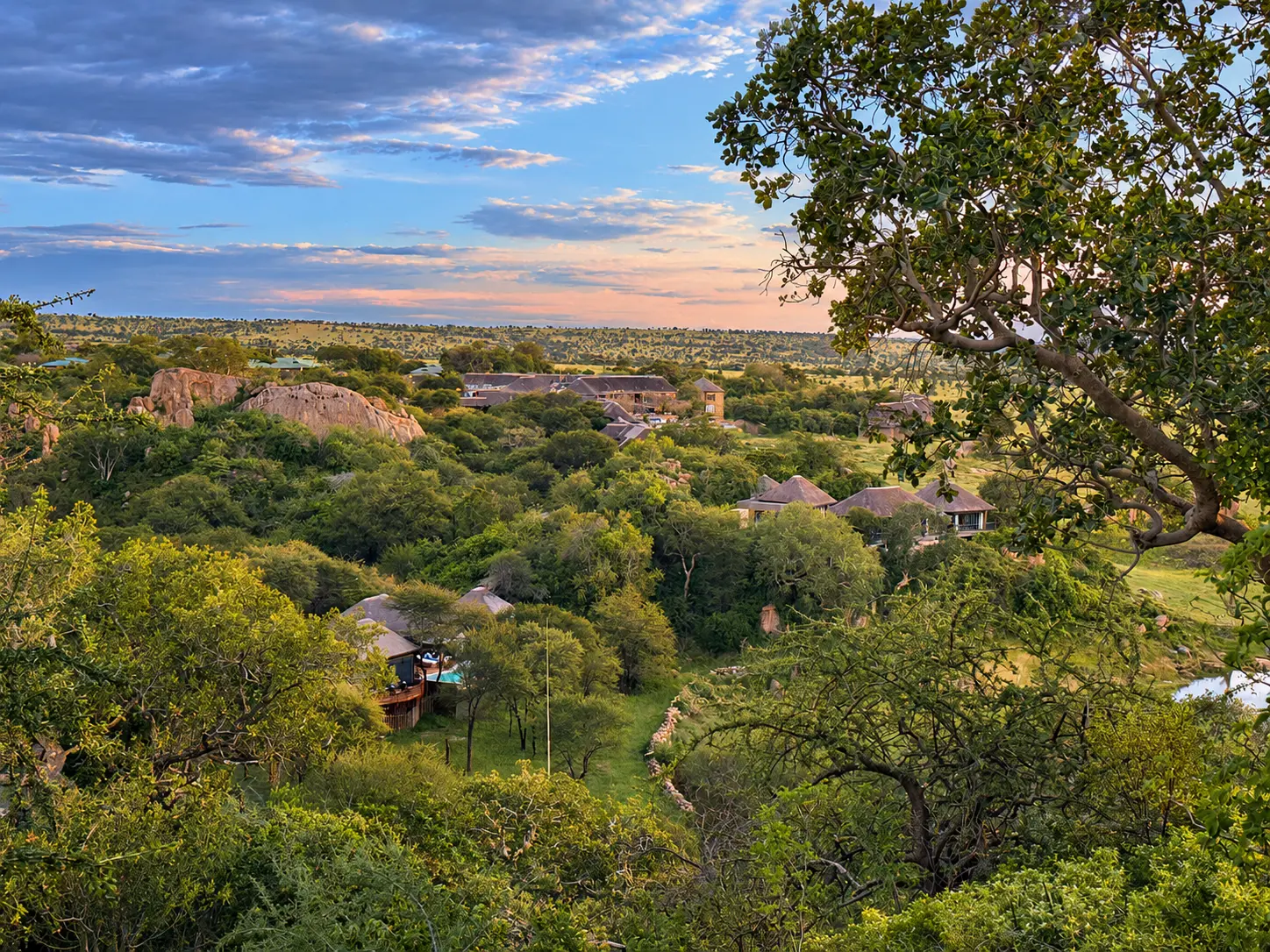
The photo above gives a good idea of the setup. The lodge, rooms and villas are spread through the bush rather than enclosed inside a fenced resort. From our villa we could see straight across the plains, and one afternoon we used the binoculars provided in the room to watch a male lion walking in the distance. We were also told that the week before our stay, a leopard had come very close to reception, so there is always the possibility of seeing something even when you are not out on a game drive.
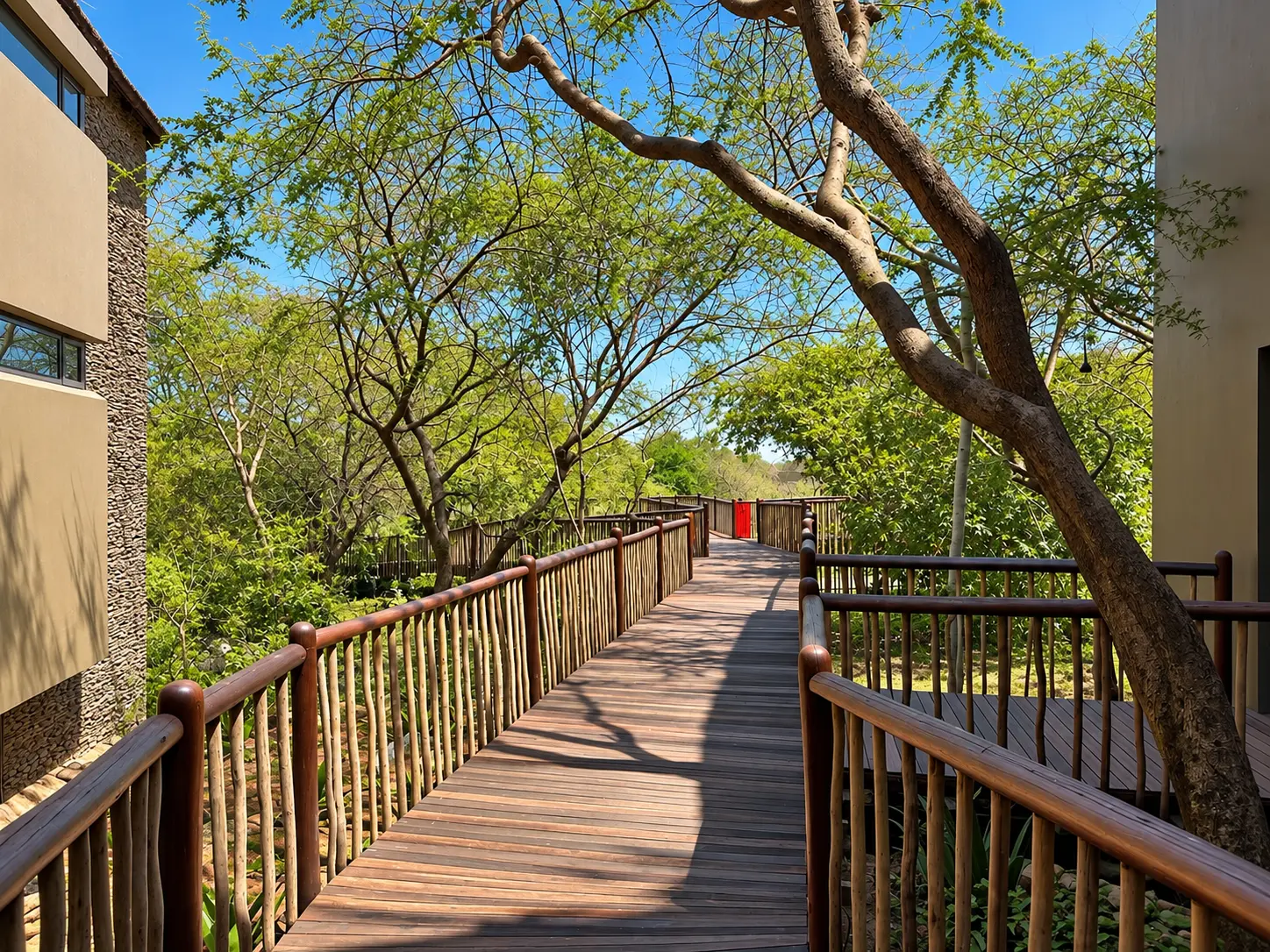
The rooms, villas and main areas of the resort are linked by raised wooden walkways, which meant we were not walking through the bush every time we wanted to go to breakfast or dinner. During the day we walked around ourselves and never felt uncomfortable. The walkways are open, though, and wildlife can potentially approach them, so you still need to pay attention and follow the hotel's instructions.
At night, staff escorted us back to our villa from the main lodge. Our villa was quite a distance from the central buildings, and I was very happy to have someone walking with us. It is easy to forget where you are after dinner and a few drinks, but the possibility of a lion or leopard being somewhere nearby is very real.
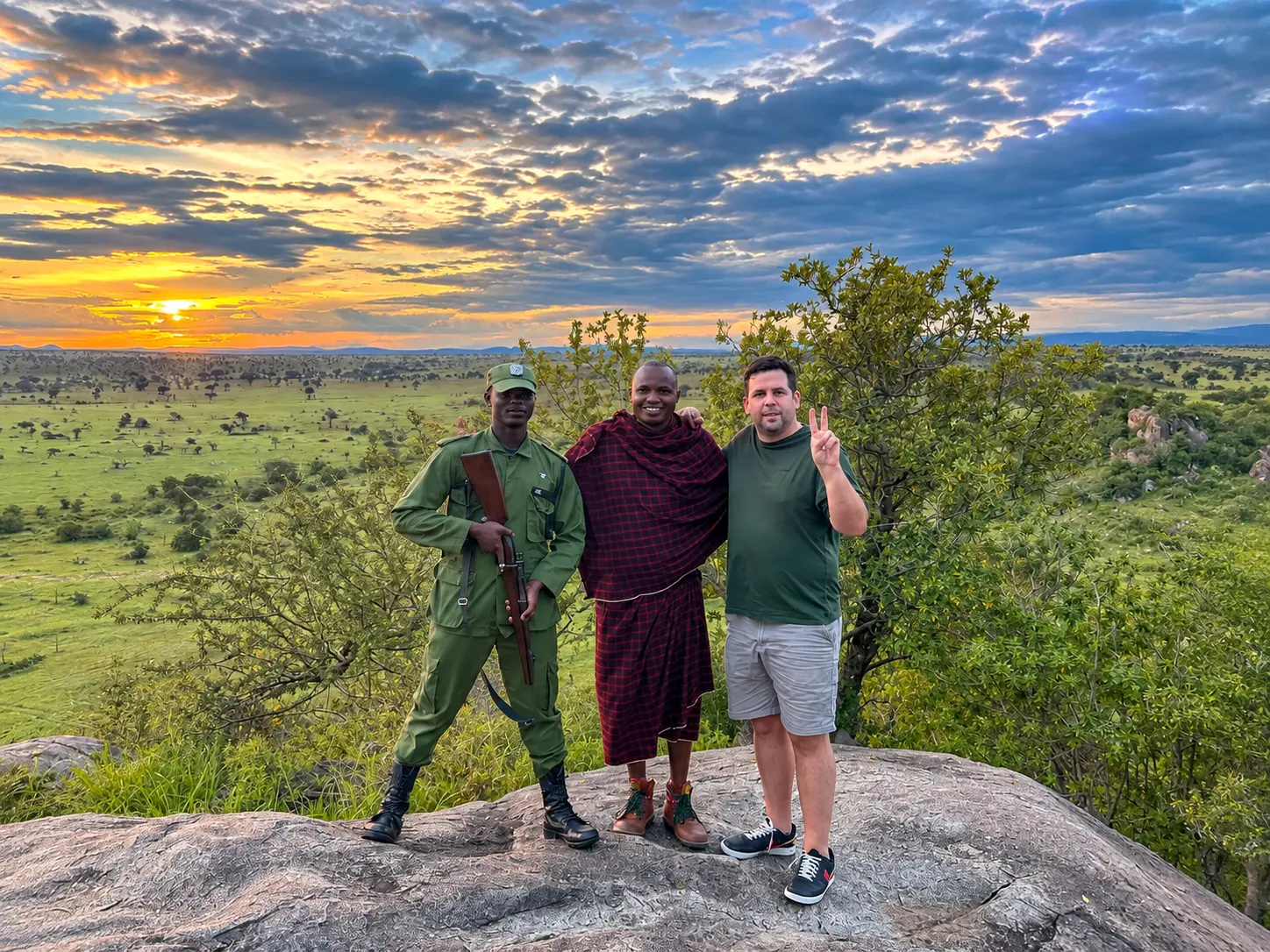
If you leave the resort on foot, the precautions increase. When we went for a walk outside the lodge, we were accompanied by an armed ranger. We simply followed his instructions and felt perfectly safe, but walking through the Serengeti is obviously very different from heading out for a walk from a normal hotel.
I thought Four Seasons handled all of this very well. We never felt unsafe or nervous about being there, but the resort also does not pretend the wildlife stops at the edge of the property. The raised walkways, nighttime escorts and armed ranger when we went out on foot all felt sensible rather than excessive.
Food and drink at Four Seasons Safari Lodge Serengeti
The food was probably the biggest surprise for me at Four Seasons Safari Lodge Serengeti. I expected the setting to be incredible and the safari experience to be good, but I wasn't quite sure what the food would be like. You are in the middle of the Serengeti, virtually everything has to be brought into the lodge, and most guests are staying on a package with meals included. It would be very easy to use all of that as an excuse to keep the menus fairly basic.
They haven't done that at all. We ate extremely well throughout our stay, and there was far more choice than I expected. The quality was also consistently good. This wasn't a case of having one excellent dinner and then fairly average food for the rest of the week. Breakfast, lunch and dinner were all good, and there was enough variety between the restaurants that we never got bored of eating at the lodge.
That is quite important here because, unlike staying at a city hotel or beach resort, you aren't going somewhere else for dinner. Once you arrive at Four Seasons Serengeti, you are essentially eating every meal on the property. The nearest alternative restaurant isn't a five-minute taxi ride away. You are quite literally in the middle of the Serengeti.
Breakfast
Breakfast is served in the main restaurant, with large windows looking across the swimming pool, watering hole and plains beyond. If you can get a table by the window, take it. The view is fantastic, particularly early in the morning when the light is softer and there can already be animals moving around outside.
It is a very good way to start the day before heading out on safari. You can have breakfast looking across the Serengeti and then, within a fairly short time, be in the back of a safari vehicle looking for lions. It is one of those times when the location of the hotel really hits you.
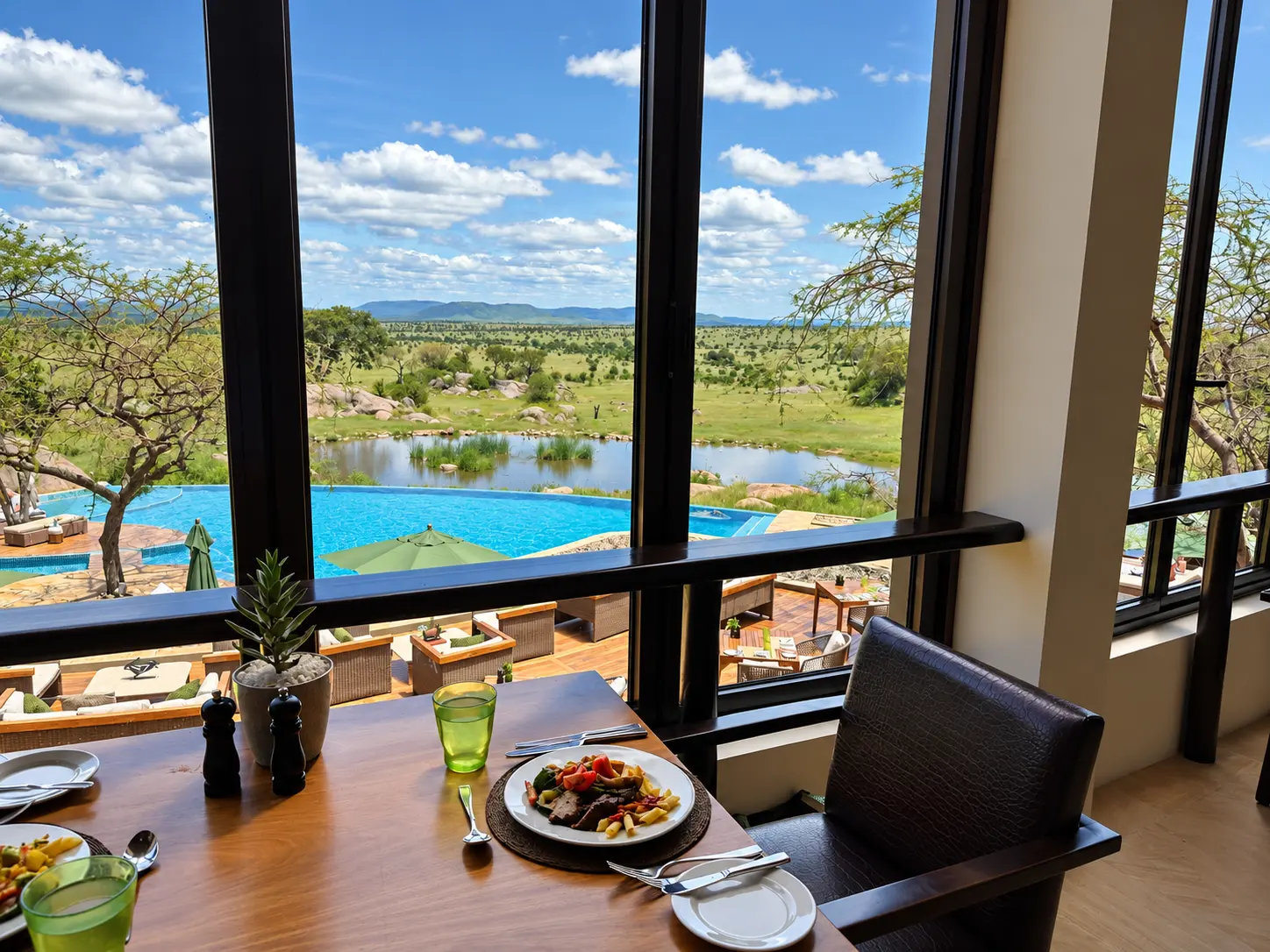
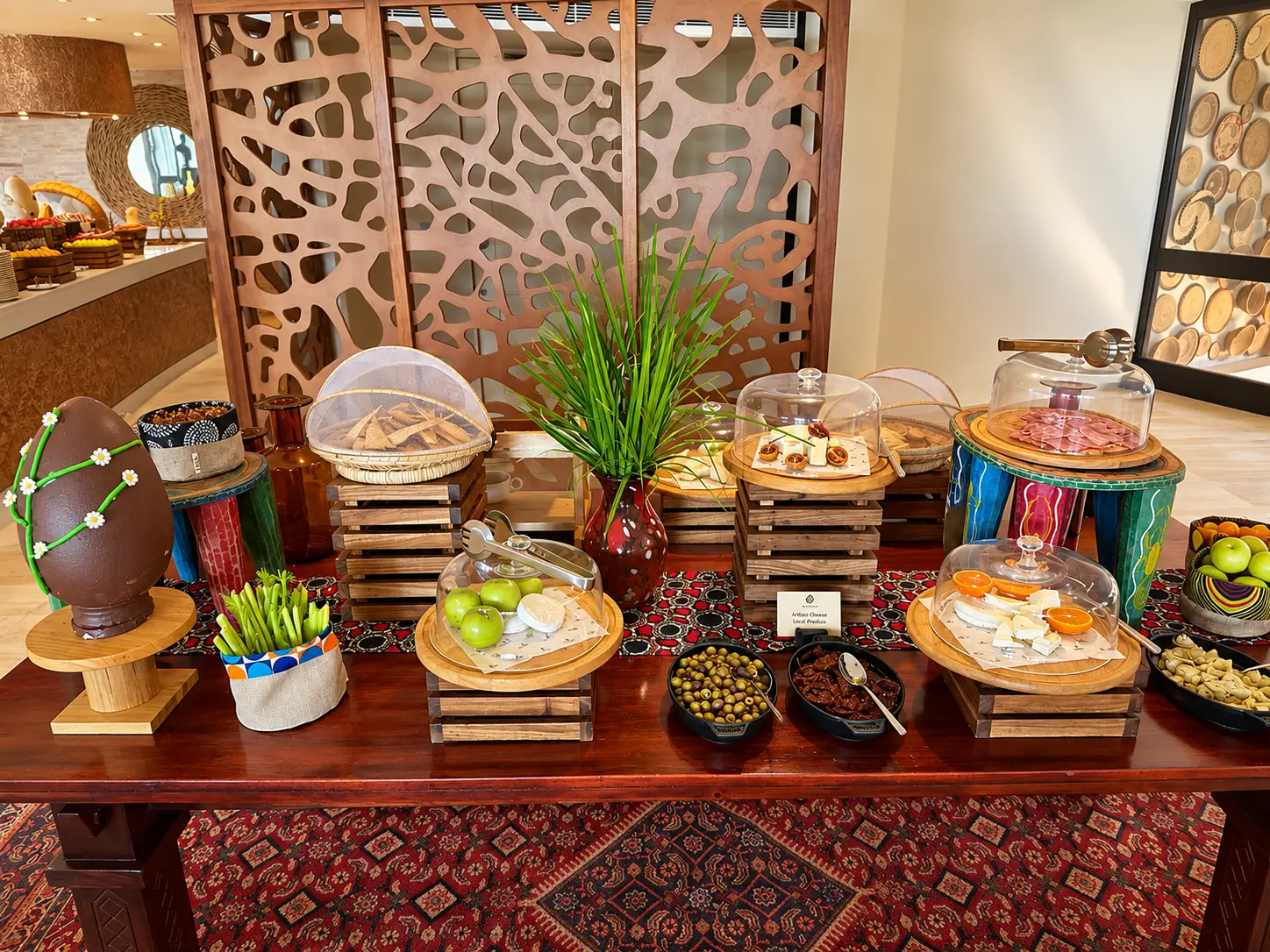
Breakfast itself is a combination of a large buffet and cooked-to-order dishes. There are pastries, breads, fruit, cheeses, cold cuts, cereals and plenty of hot options, along with eggs and other dishes made to order. It feels like a Four Seasons breakfast rather than a reduced safari-lodge version of one.
I appreciated that because safari schedules can be slightly odd. Some mornings you might be leaving very early, while on another day you might have a slower start and want to sit down for a proper breakfast. You don't necessarily want a huge meal every morning, so having plenty of lighter options as well as cooked dishes works well.
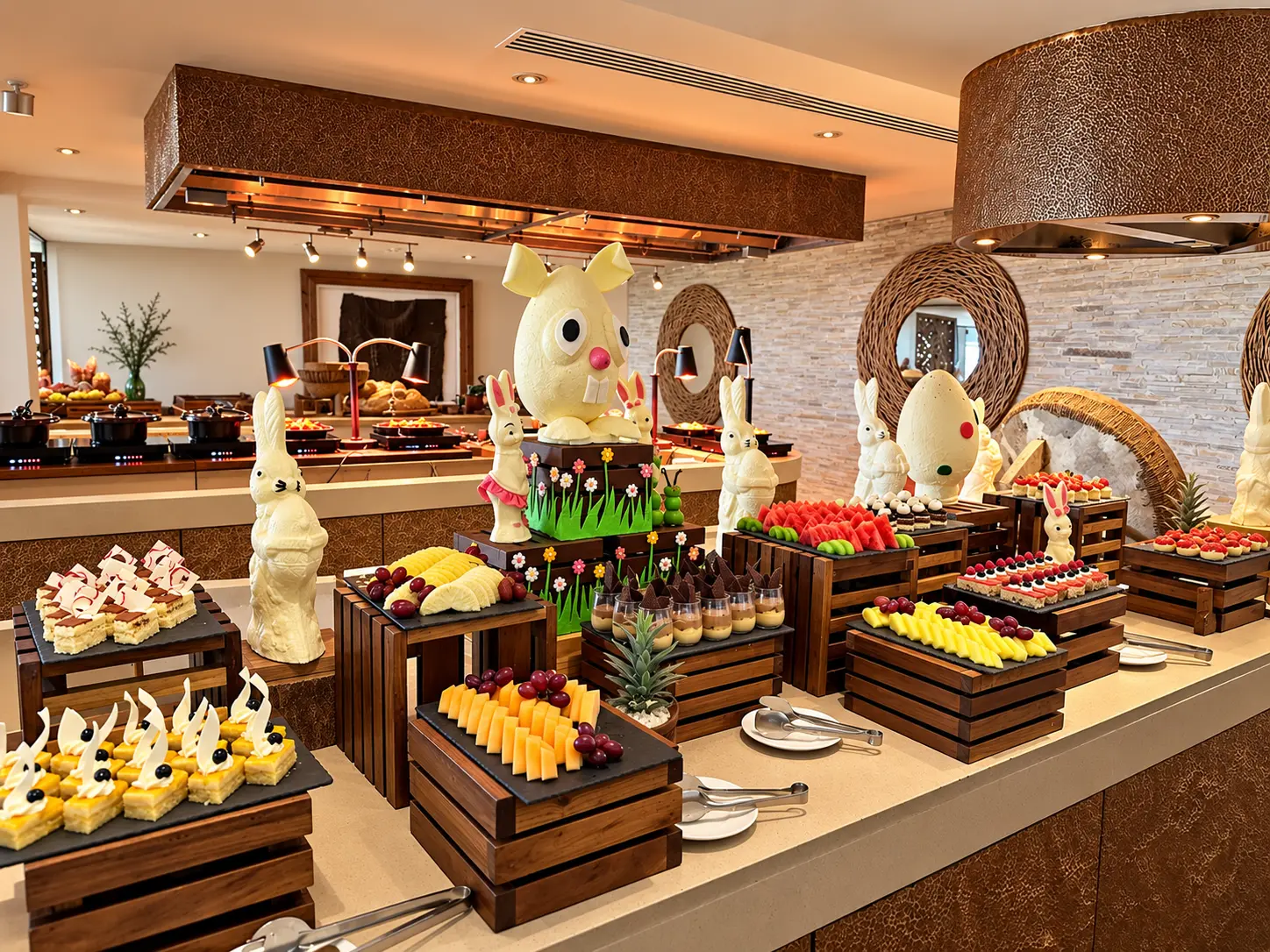
We were staying over Easter and they had gone fairly wild with the Easter display. There were enormous chocolate rabbits and eggs alongside cakes, fruit and desserts. It was quite an elaborate setup considering how remote the lodge is.
That was one of the first indications of how much effort goes into the food here. It is easy to forget when you're sitting in the restaurant that virtually everything needed to operate a hotel of this standard has to make its way into the Serengeti.
And then there is the view. Even if you're normally someone who eats breakfast quickly and gets on with the day, it is worth slowing down a little here. Sitting with a coffee while looking across the watering hole is not a bad way to spend half an hour.
Lunch at Maji
We had most of our lunches at Maji, the poolside bar and terrace, and this was probably my favorite place to eat during the day. It is much more relaxed than the main restaurant and is exactly what you want after spending several hours bouncing around in the back of a safari vehicle.
The terrace overlooks the swimming pool and watering hole, with the Serengeti stretching out behind it. There is very little between you and the horizon. You can come back from a morning game drive, have a shower, change and be sitting outside with lunch and a drink shortly afterwards.
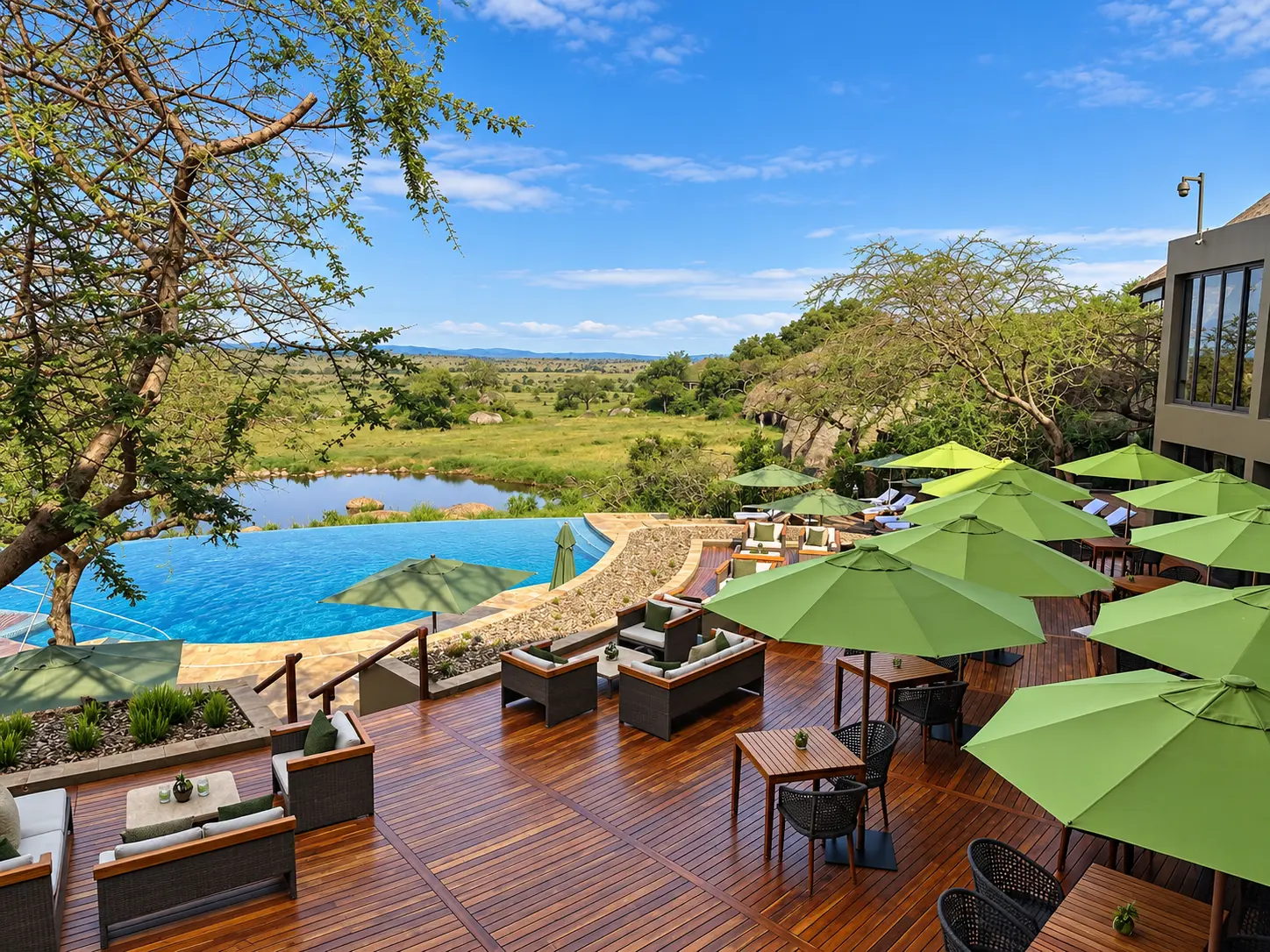
The menu is fairly relaxed, with things like burgers, pizzas and salads rather than trying to turn lunch into another big restaurant meal. I liked that. When you are staying somewhere for several days and eating three meals a day at the same hotel, you need some normal food mixed in with the more elaborate dinners.
I had the burger and fries, which was excellent. It sounds like a fairly boring thing to mention in a Four Seasons review, but sometimes after being out on safari all morning that is exactly what you want.
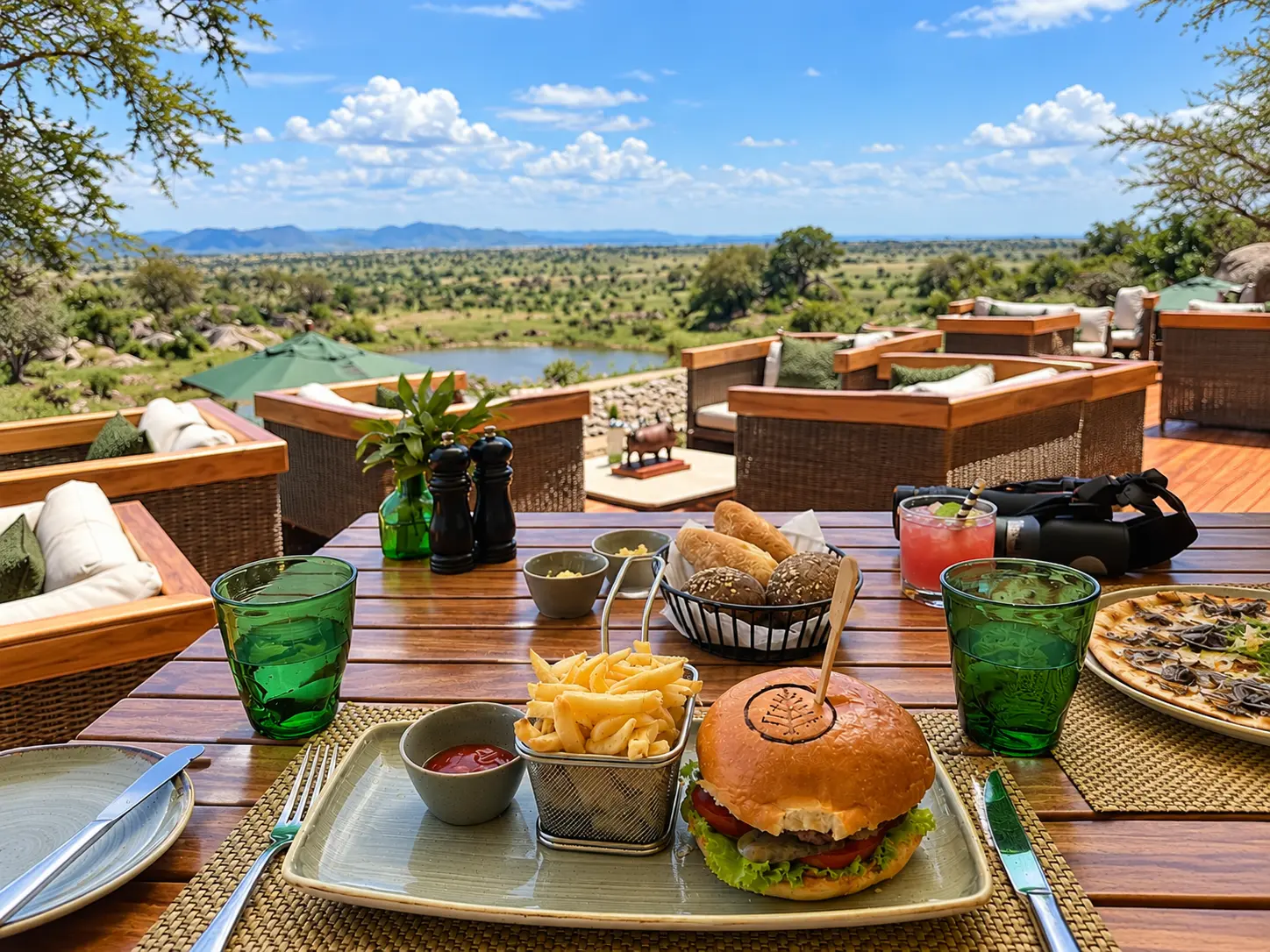
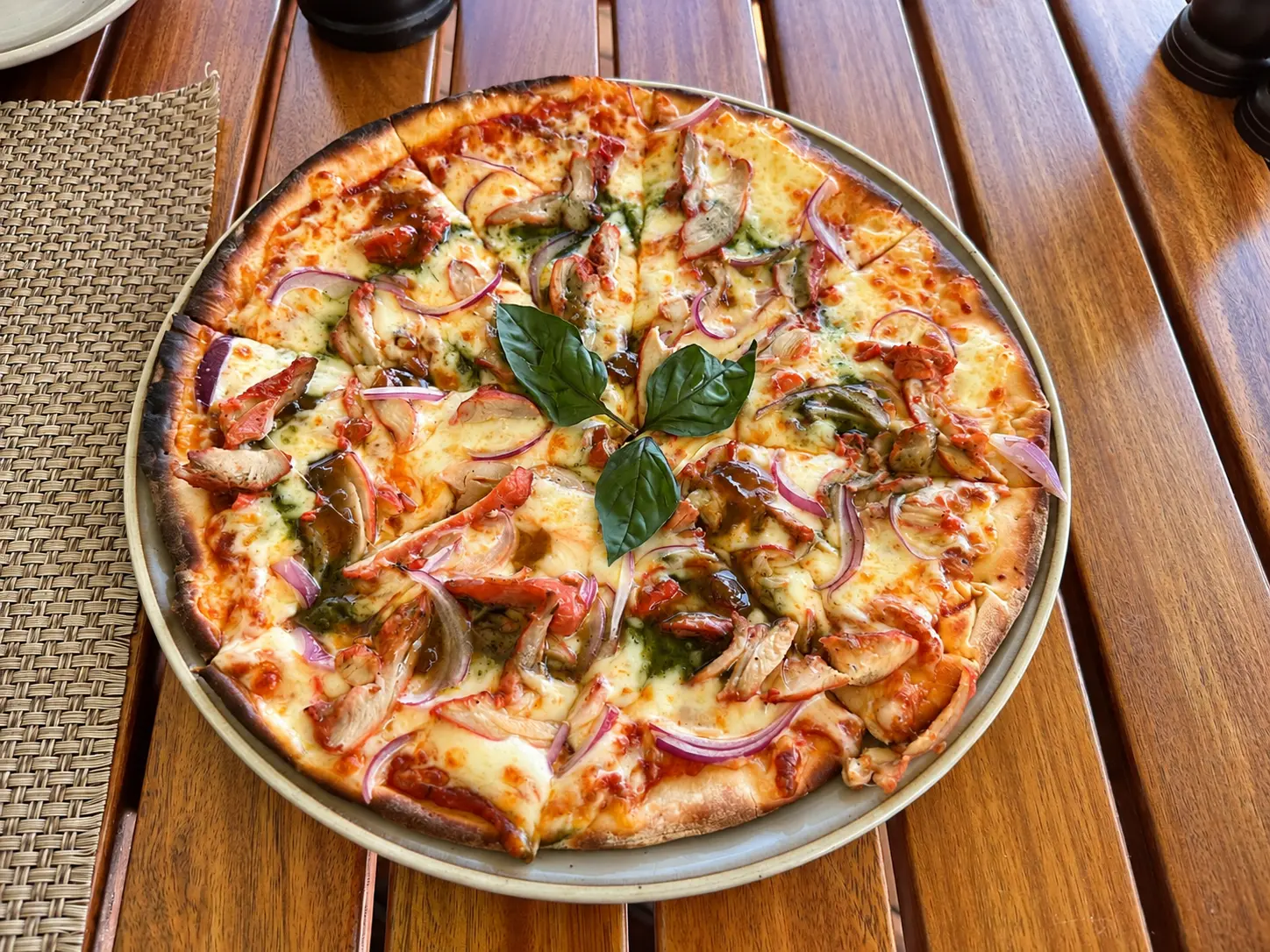
We also had pizza, which was another pleasant surprise. Again, nothing overly complicated, but very good and exactly right for lunch by the pool. One of the things Four Seasons has got right here is that they haven't fallen into the trap of making every meal an "experience." Sometimes you just want to sit outside, have a pizza and a beer and look at the Serengeti.
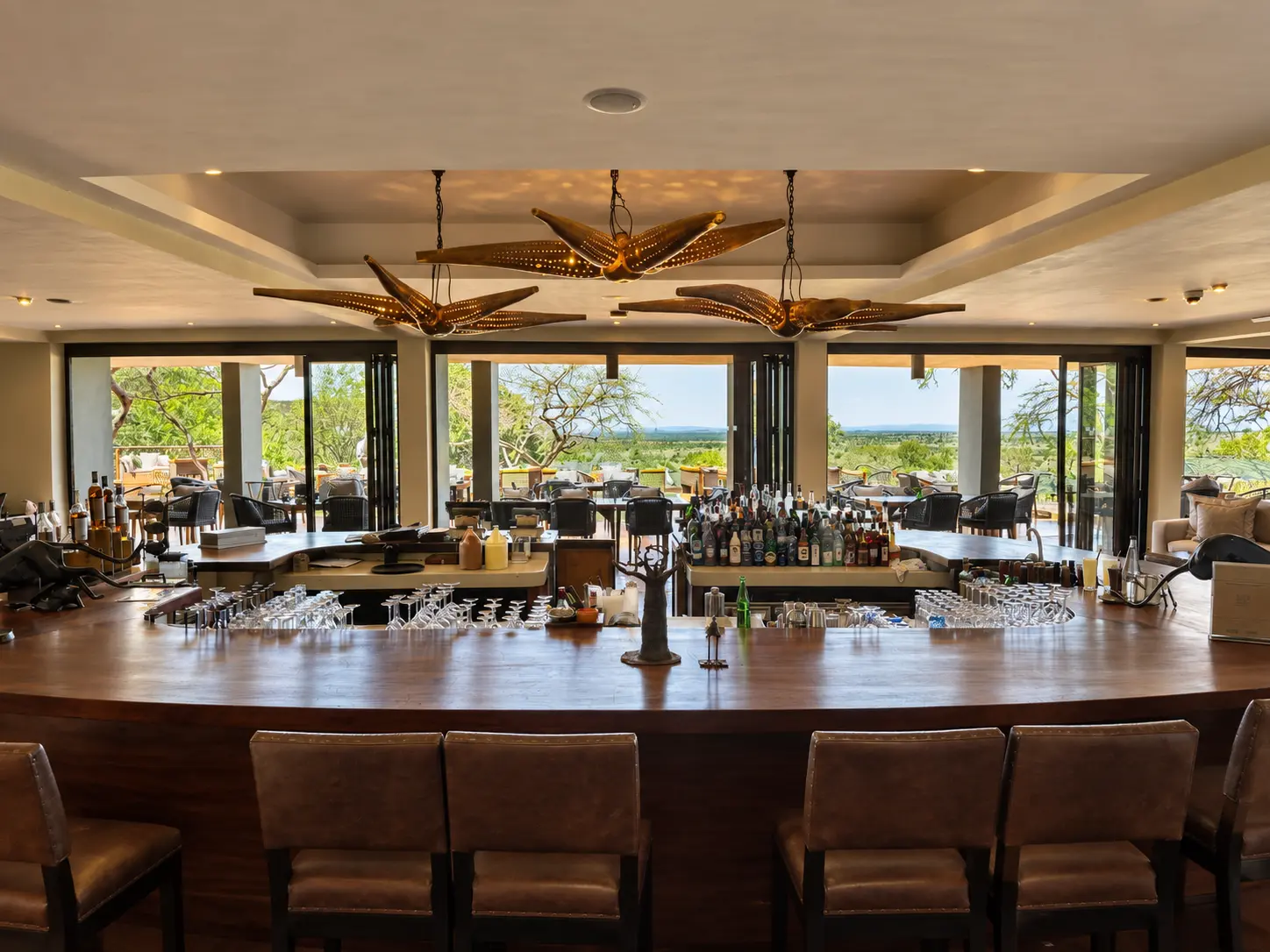
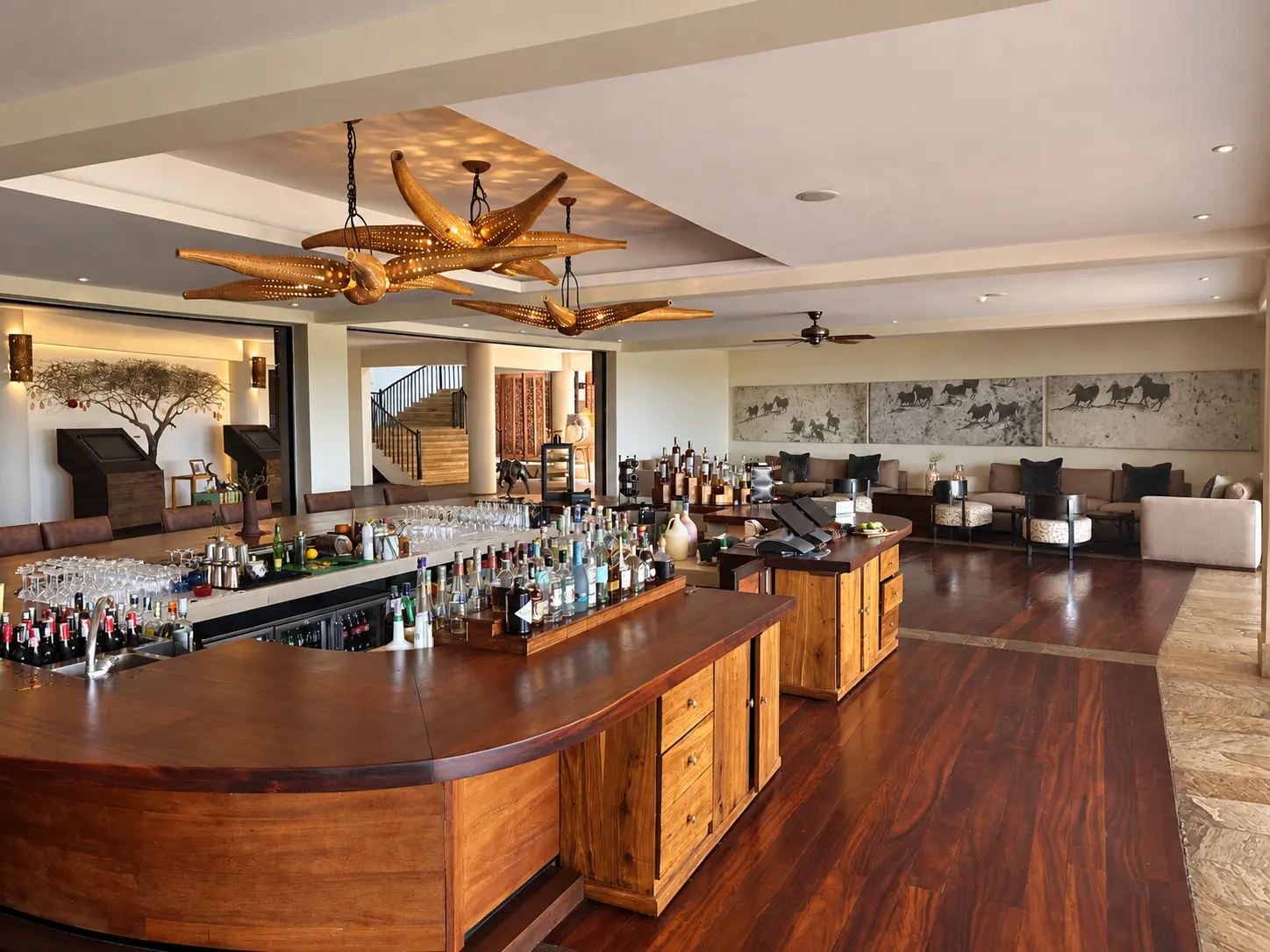
There is also a large indoor bar at Maji, so the restaurant isn't entirely dependent on the weather. The bar looks straight through towards the terrace and plains beyond, and it is a nice place to stop for a drink later in the day as well.
The pool area itself is one of the best spots at the lodge during the middle of the day. There isn't much point spending every daylight hour in a safari vehicle, particularly if you're staying for several nights. Coming back to the lodge for lunch gives you a few hours to relax before heading out again later in the afternoon.
Nuru
Dinner was where I really started to notice how much effort Four Seasons puts into the food here. There was enough variety that we didn't feel like we were working our way through the same menu every night, and the quality of the ingredients was far better than I had expected given the location.
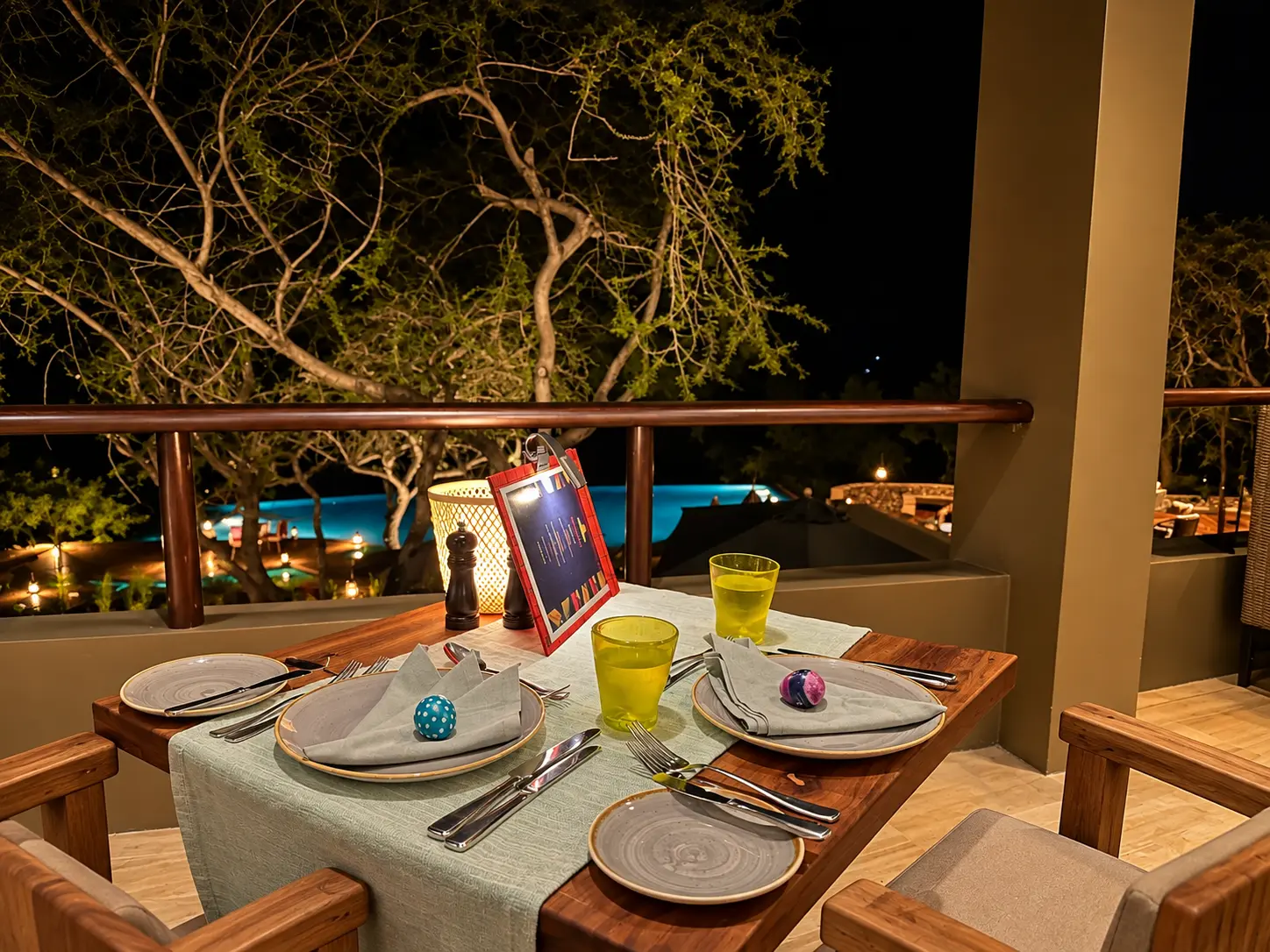
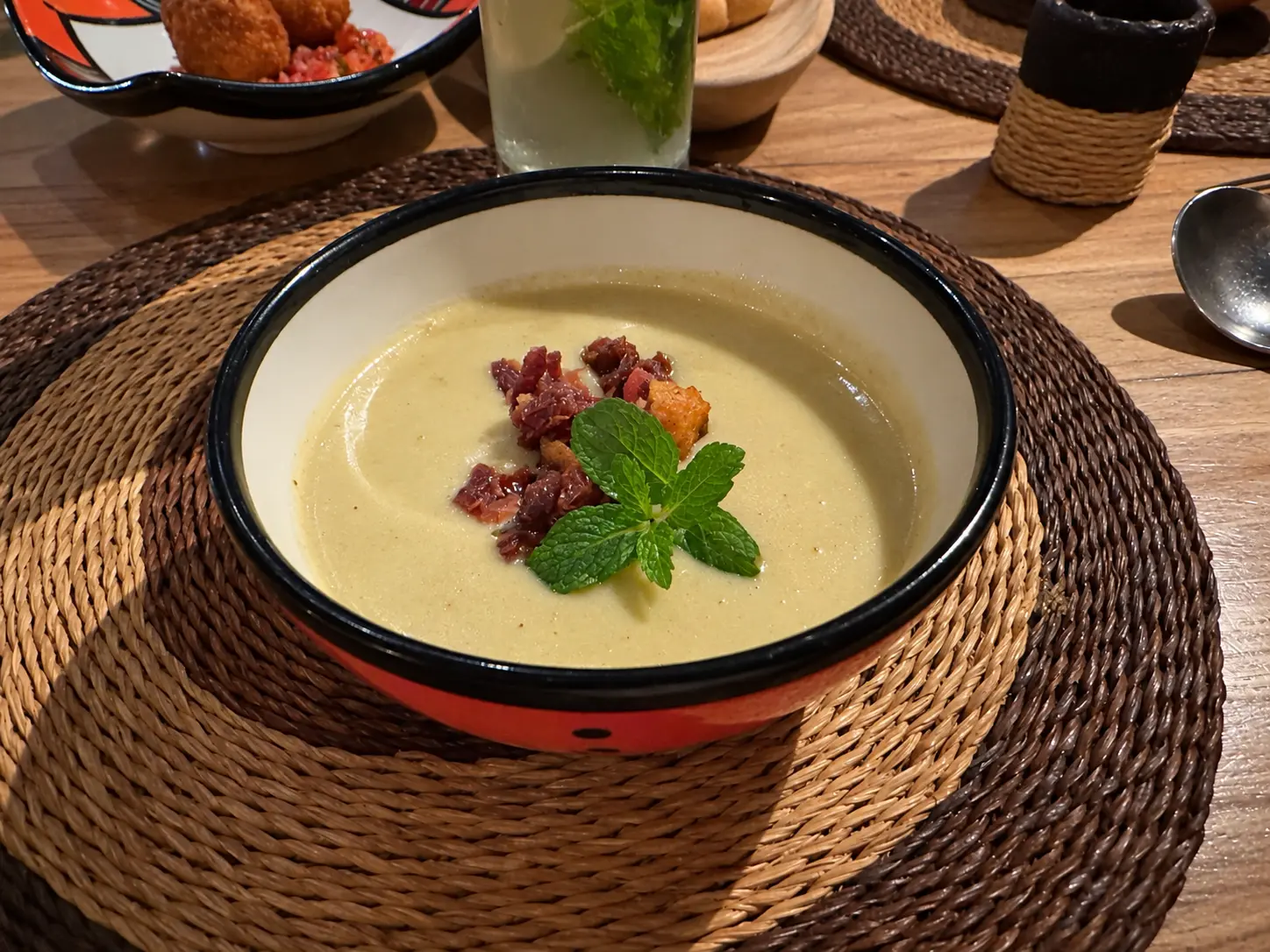
We had everything from soups and lighter dishes through to chicken, seafood and steak. Portions were good without being enormous, which I appreciated after eating breakfast and lunch at the hotel as well.
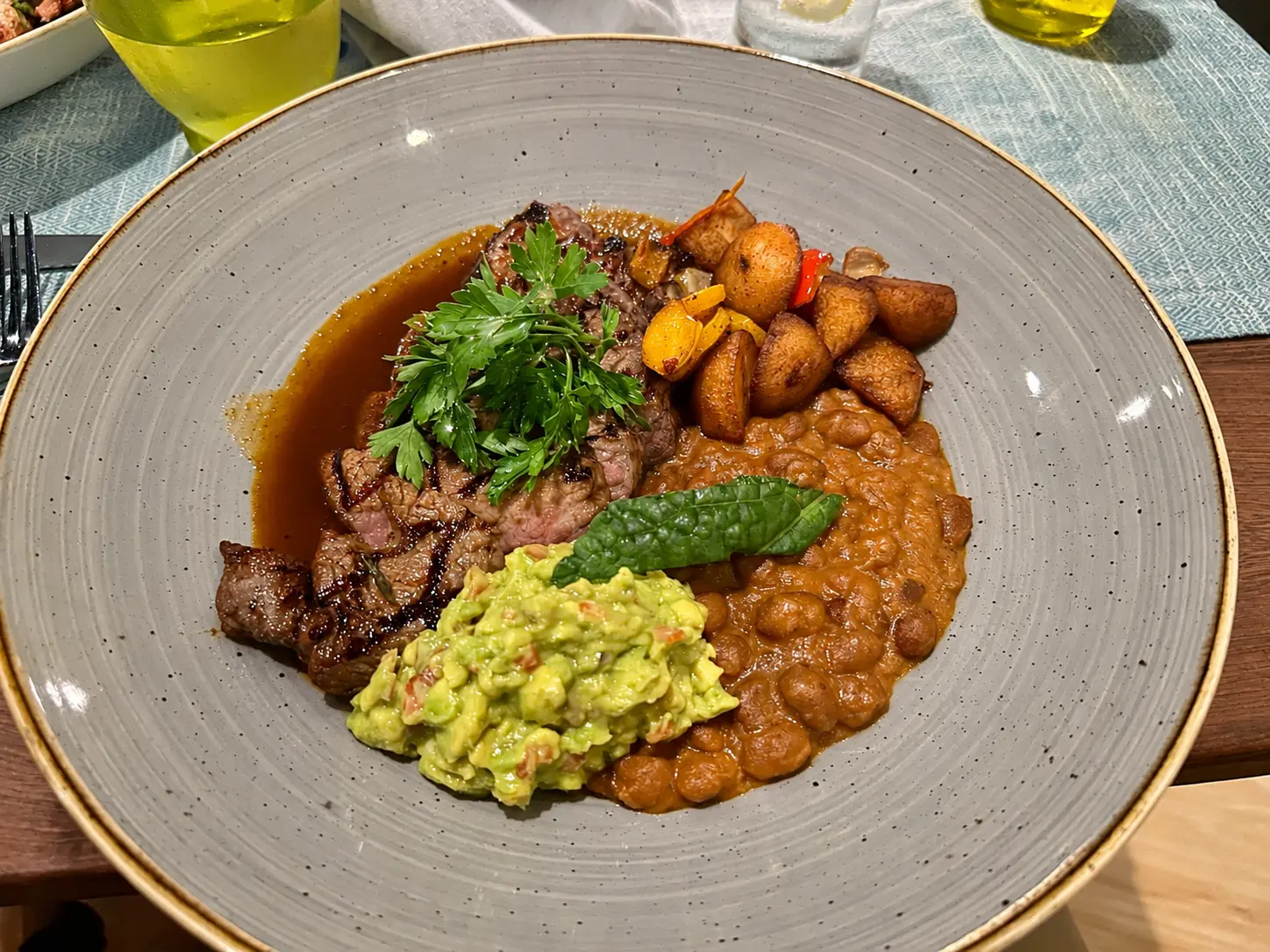
The steak was particularly good, and this is where my expectations of the all-inclusive setup were completely wrong. I had assumed the more expensive ingredients would probably be limited or carry supplements. Instead, we were eating good steaks, drinking good wine and ordering good cocktails without constantly running into restrictions.
Photo: nuru-terrace-steak-dinner-four-seasons-serengeti.png
There were plenty of lighter options as well, so you don't have to eat a huge dinner every evening. This becomes increasingly important after a few days because safari holidays can involve a surprising amount of eating. You have breakfast, snacks in the vehicle, lunch, drinks, dinner and then somehow someone is offering you more food again.
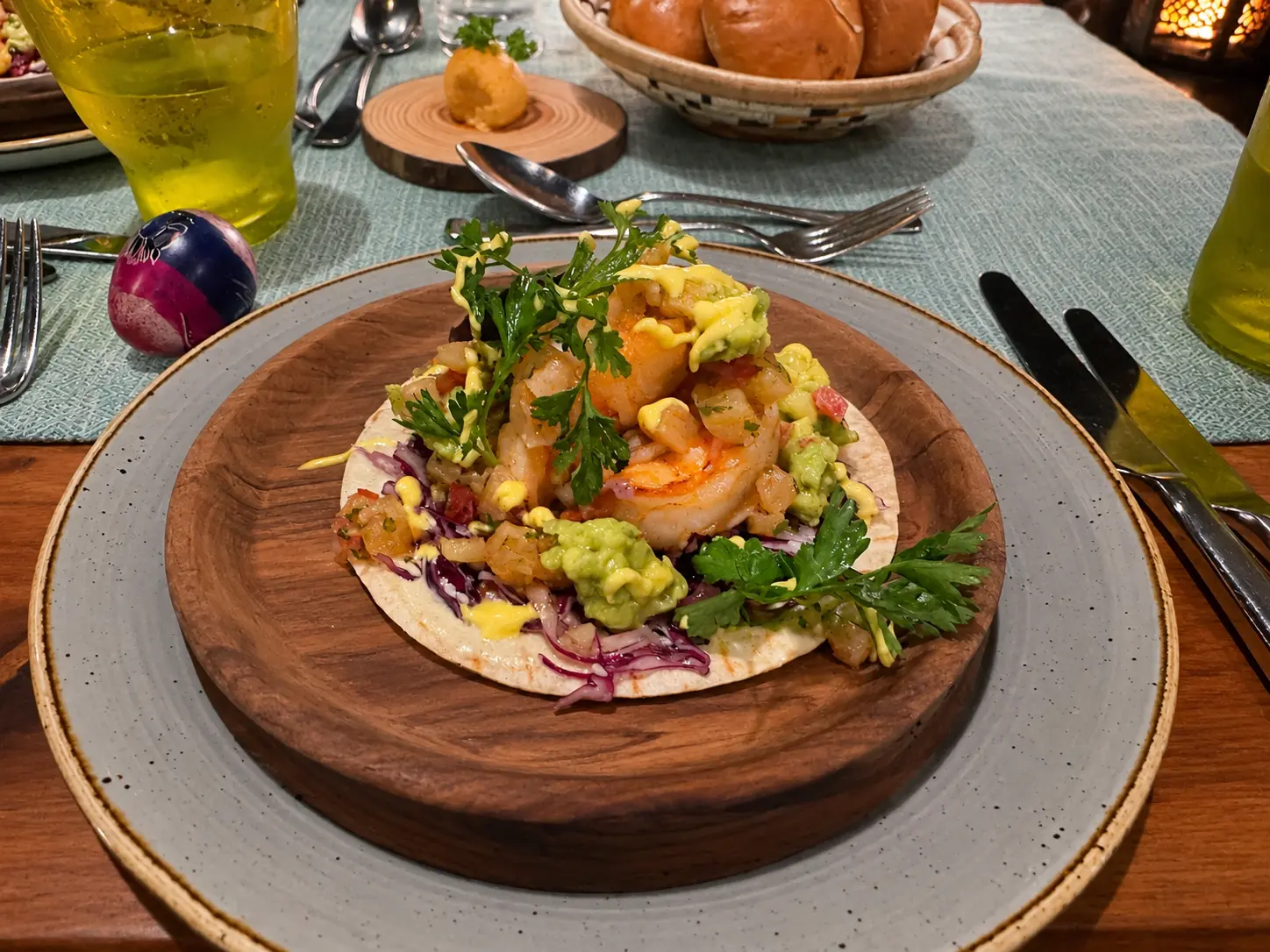
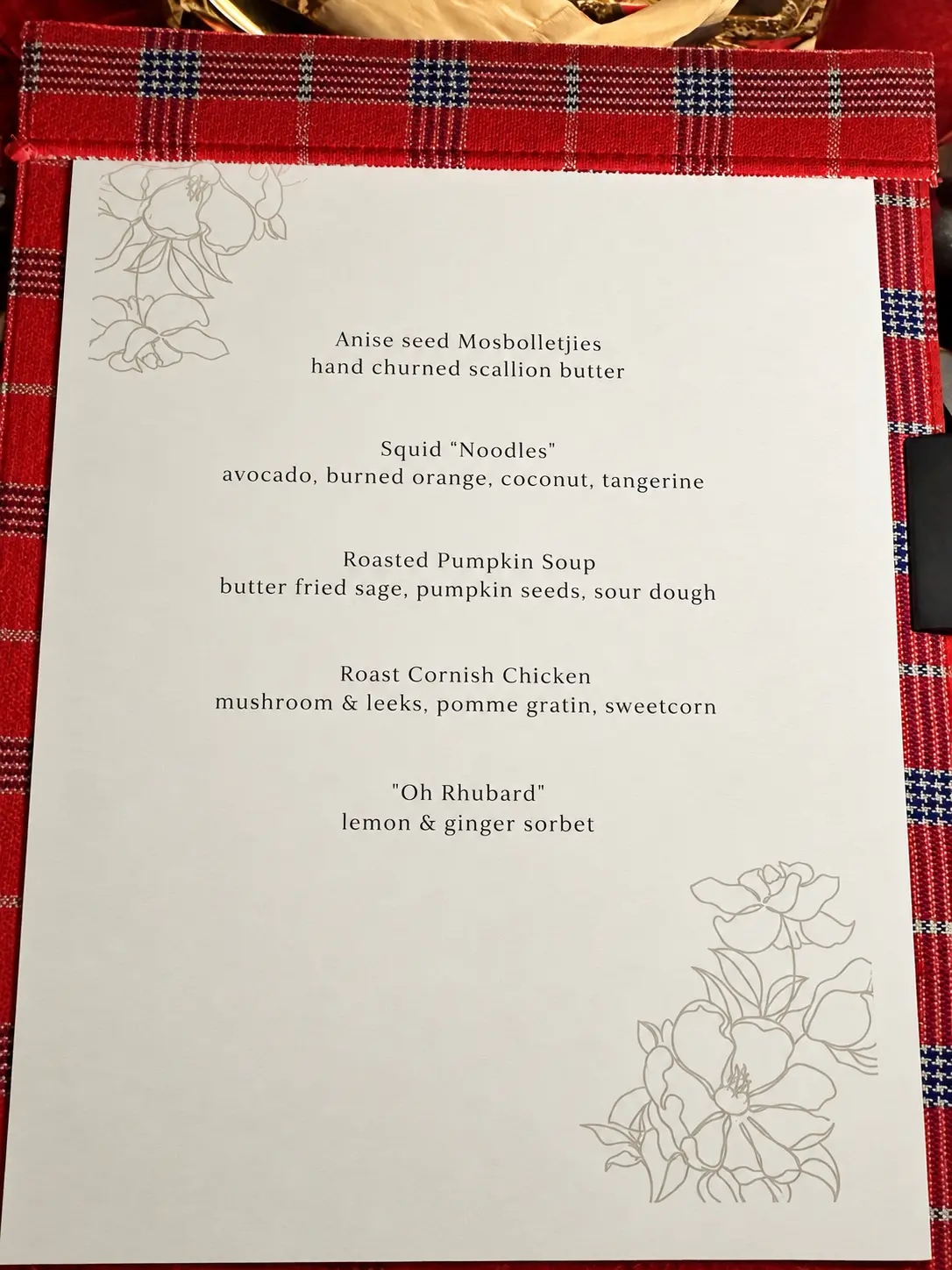
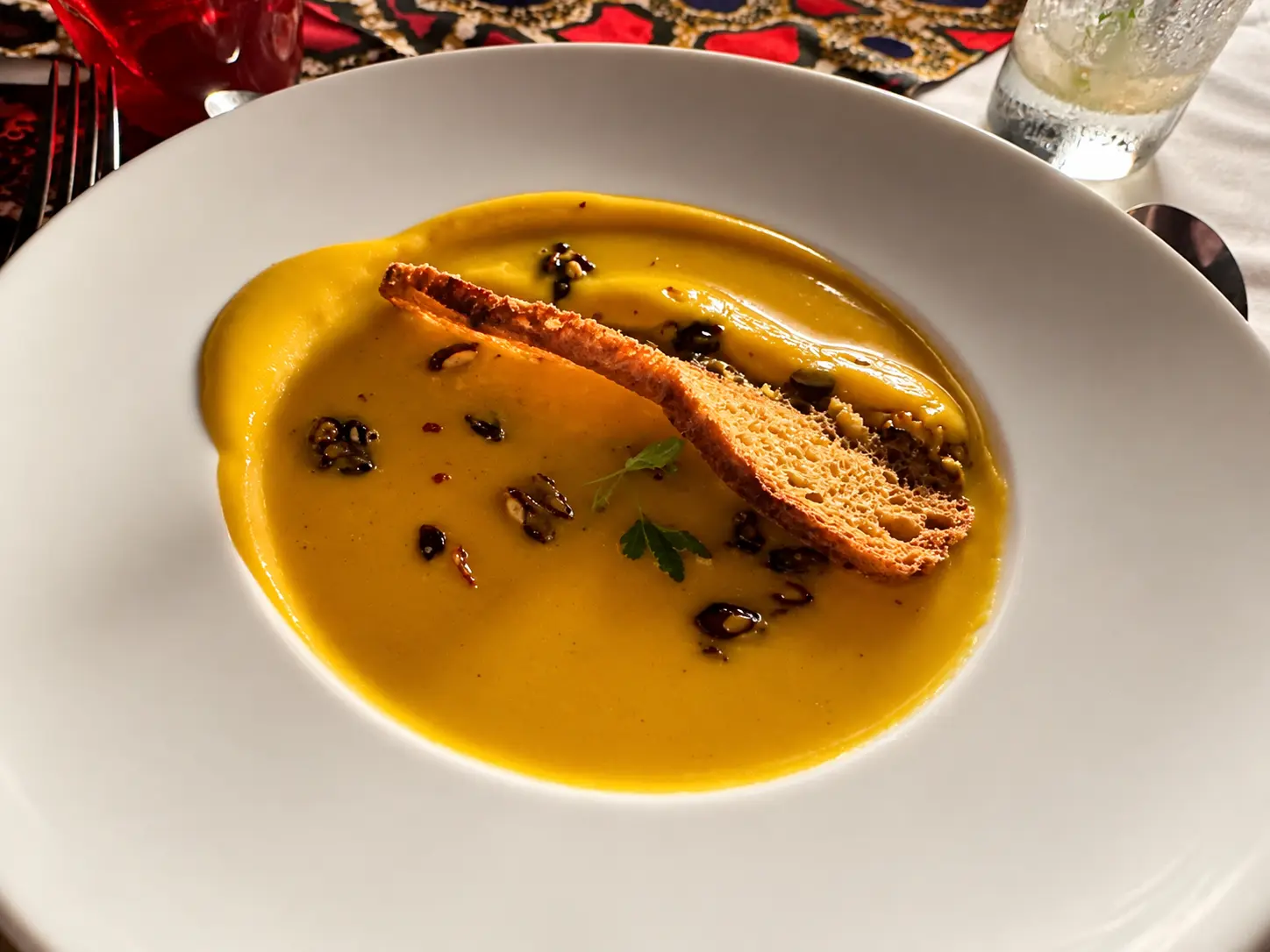
One evening we had a set menu that included squid "noodles," roasted pumpkin soup, roast Cornish chicken and rhubarb with lemon and ginger sorbet. The pumpkin soup in particular was excellent.
What impressed me was that there was clearly some thought going into changing things around. They could easily serve a large buffet every night and most guests would probably accept it because of where they are. Instead, dinner still feels like dinner at a good hotel.
And this is where the remoteness becomes relevant again. Supplying a hotel like this isn't easy. Fresh ingredients don't just arrive from a supplier ten minutes down the road. Trucks have to bring supplies into the Serengeti, so maintaining this level of choice and consistency is an operation in itself.
Boma Grill
You should also have dinner at Boma Grill at least once during your stay. This is the more traditional safari-style evening, centered around a large open fire, and it feels very different from having dinner in the main restaurant.
Tables are arranged around the outside with the fire pit in the middle. Once it gets dark, the whole area takes on a completely different atmosphere. You are outside in the Serengeti at night, so it does feel like part of the safari rather than just another restaurant inside a resort.
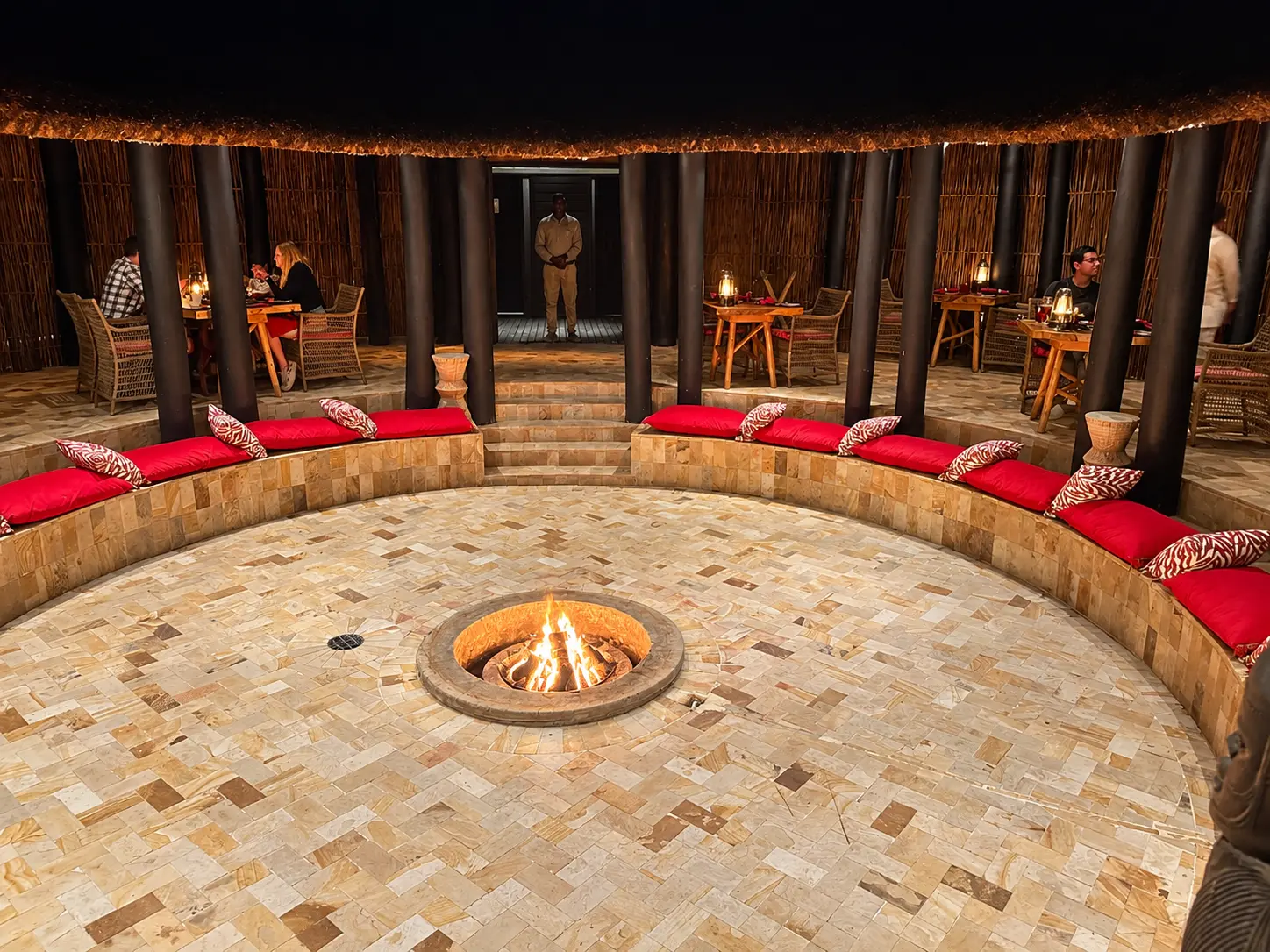
On our evening there was Maasai singing and dancing around the fire. I can sometimes find hotel cultural evenings slightly forced, particularly when they feel as though a performance has simply been dropped into the middle of dinner for tourists.
This worked better than I expected. The layout helps because everyone is already sitting around the fire and the performance takes place in the middle rather than on a stage at one end of a restaurant.
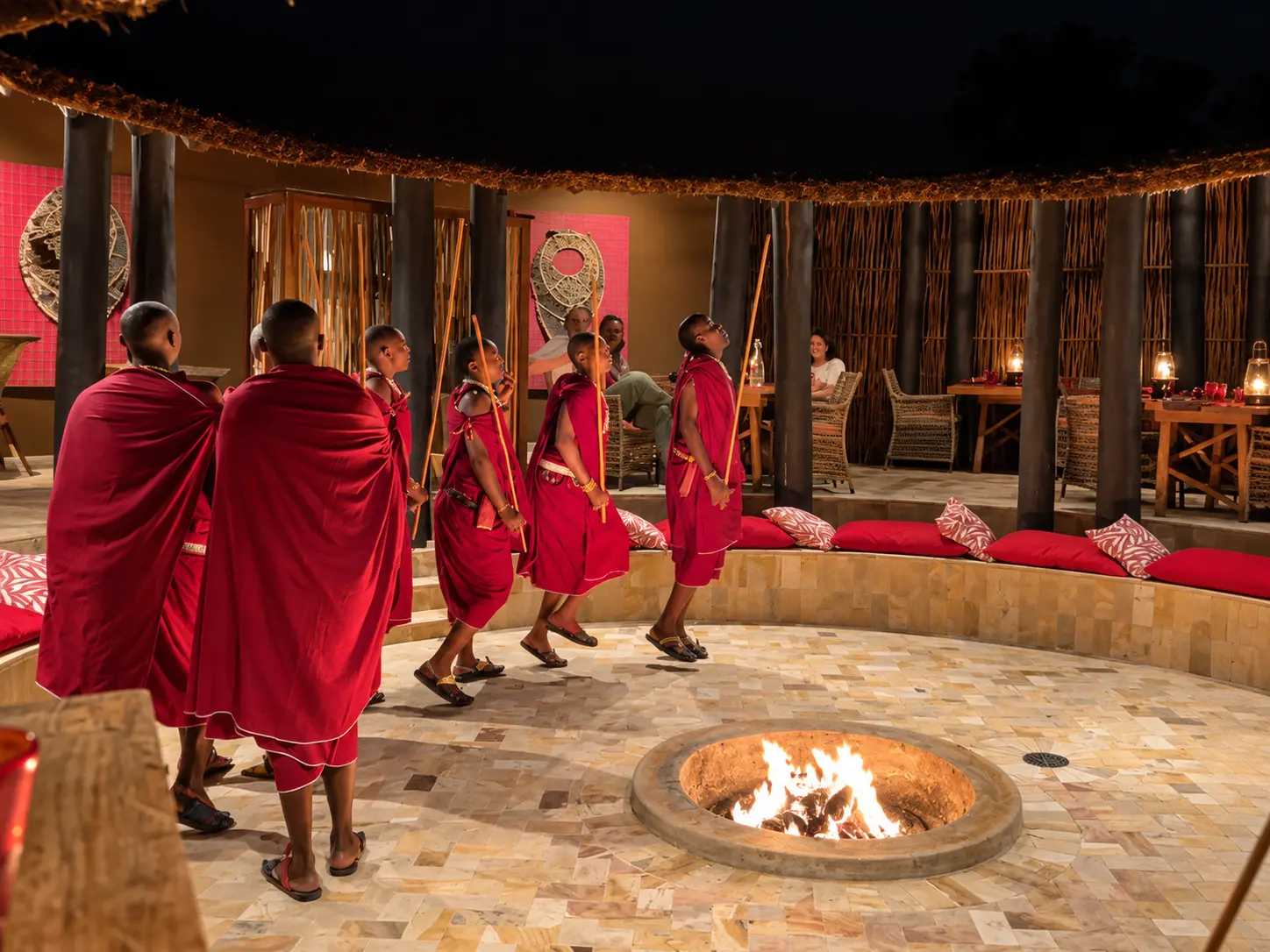
I wouldn't necessarily want to do Boma every night, but I would definitely include it once. If you're staying four or five nights, it also breaks things up and gives you a very different evening from dinner in the main restaurant.
The all-inclusive side really surprised me
This was probably the part I was most skeptical about before staying here. Whenever food and alcohol are included, there is an obvious temptation for a hotel to control costs by limiting the expensive stuff. Given the location, Four Seasons could probably get away with it more easily here than at almost any other resort.
But they don't seem to have taken that approach.
There was a good selection of wines, sparkling wine, spirits, beers and cocktails. There are obviously bottles outside the included selection if you want something particularly expensive, but I never felt the need to start ordering outside what was included.
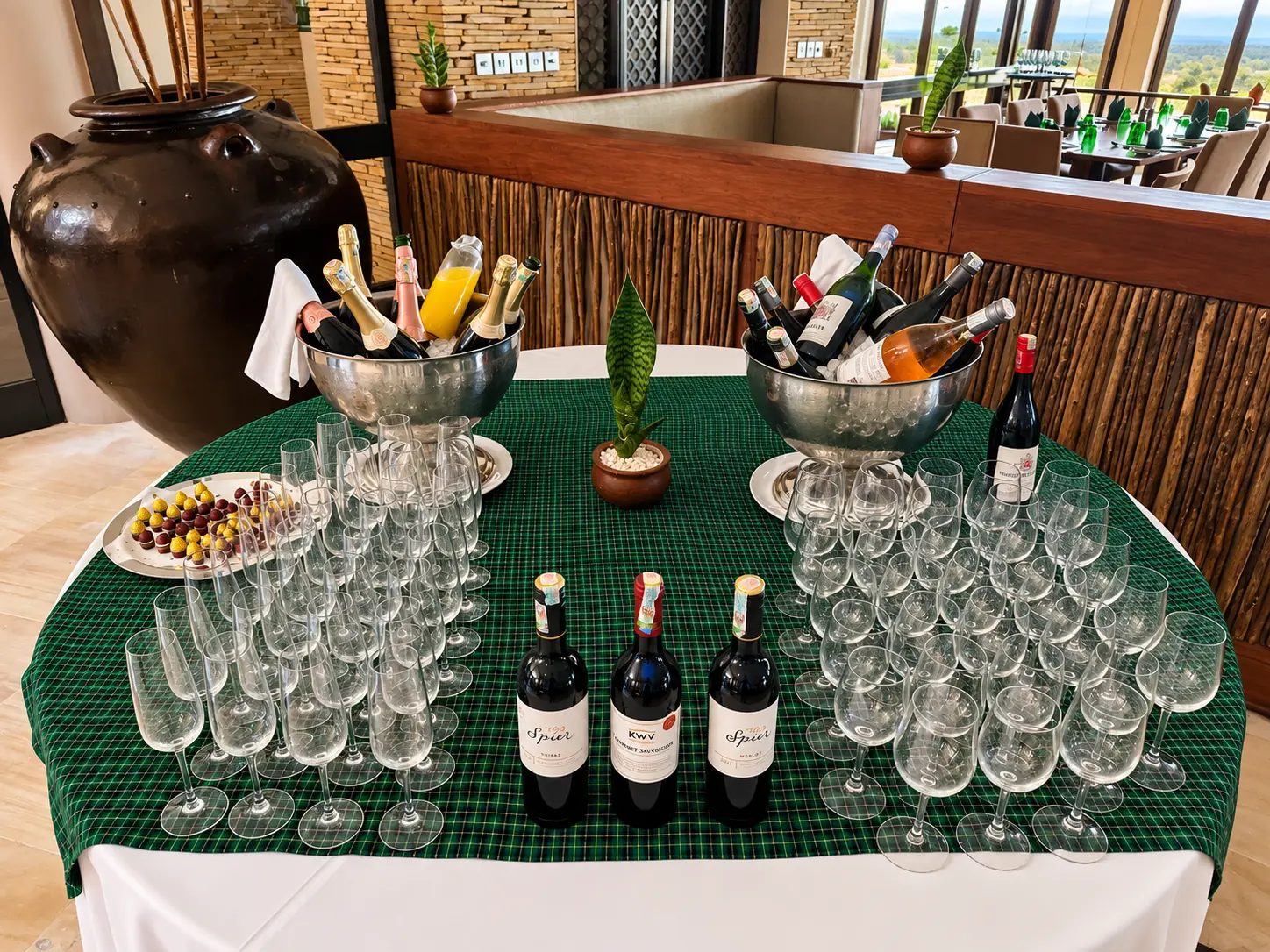
The cocktails were good too, which is often where an all-inclusive setup falls down. I have stayed at plenty of hotels where the room and food are excellent and then the included wine is something you would never order yourself and the cocktails taste like they came out of a machine.
That wasn't the case here. We had excellent cocktails and wines throughout the stay, and it never felt as though we were being pushed towards a deliberately inferior "included" selection.
For me, that is one of the biggest positives about the lodge. Four Seasons knows that once you arrive, you are a captive audience. There is no restaurant next door competing for your business and nowhere else to go for a drink. They could cut costs fairly aggressively and guests would have very little choice.
Instead, they seem to have gone in the opposite direction.
Overall
I went into Four Seasons Serengeti expecting the food to be one of the compromises that comes with staying somewhere this remote. I was wrong. It ended up being one of the things I liked most about the hotel.
The biggest thing for me was the variety. You can start the day with a proper Four Seasons breakfast overlooking the watering hole, spend the morning on safari, come back for a burger or pizza beside the pool and then have steak and a good bottle of wine for dinner. The following evening you can eat outside around the fire at Boma.
None of it felt like food designed around the fact that guests have already paid for it.
That is an important distinction. There are plenty of all-inclusive hotels where you become very aware after a day or two that the menus have been designed around keeping the cost per guest down. I didn't get that feeling here at all.
If anything, the food made me appreciate the logistics of Four Seasons Serengeti more. It is easy to look around at the pool, villas and restaurants and forget where you are. Then you drive for 45 minutes back to the airstrip, board a small plane in the middle of the Serengeti and remember just how isolated the lodge really is.
Keeping a hotel supplied out here is difficult. Keeping it supplied well enough that guests can sit down to a good steak, order a decent cocktail and barely think about the logistics behind it is quite an achievement.
For a safari lodge where you will eat virtually every meal on property, Four Seasons Serengeti does this exceptionally well.
The Pool
The main pool at Four Seasons Safari Lodge Serengeti is one of the best places to spend the few hours between game drives. It is a decent-sized infinity pool, with plenty of loungers, but the pool itself is really only half the story. The reason to come down here is the view.
The pool looks directly across the resort’s waterhole and then out over the Serengeti. There is virtually nothing blocking the view, and from the right spot it feels as though the infinity edge runs straight into the plains. Given how much of a safari trip is spent in a vehicle, it is quite nice being able to come back to the hotel, sit beside the pool and still feel like you are in the middle of the Serengeti.
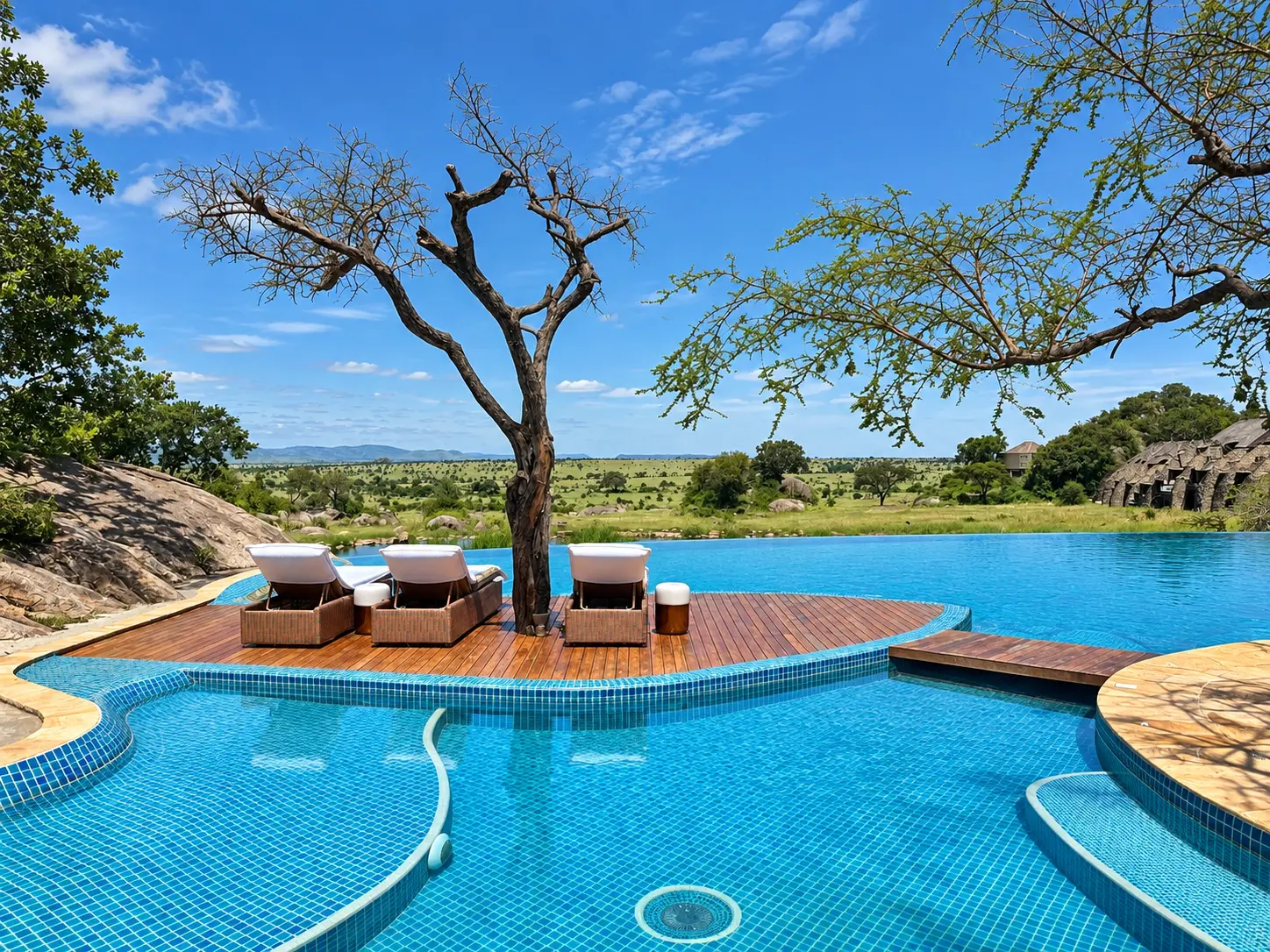
There are several different areas around the pool with loungers, and we never had any trouble finding somewhere to sit. You can also have lunch and drinks around here, which worked well for us between morning and afternoon game drives. There was really no reason to head back to the villa unless we wanted to.
The one thing I would point out is that the pool was cold. And I mean cold enough that you notice it immediately when you get in. Obviously this will depend on the weather and time of year, but during our stay it was much more of a quick swim than somewhere I wanted to spend an hour floating around.
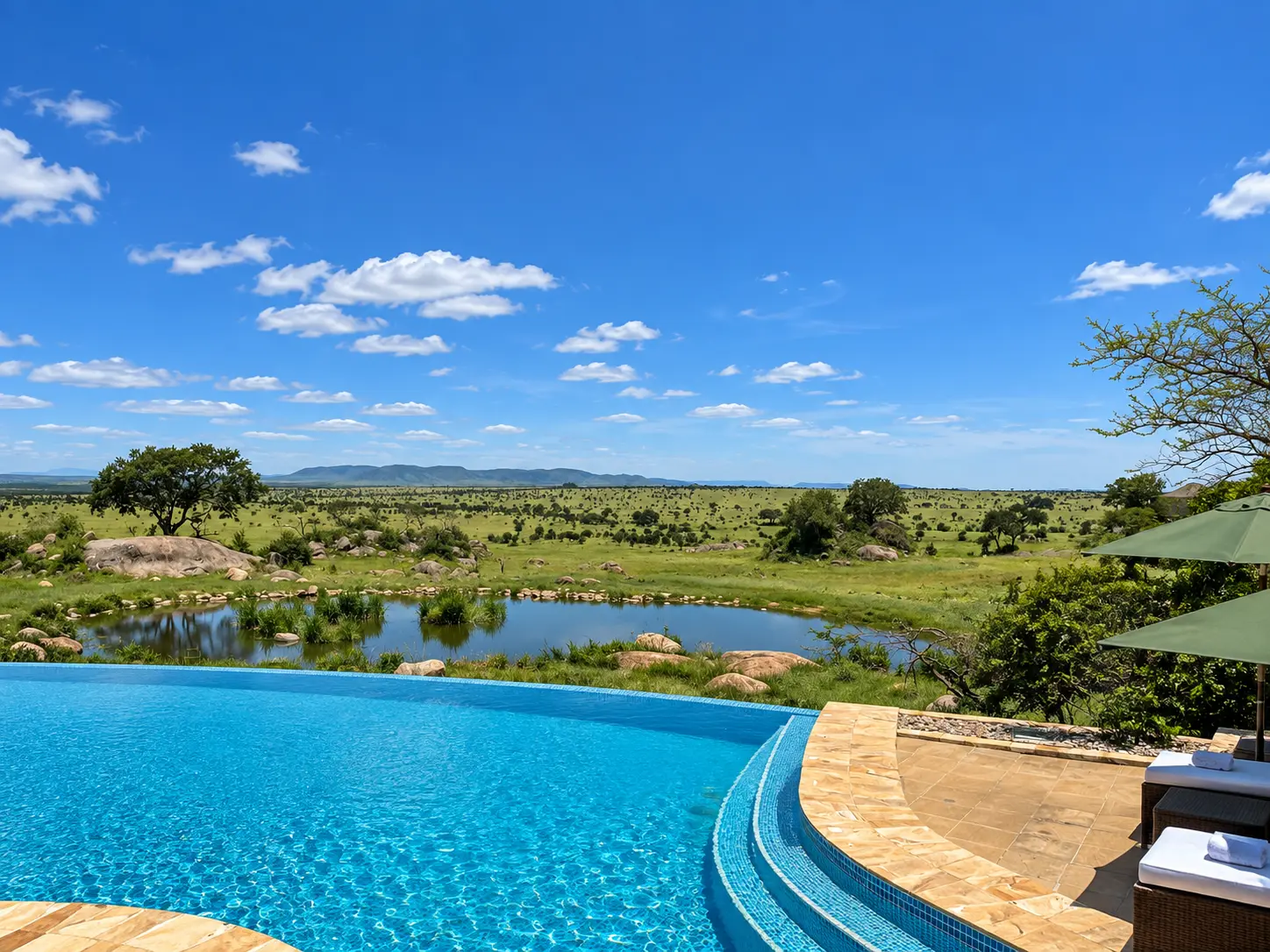
The view, however, is excellent. The waterhole sits immediately below the pool and attracts wildlife, so you do not necessarily have to be on a game drive to see animals. Even when the waterhole is quiet, you are looking across an enormous stretch of open Serengeti with almost nothing built in front of you. It is a pretty impressive backdrop for a hotel swimming pool.
Four Seasons has also thought about the boring but useful stuff. Beside the pool there is a self-service station with drinking water, sunscreen and insect repellent, so you do not need to remember to bring everything down from the room.
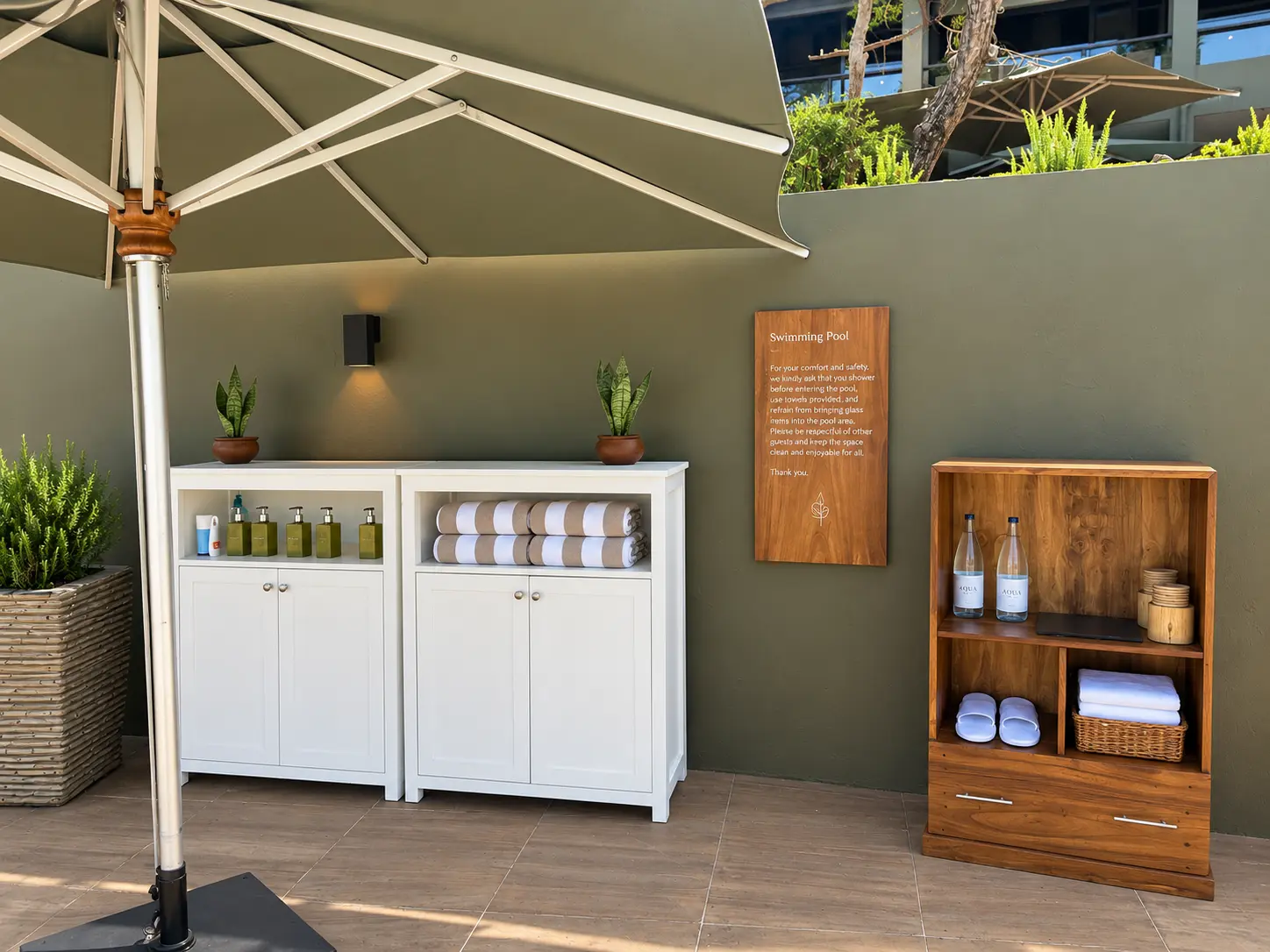
I probably wouldn't choose Four Seasons Serengeti because of its swimming pool, but once you are here it is a very good part of the hotel. Safari days tend to start early, and there can be several hours of downtime before heading back out in the afternoon. This is where I would spend them. Have lunch, order a drink, sit by the pool and keep an eye on the waterhole. You are still watching the Serengeti, just without being bounced around in the back of a safari vehicle.
The Watering Hole
One of the big advantages of Four Seasons Safari Lodge Serengeti is that you do not necessarily need to leave the hotel to see wildlife. There is a large watering hole directly in front of the lodge, and animals come to you.
We saw elephants here several times during our stay, but the best sighting was a huge herd arriving together to drink. There were adults, younger elephants and tiny calves all making their way down to the water. You could sit at the lodge and watch the whole thing unfold without getting into a safari vehicle.
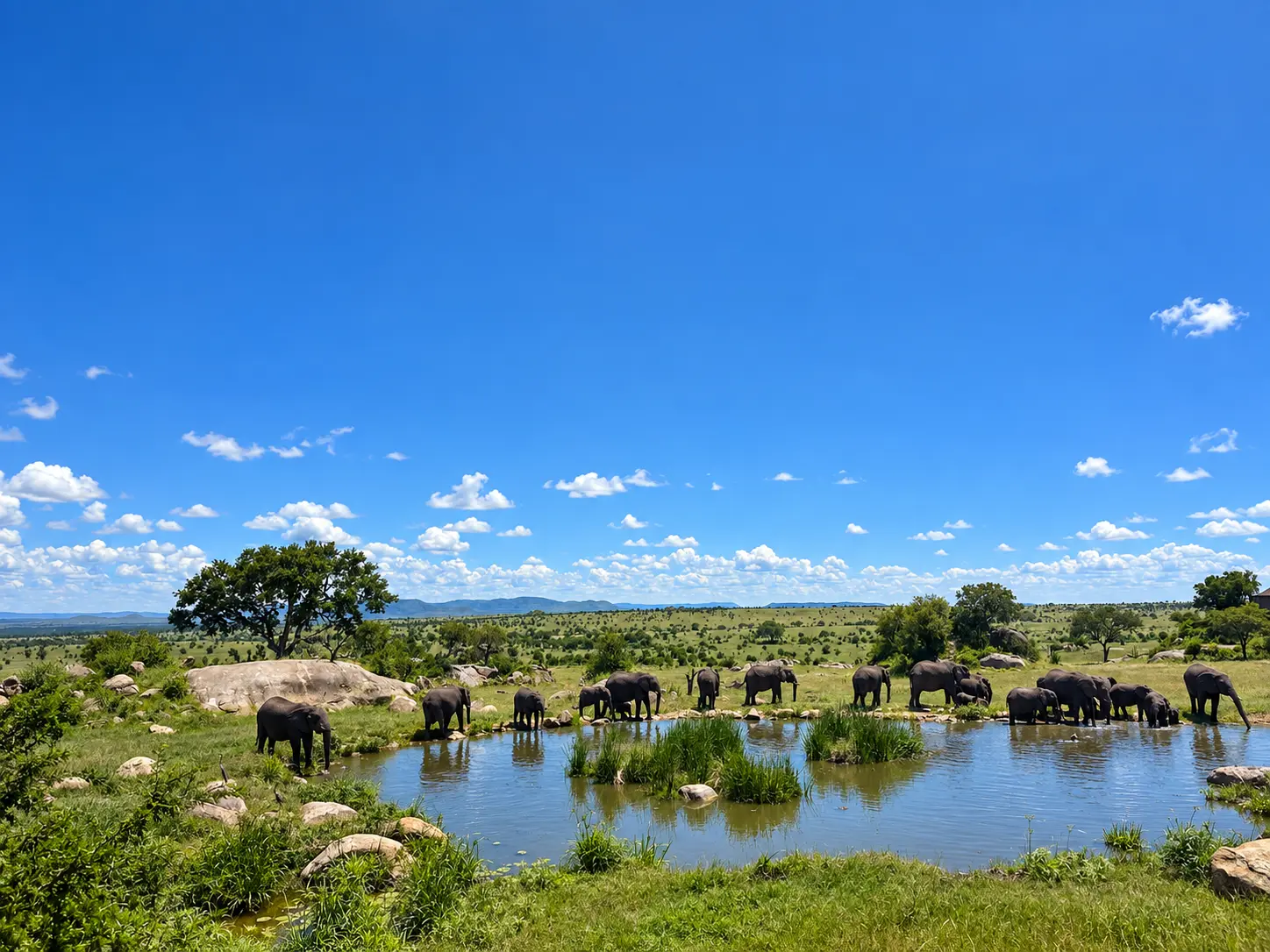
The location of the watering hole is particularly good because you can see it from several parts of the hotel, including the main pool area. This isn't a distant view where you need binoculars to work out what is going on. When the elephants come in, they can be remarkably close. The watering house is right next to the pool and Maji Bar and Terrace.
That also makes downtime at the hotel much more interesting. On safari there is usually a gap between the morning and afternoon game drives, and normally that means lunch followed by a few hours doing very little. Here, it is worth keeping an eye on the watering hole because you never really know what is going to turn up.

The calves were particularly entertaining to watch. We had adults drinking at the water's edge while some of the smaller elephants stayed tucked between them. At one point we had a tiny calf directly opposite us, with the edge of the swimming pool in the foreground. It gives you a pretty good idea of just how close the watering hole is to the lodge.
For me, this is one of the best features of Four Seasons Serengeti. Of course you are still going to spend plenty of time out on game drives, and that is where you will see the greatest variety of wildlife. But there is something very nice about coming back, having lunch or sitting beside the pool and continuing to watch animals from the hotel. You never really switch off from the fact that you are in the middle of the Serengeti.
The Discovery Centre
One of the more interesting parts of Four Seasons Safari Lodge Serengeti is the Discovery Centre. I was expecting something fairly small, perhaps a few maps and books about the Serengeti, but it is much more extensive than that. It is almost a small natural history museum inside the lodge, and we ended up spending far more time in here than I expected.
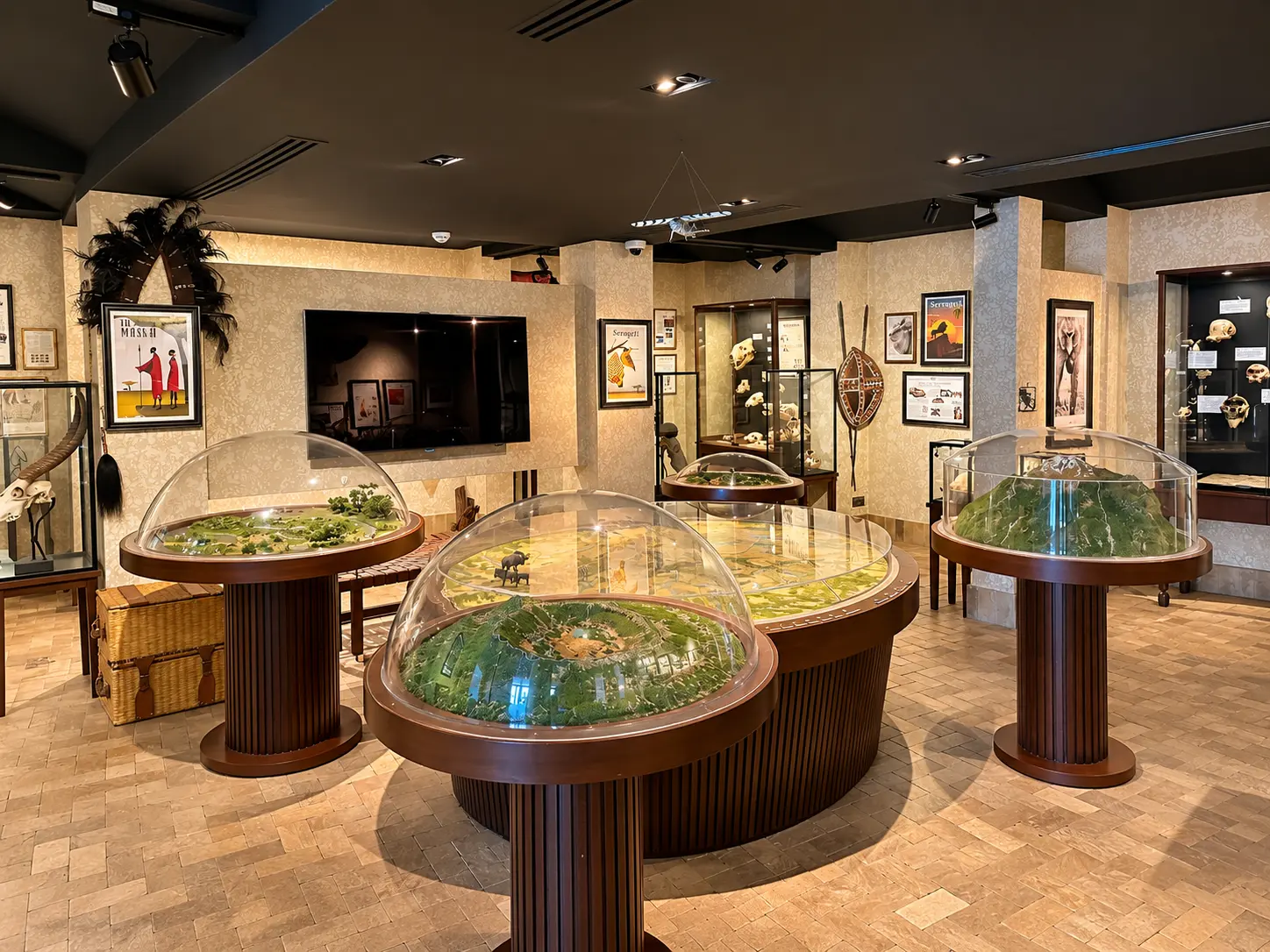
There are displays covering the Serengeti ecosystem, the Great Migration and the different animals found throughout the national park. There are maps showing how everything fits together, along with photographs and information about the landscape and wildlife. I found it particularly useful after we had already been out exploring because suddenly you recognize the animals and places being discussed rather than just reading about them in the abstract.
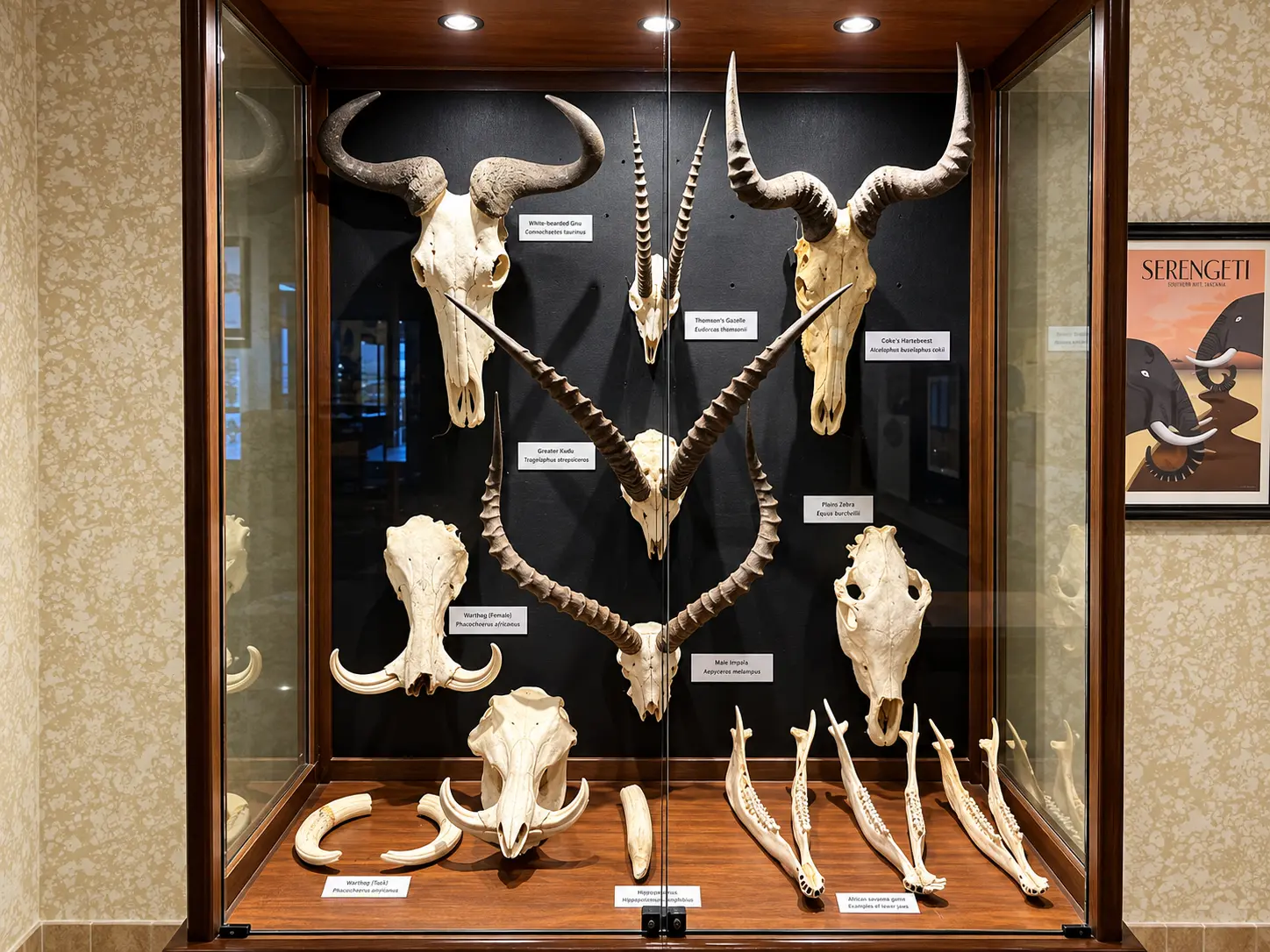
The collection of bones, skulls and horns is especially good. There is quite a lot to see, including some enormous specimens that give you a much better idea of the scale of these animals when you are standing directly beside them.
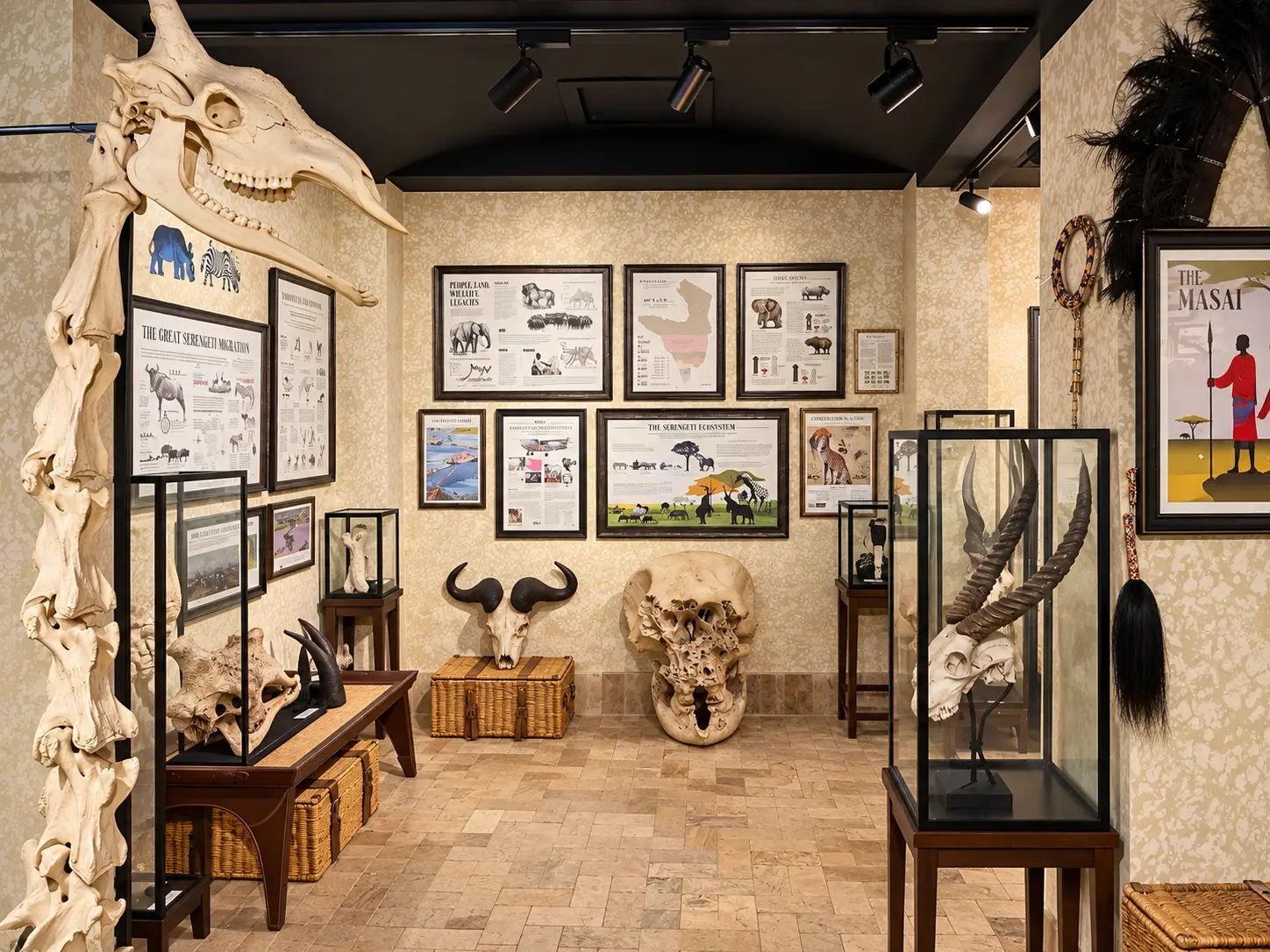
There are also glass display cases where you can get a much closer look at individual skulls and horns. This was probably the part I spent the most time looking at. On a game drive you obviously keep your distance from the wildlife, so being able to examine some of these specimens up close adds another dimension to what you have been seeing outside.
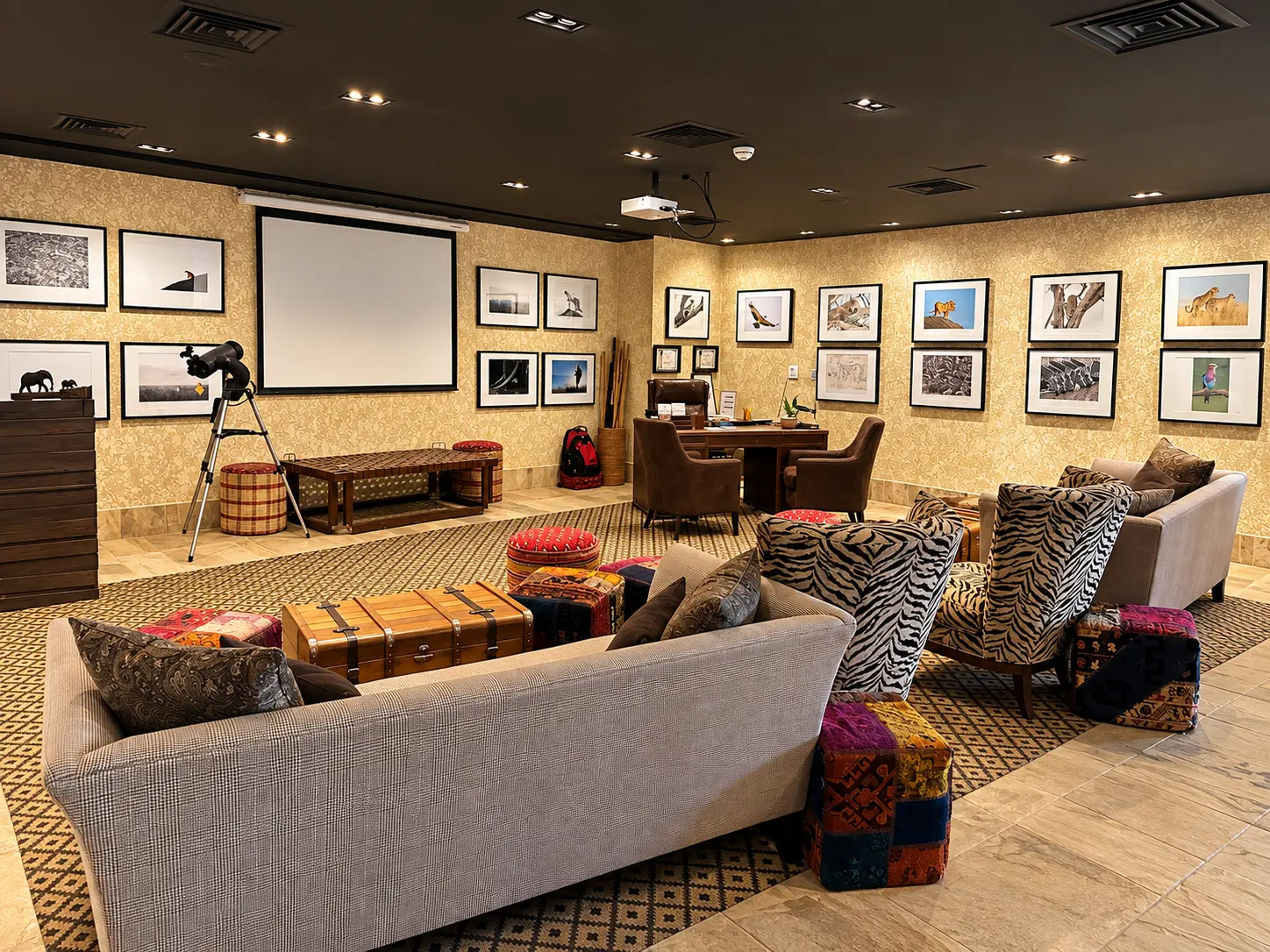
What stops the Discovery Centre from feeling like a museum that happens to be attached to a hotel is how Four Seasons uses it. There is a comfortable lounge and presentation room with sofas, chairs, wildlife photography and a large screen, and the staff use the space for talks, presentations and other activities.
The night before one of our safaris, the staff even set up a wildlife movie for us in here. We sat down and watched it together, and by the time it finished we were even more excited about heading out the following morning. It was one of those relatively small touches that I remember from the stay because it connected what we were learning inside the lodge with what we were about to experience outside it.
I also liked that none of this felt overly educational or forced. You can spend ten minutes walking through on your way somewhere else, or you can sit down, look through the exhibits and start asking questions. The staff clearly know the Serengeti extremely well and are happy to explain what you are looking at.
It is another example of why Four Seasons Serengeti works so well as a safari lodge. You are not simply leaving the hotel each morning to go and find the wildlife. The Serengeti is part of the experience back at the lodge as well, whether that is elephants turning up at the watering hole, seeing a lion from your villa, or sitting in the Discovery Centre the night before a safari watching a wildlife movie and wondering what you might see for yourself the next day.
Other things to do
There are other things to do at Four Seasons Safari Lodge Serengeti beyond heading out on game drives. The Discovery Centre is probably the most interesting, and there is also the pool, spa, gym and plenty of space around the lodge to sit and watch what is happening at the watering hole.
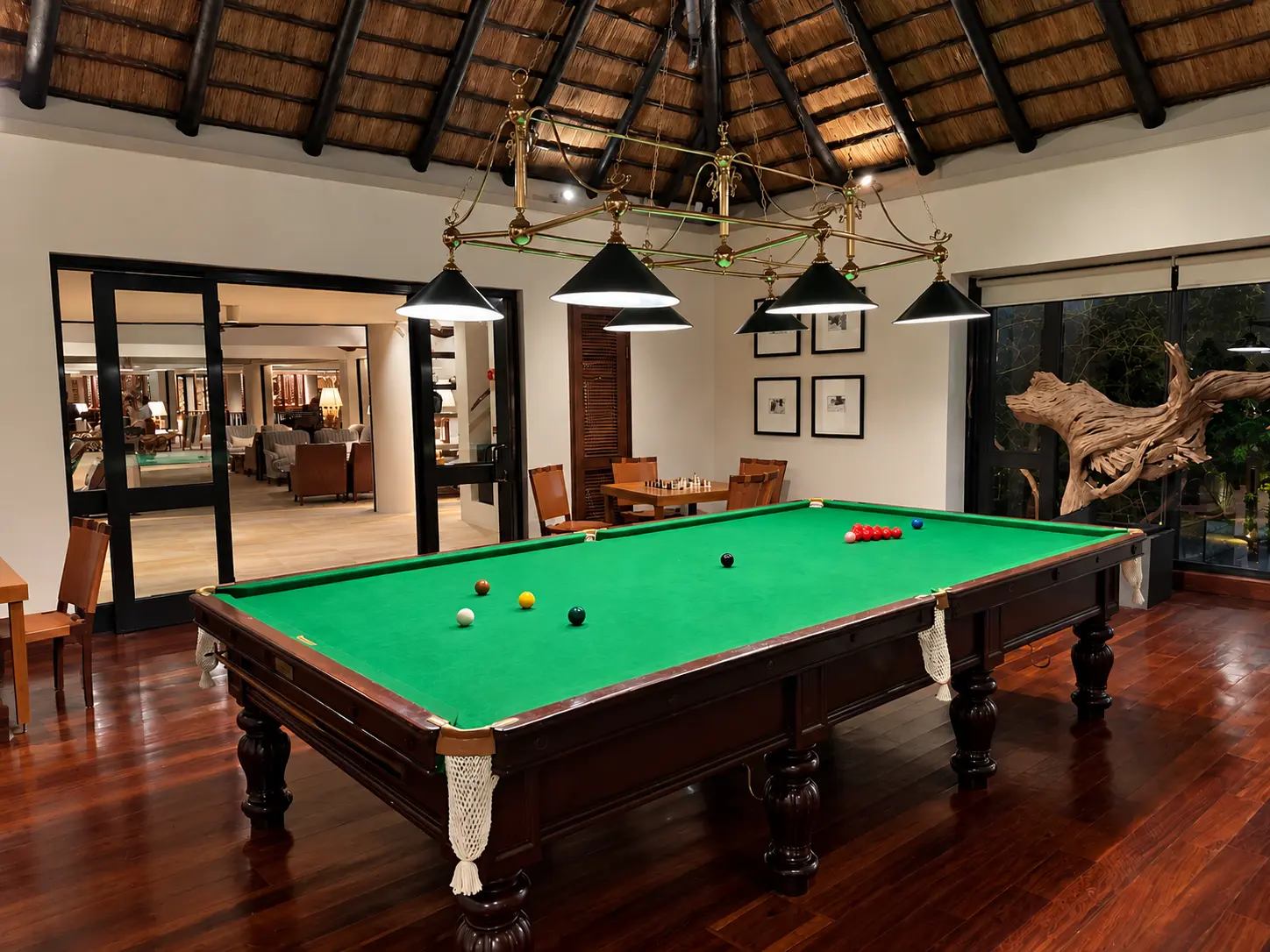
There is also a hangout area with a full-size billiards table, chess and a selection of board games. It is a nice addition, particularly if you have older children or find yourself with a few hours to fill between activities.
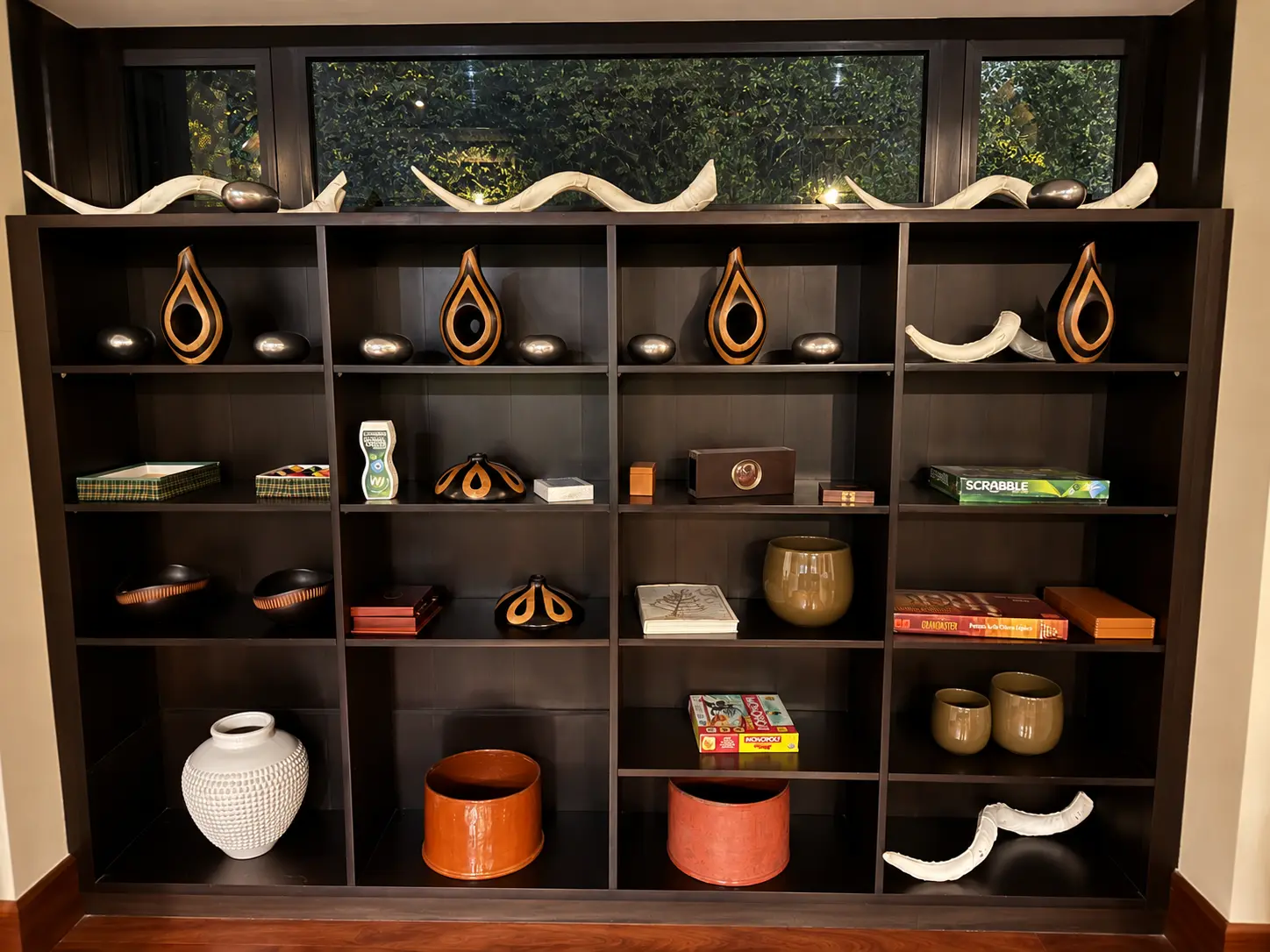
There are more games on the shelves, including Scrabble and Monopoly, so there is enough here to keep people occupied if the weather turns or you decide to have a quiet afternoon at the lodge.
In reality, though, we barely used any of it. After a full day out on safari, followed by enjoying the food and a few drinks back at the lodge, we were usually tired. Most of our downtime was spent resting, sitting by the pool or back at the villa. There is plenty to do if you want it, but I would not arrive thinking you need to fill every hour. Safari days can be long, and having some time to do very little was quite welcome.
Is Four Seasons Serengeti good for kids?
Four Seasons Safari Lodge Serengeti is much more family-friendly than I expected. Safari can sound like quite an adult trip, with early starts and hours sitting in a vehicle, but there were plenty of families staying while we were there and the lodge has put quite a lot in place for children.
The Kijana Klub is the dedicated kids club and, despite trying several times, I never managed to get a decent photograph of it because it always seemed to be full of kids. That probably says enough. I also liked where they have put it. It leads onto the main terrace, so we regularly saw kids moving between the club and their parents, who were outside having lunch or a drink. It makes the whole setup feel much less formal than dropping your children at a kids club on the other side of a resort.
The complimentary Kids For All Seasons program is for ages 2 to 17, with adult supervision required for children under four, and currently operates daily from 10:00 AM to 6:00 PM. The activities are also tied into being in Africa rather than just generic resort entertainment.
Some of the options include:
- Remote camera traps, nature walks, scavenger hunts and tree planting
- Maasai beading, storytelling and basic Swahili lessons
- A "Maasai for the Morning" experience learning bush skills and traditions
- Serengeti Passports for recording the animals children spot
- Kids movie nights with dinner and supervision
- Private children's cooking classes
The Discovery Centre is another big plus for families. There are maps, models, animal skulls, horns and displays about the Great Migration and wildlife. The night before one of our safaris, the staff even put a wildlife movie on for us in the presentation room, which got us more excited about going out the next morning. I could see kids loving this, particularly once they start recognizing animals they have already seen.
There is also the pool and watering hole, so an afternoon back at the lodge doesn't mean the wildlife stops. We watched entire families of elephants coming down to drink, including tiny calves. Four Seasons also offers family-focused safari experiences, and hot-air balloon safaris are available from age seven.
Accommodation is another reason I think the lodge works well for families. There are connecting room options, so parents don't necessarily need to squeeze everyone into one room. For larger families, I would look carefully at the room combinations and villas when booking, as the best setup will depend on the children's ages.
I would still avoid filling every morning and afternoon with long game drives if traveling with younger children. The advantage of Four Seasons is that you don't have to. Between the kids club, Discovery Centre, pool and animals coming to the watering hole, staying back at the lodge for an afternoon doesn't feel like a wasted safari day.
One important point for families with babies: children must be at least two years old to stay at the lodge.
From what we saw, kids aren't an afterthought here. The fact I couldn't even get an empty photo of the kids club probably sums it up fairly well.
Overall
Four Seasons Safari Lodge Serengeti was one of the highlights of our Africa trip. You are right inside the Serengeti, and the wildlife is part of the hotel experience rather than something you only see on a game drive. We watched elephants at the watering hole, spotted a male lion from our villa and were seeing wildlife before we had even reached the lodge from the airstrip.
Our Preferred Partner upgrade to a One-Bedroom Villa was fantastic, but the biggest surprise for me was the food. I expected an all-inclusive lodge this remote to come with some compromises, but we ate extremely well and the choice of wines and cocktails was far better than expected. I also think the value for money is excellent when you compare it with what some of the smaller high-end safari lodges are charging.
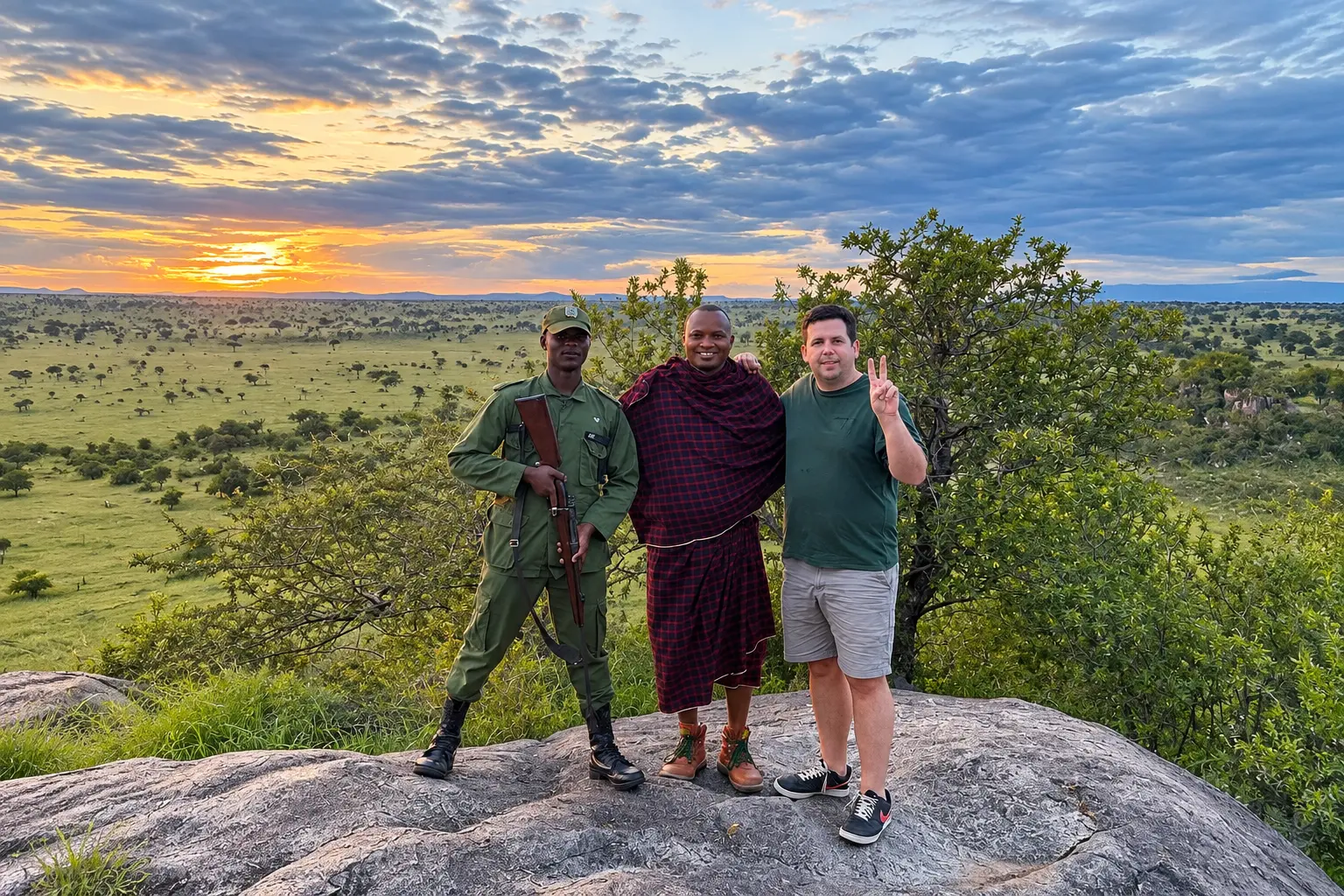
The staff were phenomenal. It was very clear throughout the stay that they wanted us to have a good time. They were constantly offering to take photos of us, checking that everything was going well and doing little things that went beyond what we had asked for. It never felt forced either. There was a real warmth to the service, and the staff ended up being a big part of why we enjoyed the stay so much.
The whole lodge runs like a well-oiled machine. There is obviously a huge amount happening behind the scenes to operate a Four Seasons in the middle of the Serengeti, but as a guest you barely notice it. Transfers, game drives, meals and everything in between just seemed to work.
The only real downside for me is the size. With 77 rooms, suites and villas, this is large for a safari lodge and it can attract large groups. We saw that firsthand when a herd of elephants arrived at the watering hole and some members of a group became so loud that the elephants were unsettled and eventually moved away.
Separately, we watched staff repeatedly tell children from the same group not to feed or touch a small wild animal around the dining area. There were also signs clearly telling guests not to feed the wildlife. Despite all of that, one child tried to hand-feed the animal, was bitten, and the parents then complained. I ended up speaking to the manager about it because I had personally heard the staff warning them several times beforehand and felt it was unfair for the hotel to be blamed.
None of this was Four Seasons' fault, but it does show the trade-off that comes with a lodge of this size. If you want a tiny safari camp with six or twelve rooms and very few other guests around, this isn't it. What you get instead is a real safari experience with the space, excellent food, facilities and service of a Four Seasons resort.
For us, that trade-off was easily worth it. The value is excellent, the lodge is incredibly well run, the staff were phenomenal and the location speaks for itself.
I would happily return.
Book Four Seasons Serengeti with Preferred Partner Benefits
Planning a stay at Four Seasons Safari Lodge Serengeti? Clements Travel does not charge booking fees, and you pay Four Seasons directly.
When available, we can book your stay with Four Seasons Preferred Partner benefits, including daily breakfast, a hotel credit and a room upgrade subject to availability.
Get in touch for a quote and we can also help with room selection, family accommodation and putting the safari side of the trip together.