Article and photos by Dylan Clements
Four Seasons Hotel Kyoto is best for travelers who want a quieter luxury base with large rooms, excellent facilities and easy access to Higashiyama and Gion. It works especially well for couples, families and longer stays. The hotel is contemporary rather than a traditional ryokan, and its calm setting is a big part of the appeal. Room allocation is worth considering carefully, as some rooms are more private than others.
Four Seasons Preferred Partner Benefits
Clements Travel is a Four Seasons Preferred Partner, and eligible reservations at Four Seasons Hotel Kyoto receive:
- Daily full breakfast for two guests per bedroom
- US$100 hotel credit per stay for guest rooms
- US$200 hotel credit per stay for suites and specialty suites
- US$200 hotel credit per bedroom per stay for qualifying villas and residences
- One-category upgrade, subject to availability
- Early check-in and late check-out, subject to availability
- Preferred Partner recognition from the hotel
- Additional help from Clements Travel with room selection, room allocation and pre-arrival requests
There is no additional booking fee, and you still pay Four Seasons directly.
For Four Seasons Kyoto, I think there is another major advantage to booking through a Preferred Partner who has physically visited the property. Room allocation is particularly important here. Some rooms are considerably more private than others, and having walked the property ourselves, we can make much more informed room requests than somebody simply looking at room descriptions online.
First Impressions of Four Seasons Hotel Kyoto
I had been looking forward to visiting Four Seasons Kyoto because it is one of those hotels where the photographs only tell part of the story. The images understandably focus heavily on the historic pond garden, but once you are at the property you realize how much more there is to it.
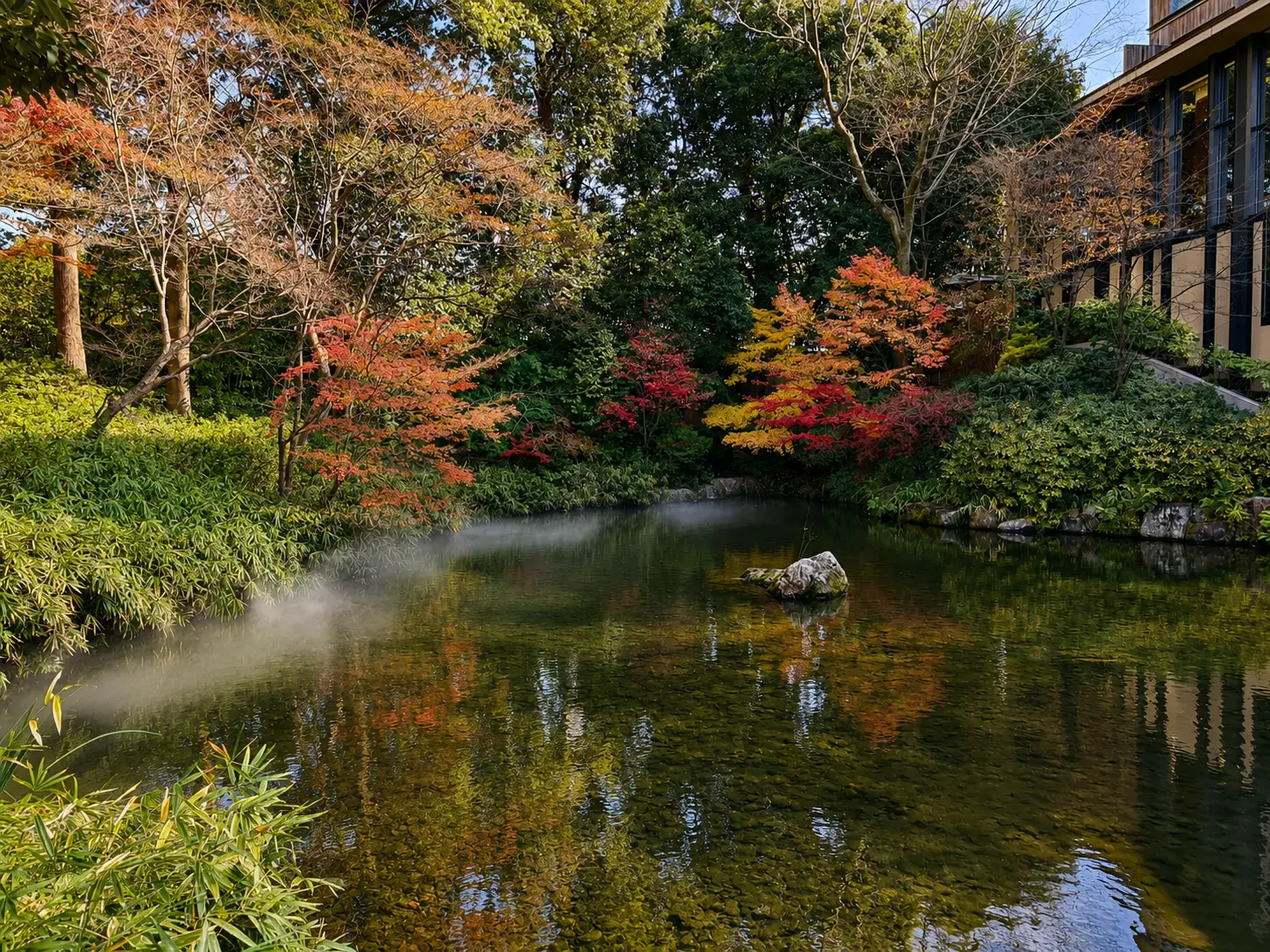
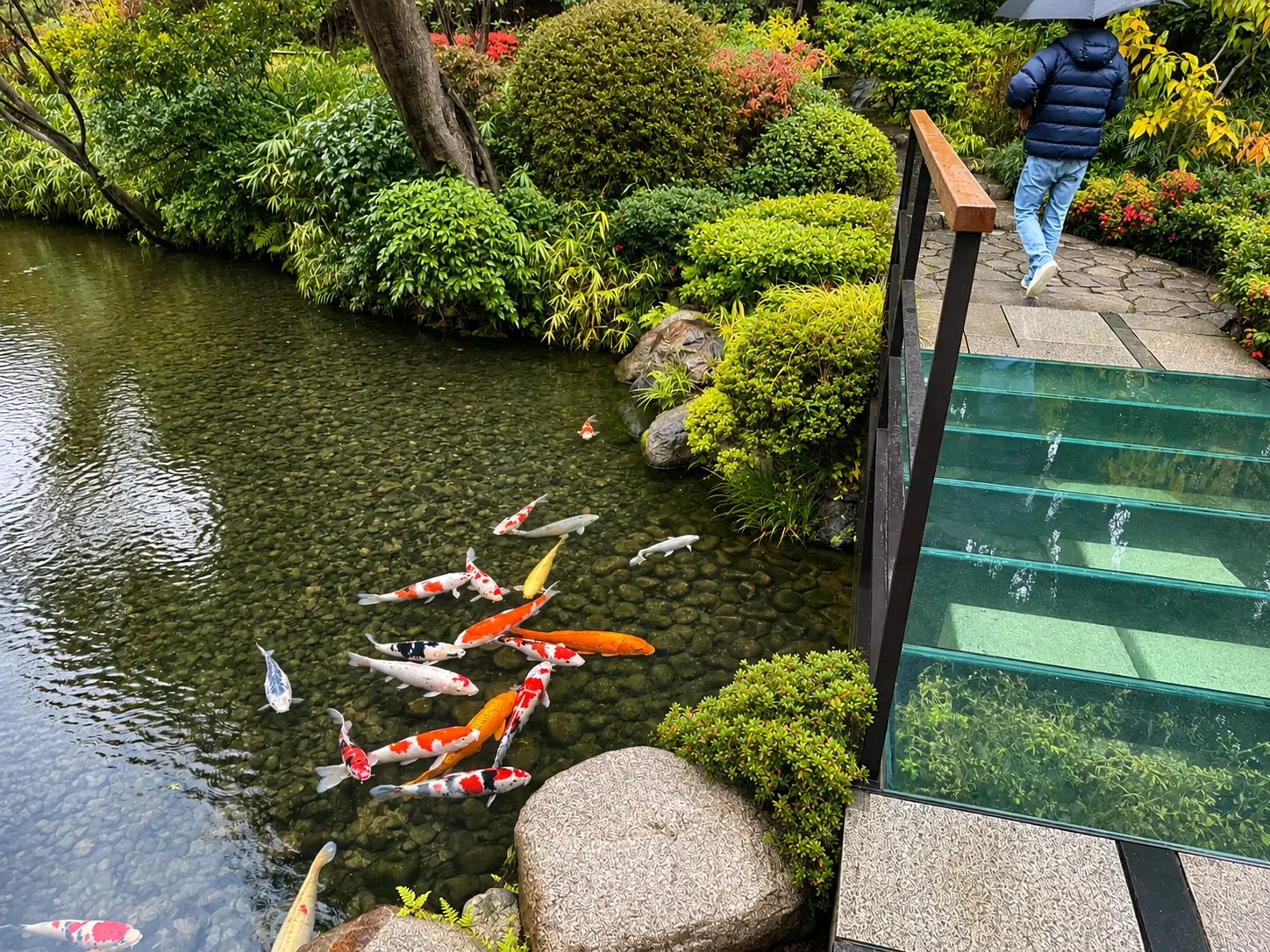
The hotel sits in Higashiyama and is centered around Shakusui-en, an approximately 800-year-old pond garden. It is the defining feature of the hotel and, in my opinion, the main reason Four Seasons Kyoto feels so different from a normal city hotel. There are mature trees, koi swimming through the pond, a traditional tea house and plenty of places where you can stop and enjoy the surroundings.
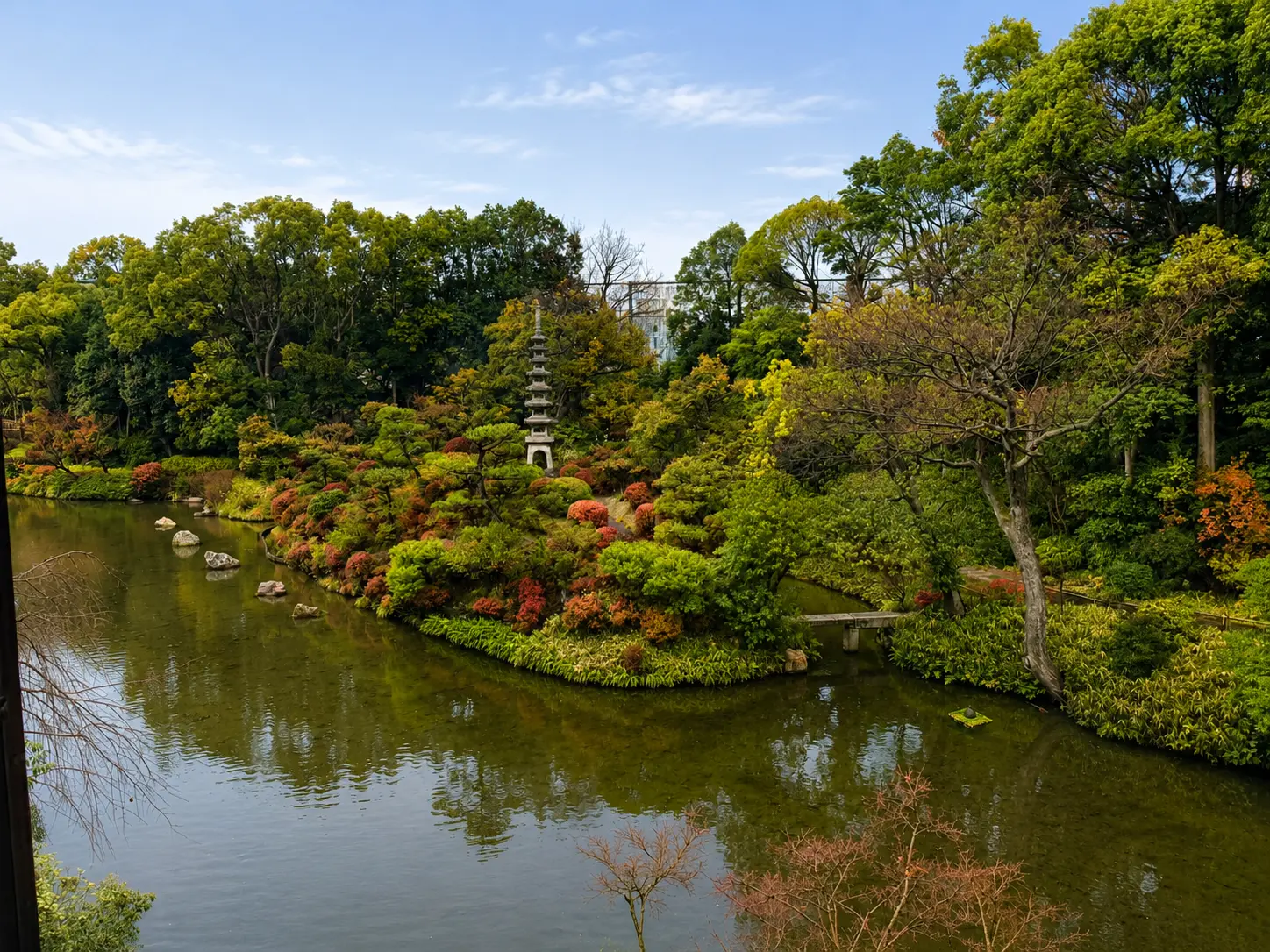
What surprised me most was how peaceful the hotel feels once you move toward the garden side. Kyoto can become extremely busy, particularly during cherry blossom season and the autumn foliage period, so being able to spend the day sightseeing and then return somewhere that feels removed from all of that is a huge positive.
Some online feedback says the hotel does not feel Japanese enough, but I think that criticism misses what Four Seasons Kyoto is trying to be. This is not a traditional Japanese ryokan, and it was never designed to be one. If that is the experience you want, Kyoto has many excellent ryokan.
Four Seasons Kyoto is a modern luxury hotel that opened in 2016, and I think it is a very good example of contemporary Japanese architecture and design. The Japanese influence is expressed through the materials, proportions, landscaping, artwork and the relationship between the building and the historic garden rather than through obvious traditional decoration everywhere you look.
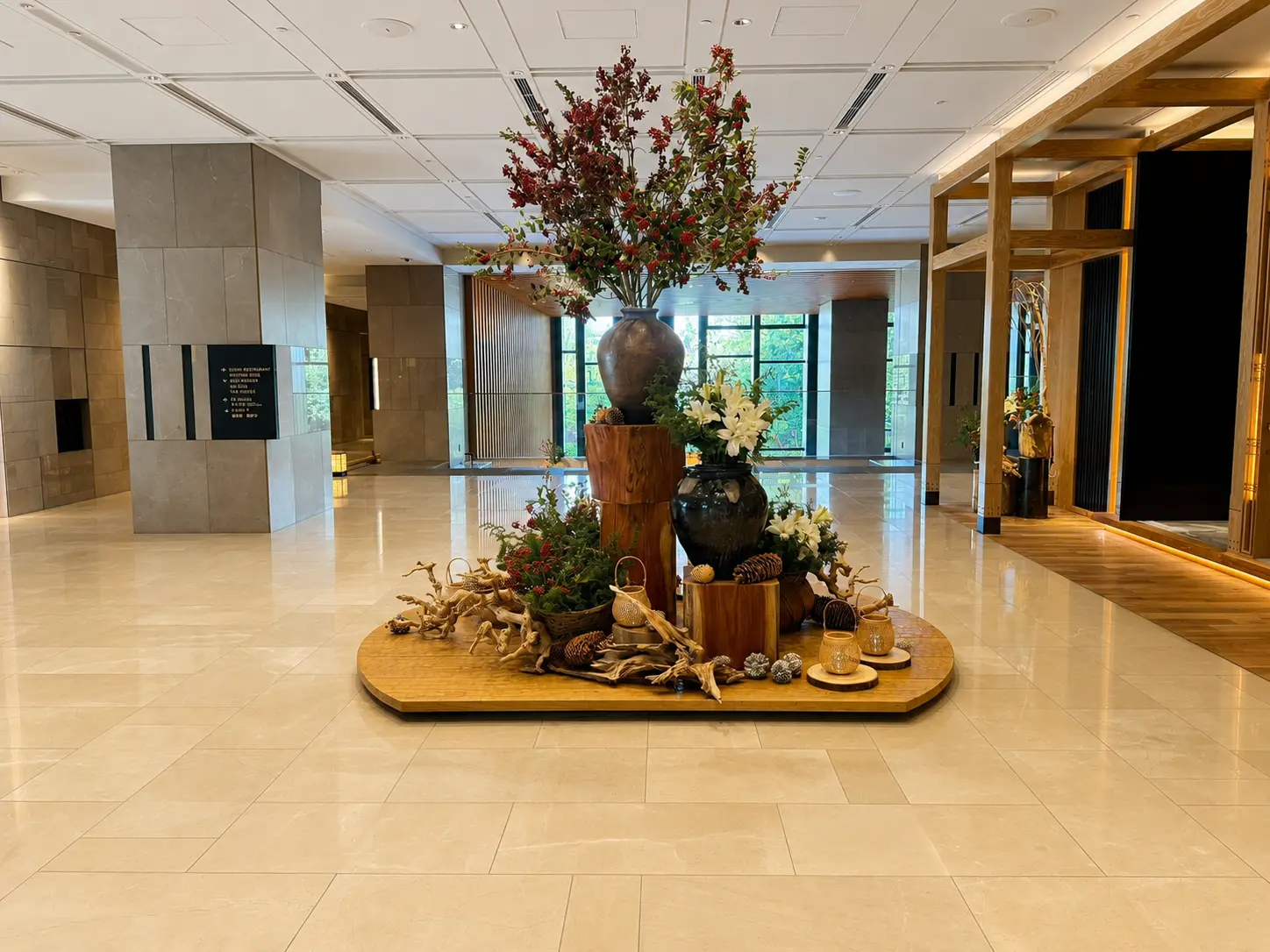
For me, that is one of the reasons the hotel works so well. You still feel that you are in Kyoto, particularly once you move toward Shakusui-en and the tea house, but the hotel also feels current, spacious and highly polished.
Location: Is Four Seasons Kyoto in a Good Area?
Before visiting, I had wondered whether the location might feel slightly removed from the center of Kyoto. In reality, I liked it far more than I expected. Four Seasons is in Higashiyama, which puts you close to many of eastern Kyoto's major sights while still feeling noticeably calmer than some of the better-known luxury hotel locations in the city.
We also stayed at Park Hyatt Kyoto on this trip and loved that hotel too, but the setting is very different. Park Hyatt sits directly on Ninenzaka, right in the middle of one of Kyoto's most photographed and heavily visited historic areas. It is an incredible location for sightseeing, particularly for Kiyomizu-dera and the surrounding streets, but during the day it can become extremely busy.
Four Seasons Kyoto feels much more removed from the crowds, even though you are still in Higashiyama. For me, that quieter setting became one of the hotel's biggest advantages.
Gion is only a short drive away, and getting around Kyoto is extremely easy. Uber is excellent value in Kyoto, readily available and, in our experience, the cars were consistently clean and modern. We used it frequently throughout the city.
In reality, you are likely to use Uber or taxis whichever luxury hotel you stay at in Kyoto. The temples, gardens and major sights are spread across different parts of the city, from Higashiyama in the east to Arashiyama in the west, so there is no single hotel location that puts everything within walking distance.
That is why I would not view the Four Seasons location as a disadvantage. You still have excellent access to eastern Kyoto, but you return to a calmer setting at the end of the day.
Arrival at Four Seasons Hotel Kyoto
The arrival at Four Seasons Kyoto is quite understated. You come into a quiet stone courtyard with Japanese planting, sculpted pines and large pieces of rock rather than a grand hotel entrance.

Once inside, check-in was relaxed. We were given Japanese green tea, chilled towels and small Four Seasons Kyoto chocolates while everything was taken care of.
.webp)
There was also a Four Seasons Preferred Partner welcome amenity waiting in our room, with fresh fruit and a selection of Japanese sweets, including several matcha-based pieces.
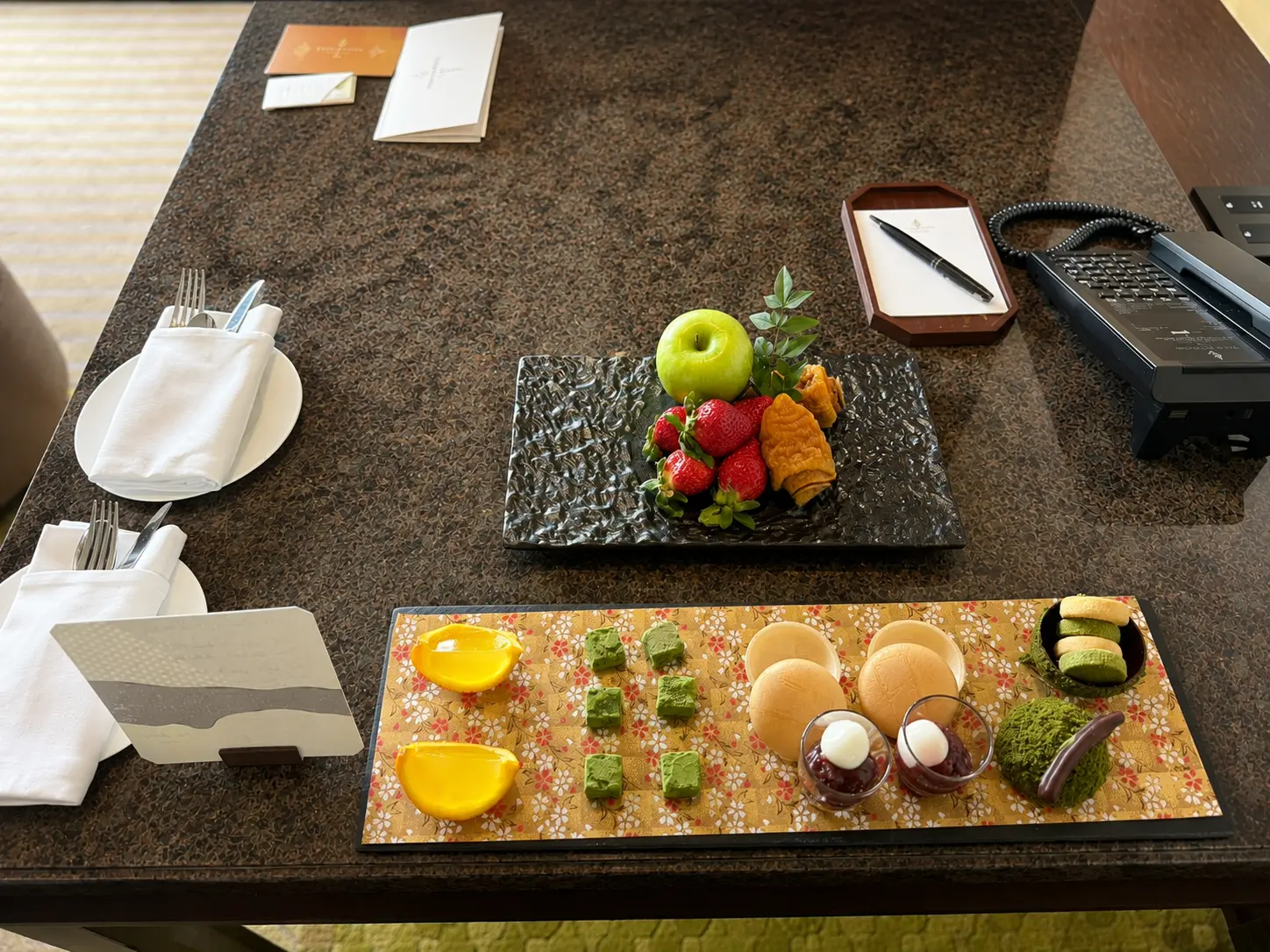
The whole arrival felt calm and fairly low-key, which suits the hotel. You do not really understand the scale of the property or the Shakusui-en pond garden until you move further inside.
Our Deluxe Room at Four Seasons Hotel Kyoto
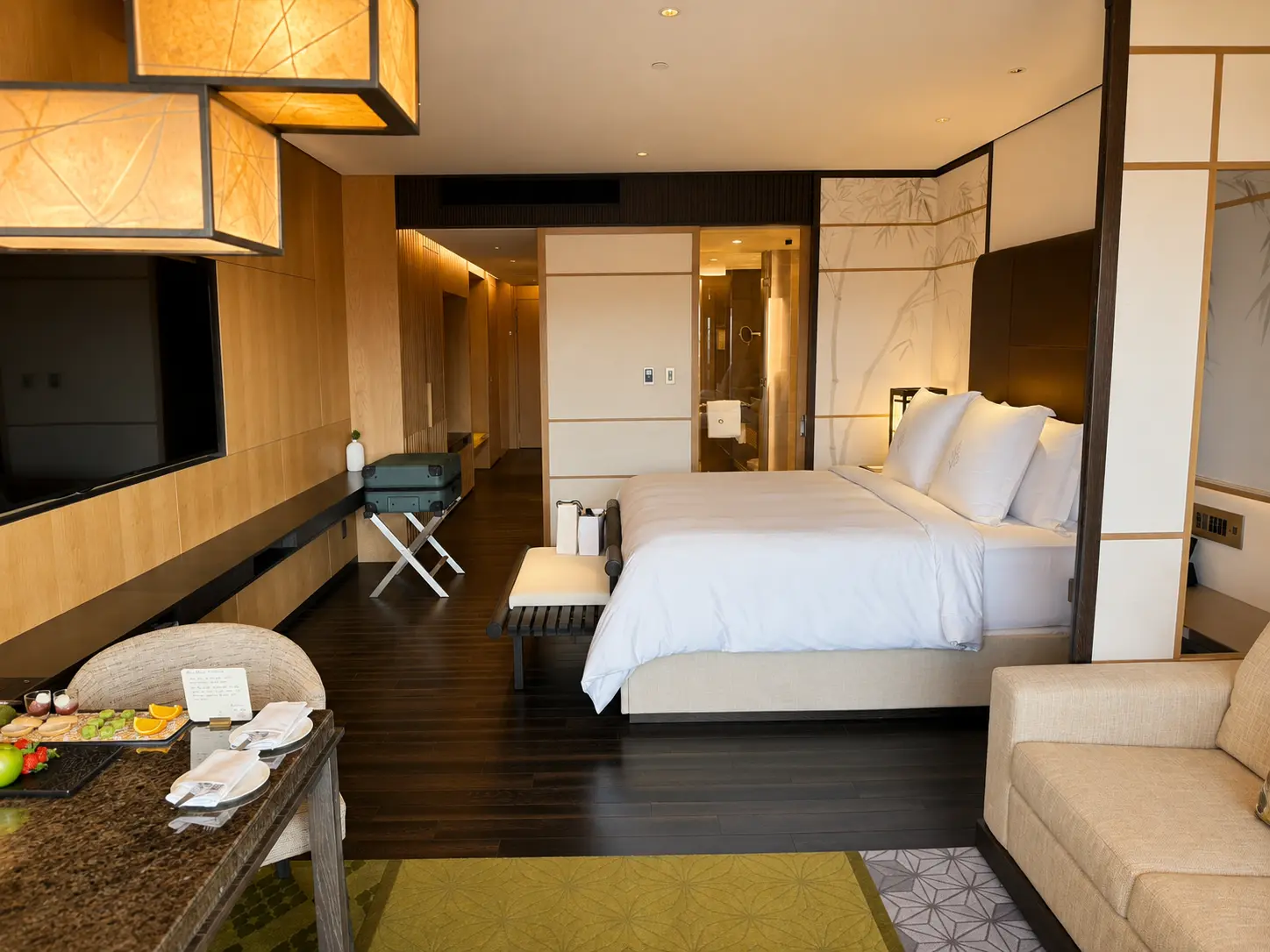
We had booked a Premier Room and were upgraded to a Deluxe Room for our stay. At 49 to 53 sqm, it is a large room by Kyoto standards, and you notice the extra space as soon as you walk in.
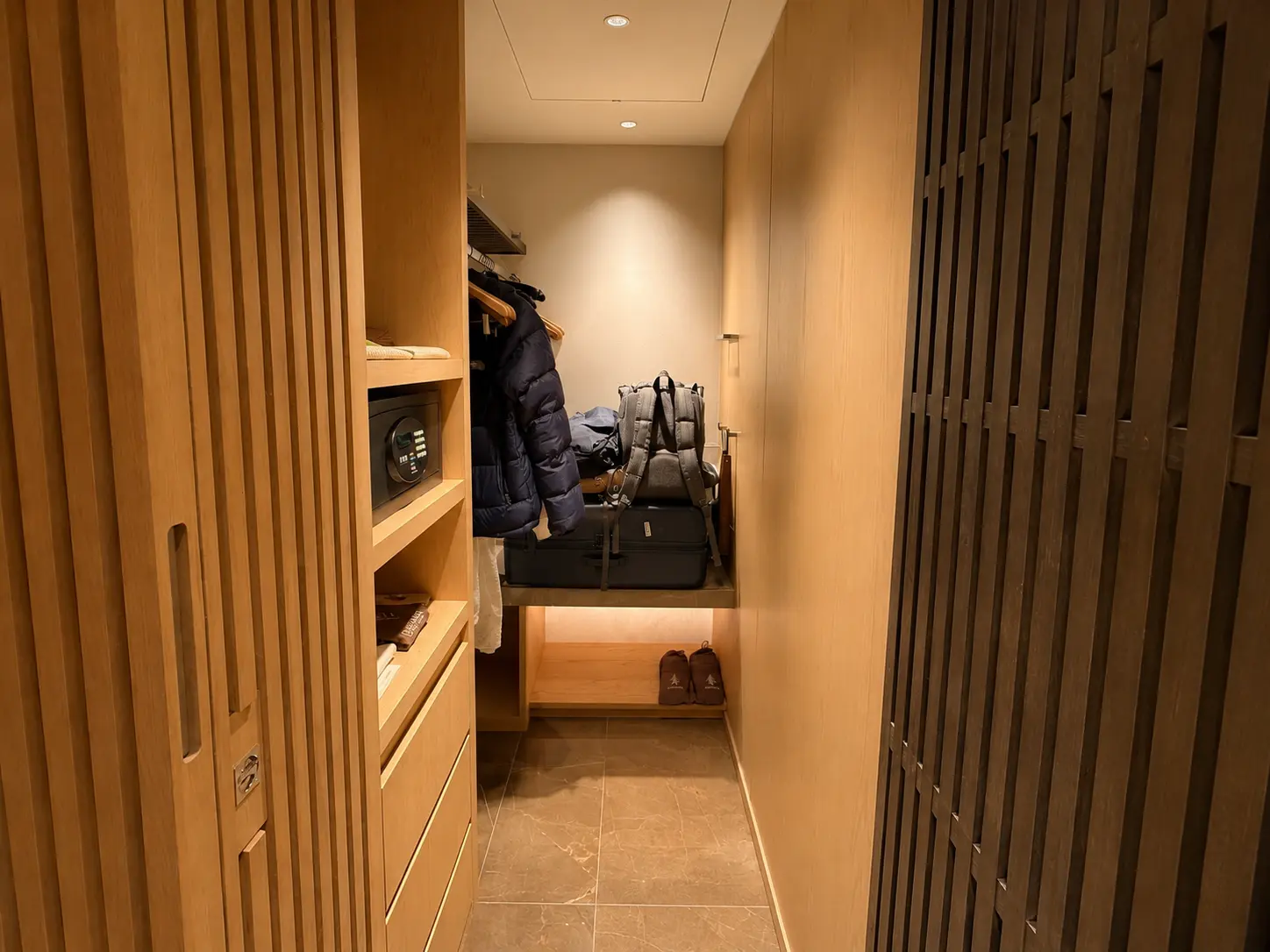
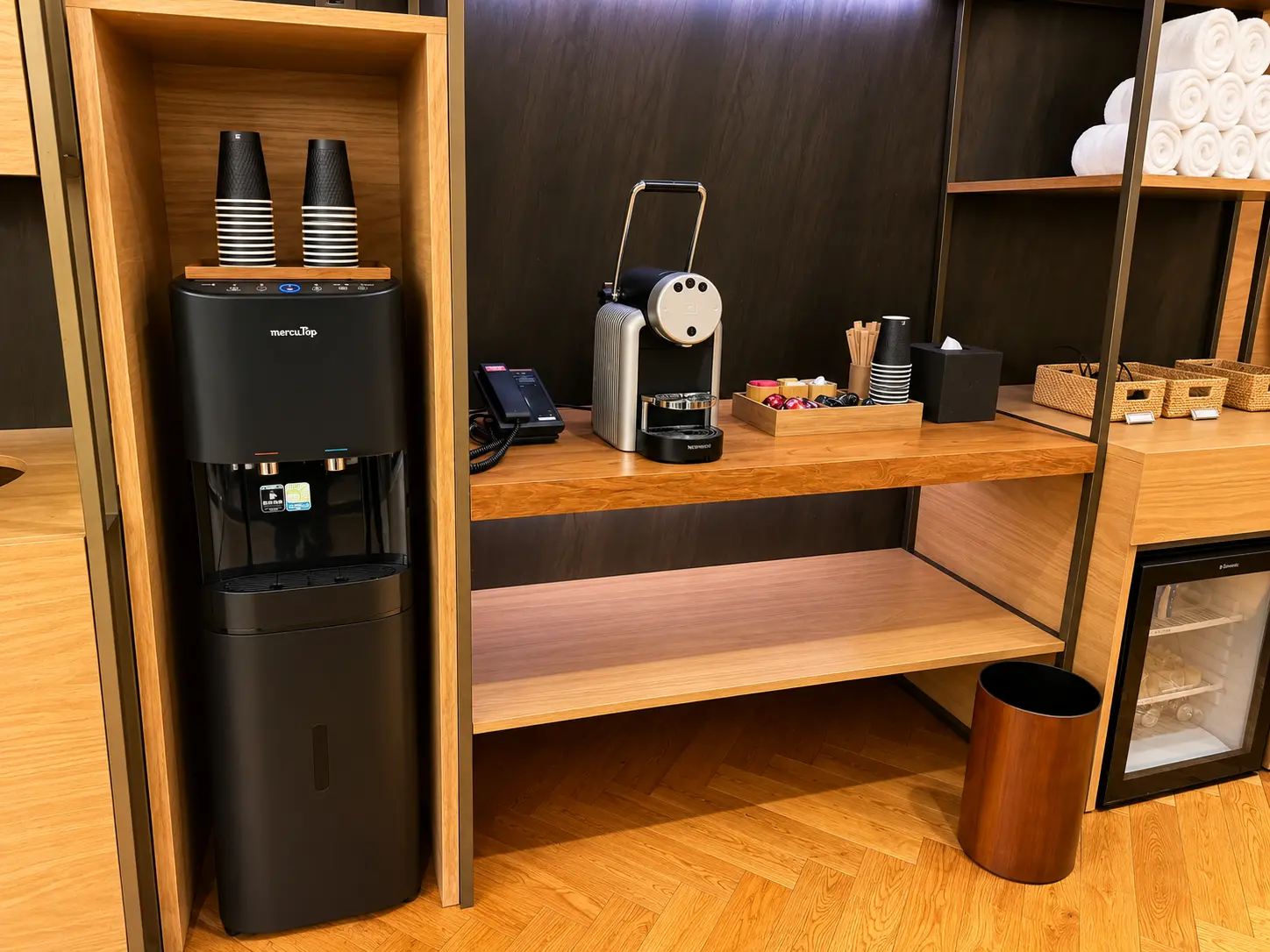
There is a long entrance hallway with the minibar and coffee station, built-in storage and a separate walk-in closet with a safe, hanging space and a large luggage bench. It keeps most of the practical stuff away from the bedroom and gives the room a much less cluttered feel.
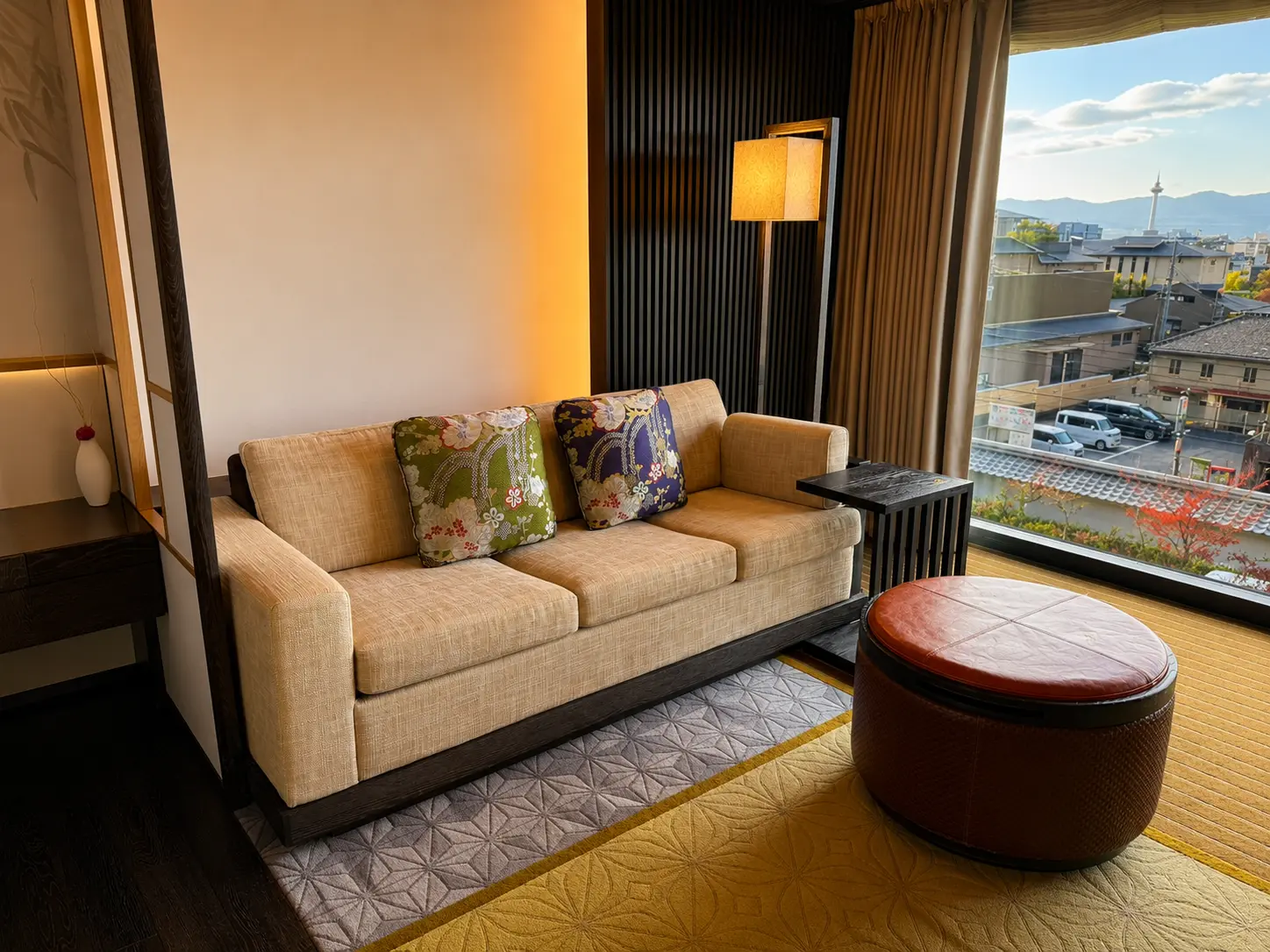
The bedroom had a king bed, sofa and coffee table beside the window, with plenty of room around everything. One small detail I liked is that the window can be opened, which is not always the case in newer city hotels.
Our room looked across Kyoto, with Kyoto Tower visible in the distance. Four Seasons lists the Deluxe Room as having a courtyard-facing outlook toward the main hotel entrance, so the exact view will depend on where the room is allocated.
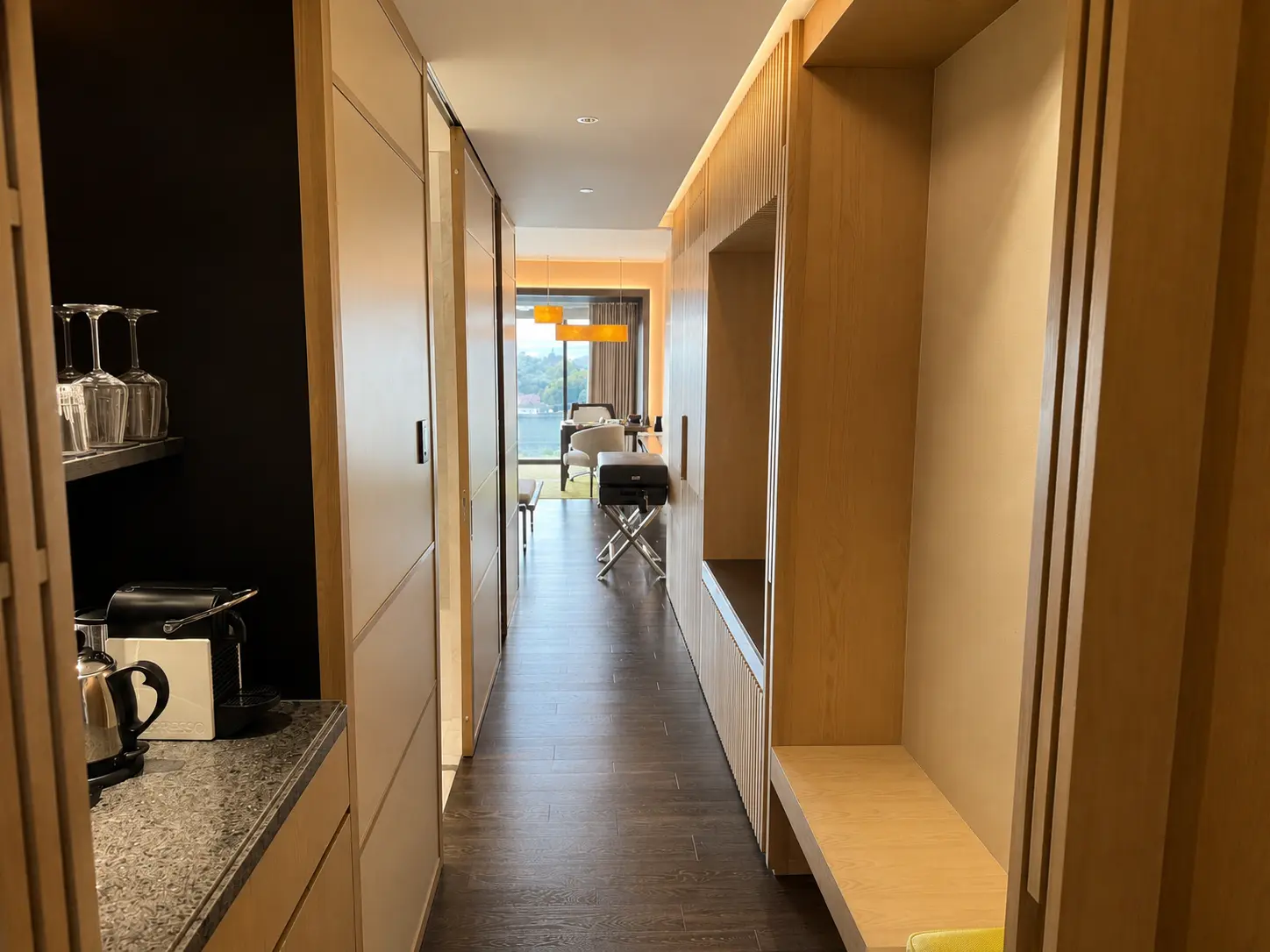
The overall look is contemporary Japanese. There are warm timbers, neutral fabrics, clean lines and restrained detailing rather than obvious traditional decoration.
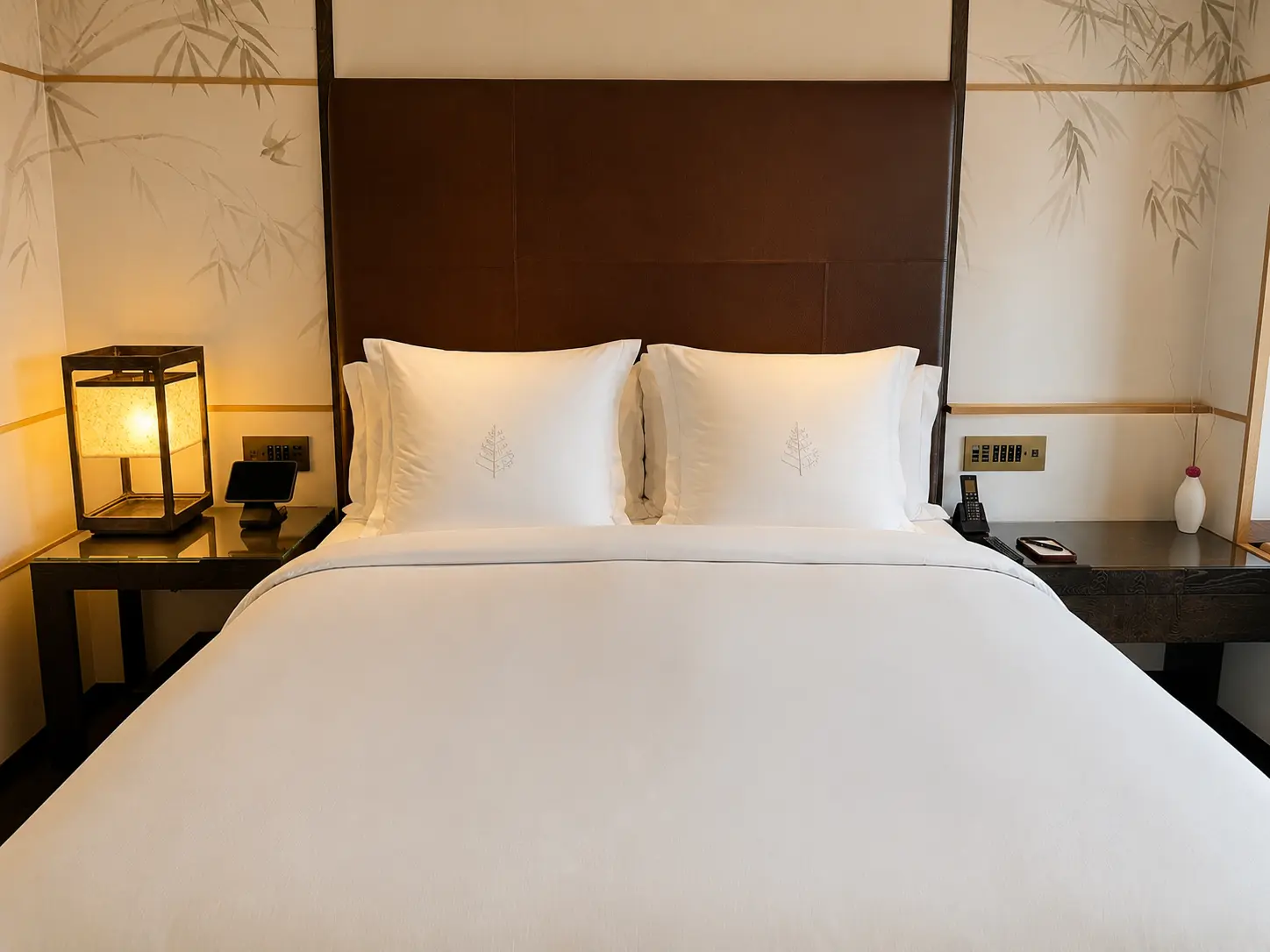
Beds are excellent, the furniture feels substantial and the rooms have comfortable seating rather than trying to squeeze a small chair into a corner. Storage is also good, which becomes increasingly useful if Kyoto forms part of a longer trip through Japan.
The bathrooms are fairly large for a city hotel and are divided into separate areas. There is a walk-in stone shower with rainfall and handheld fittings, a deep soaking tub, and a separate toilet room with a TOTO washlet.
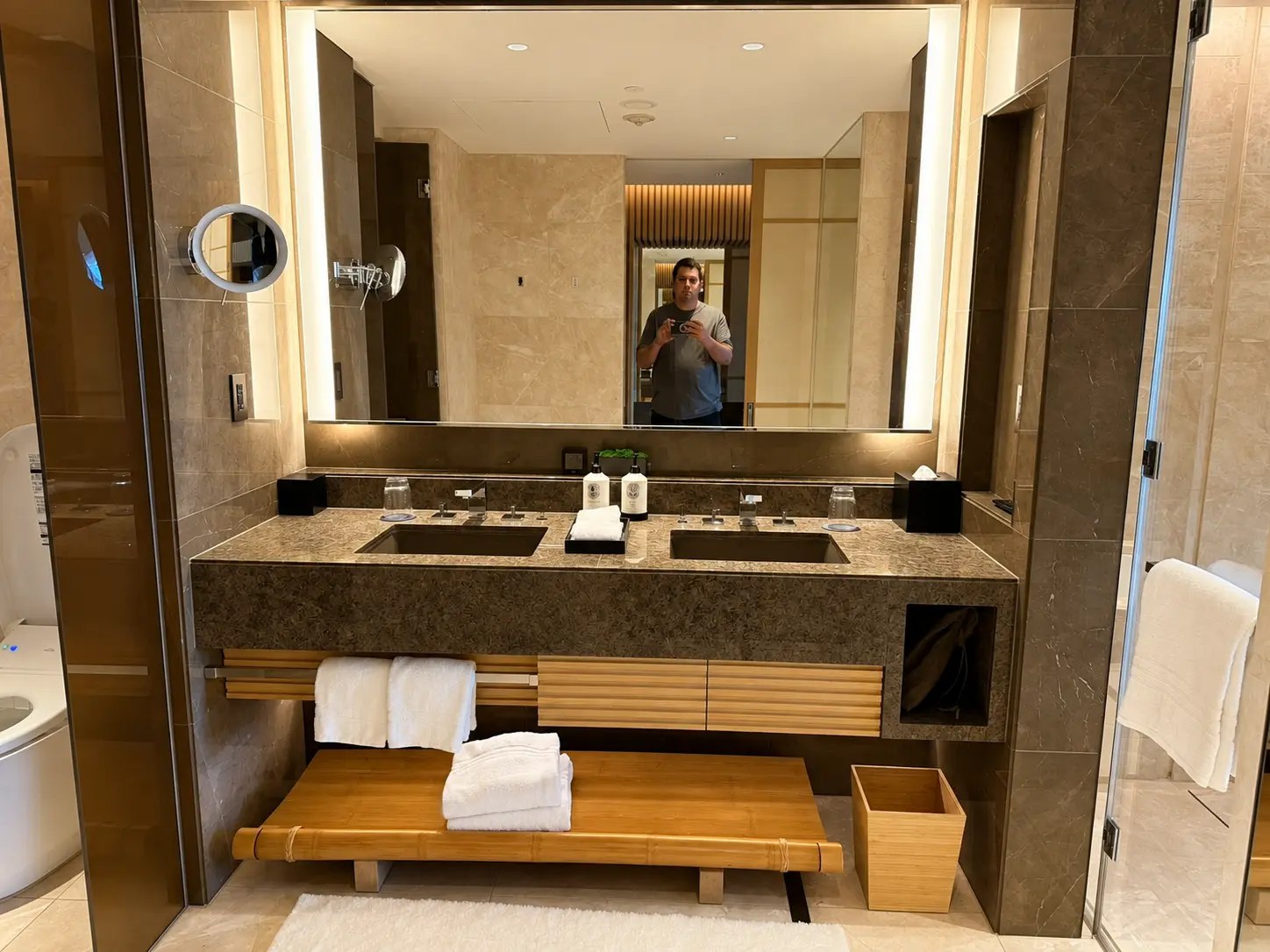
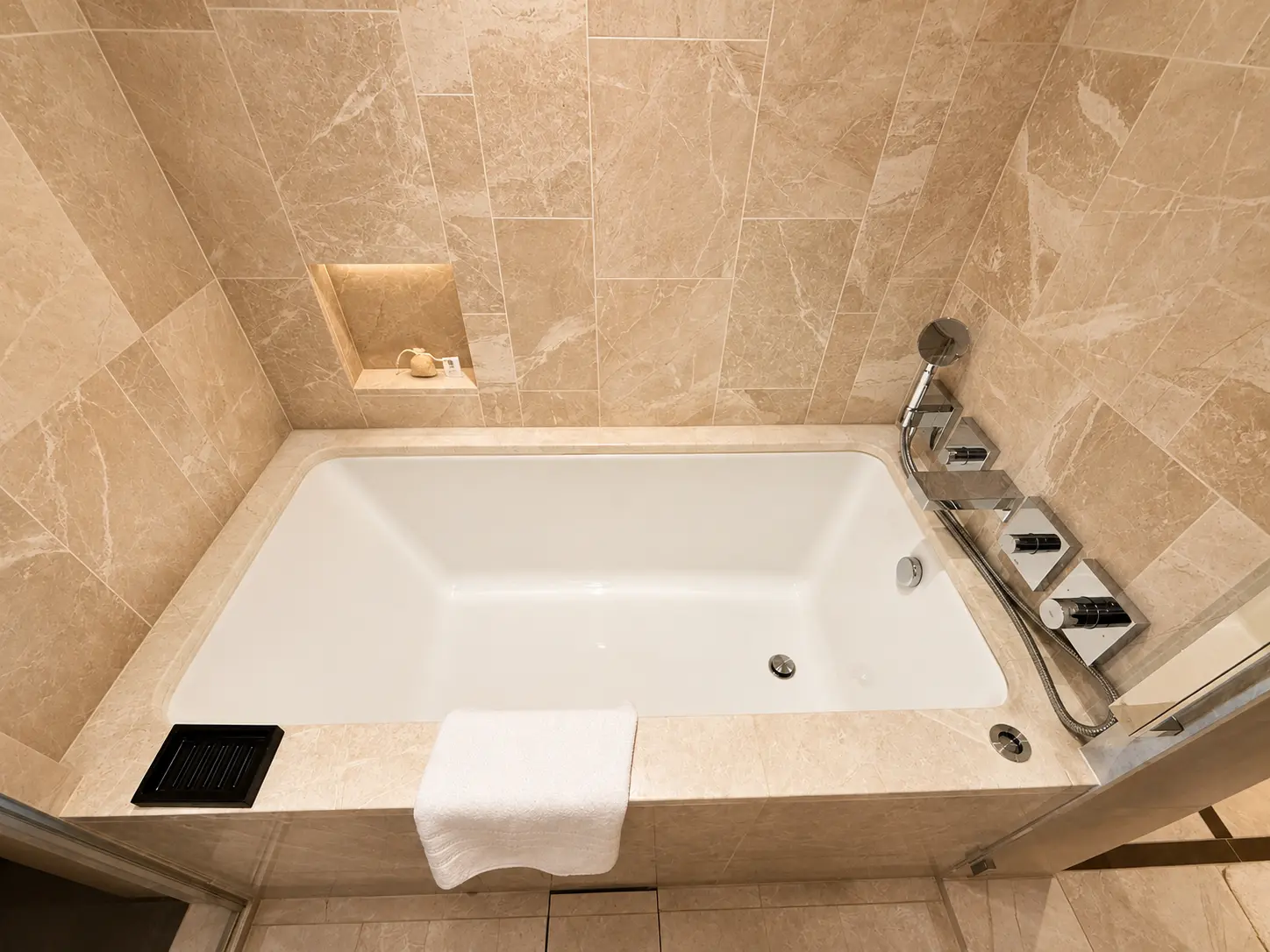
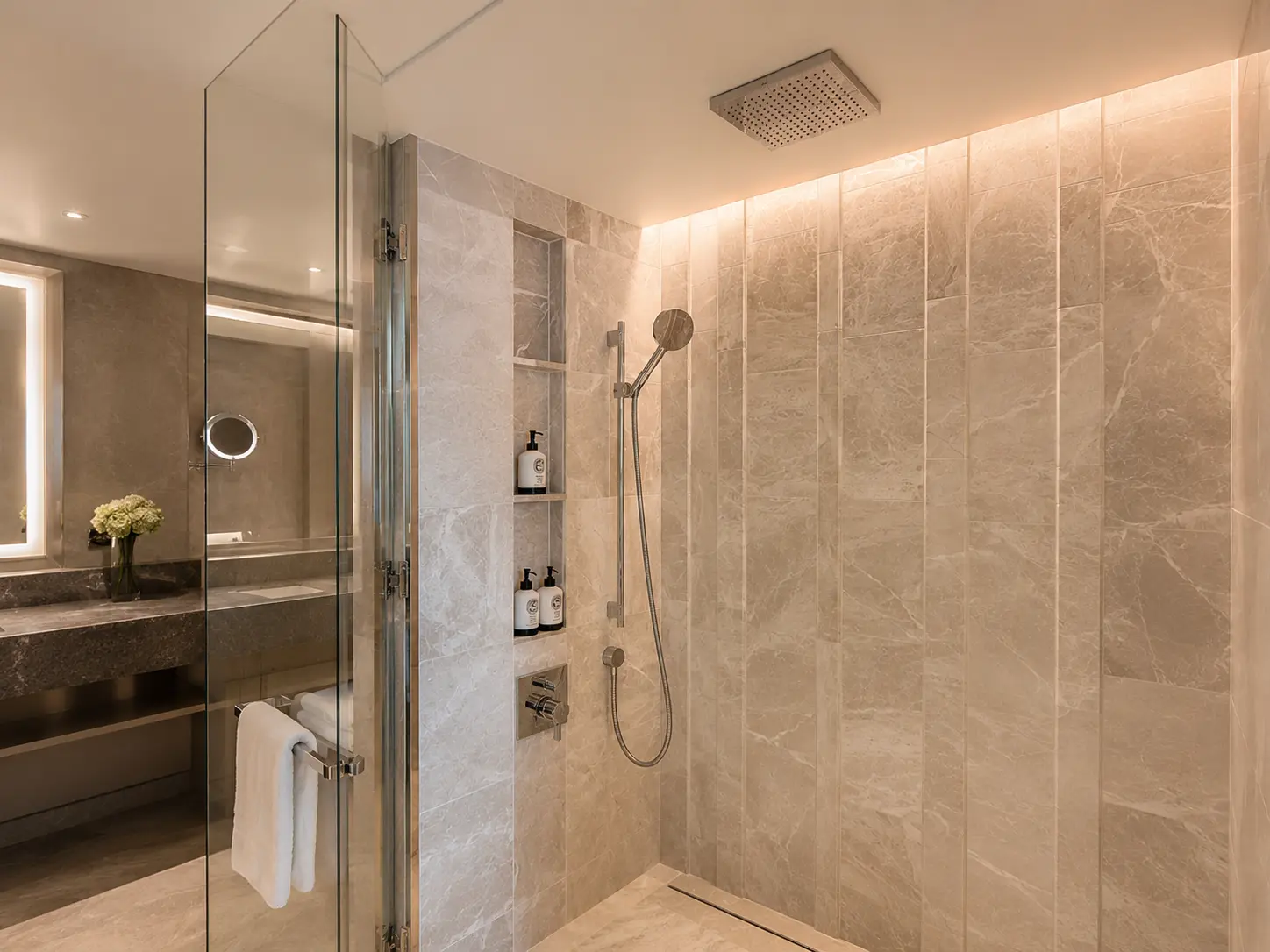
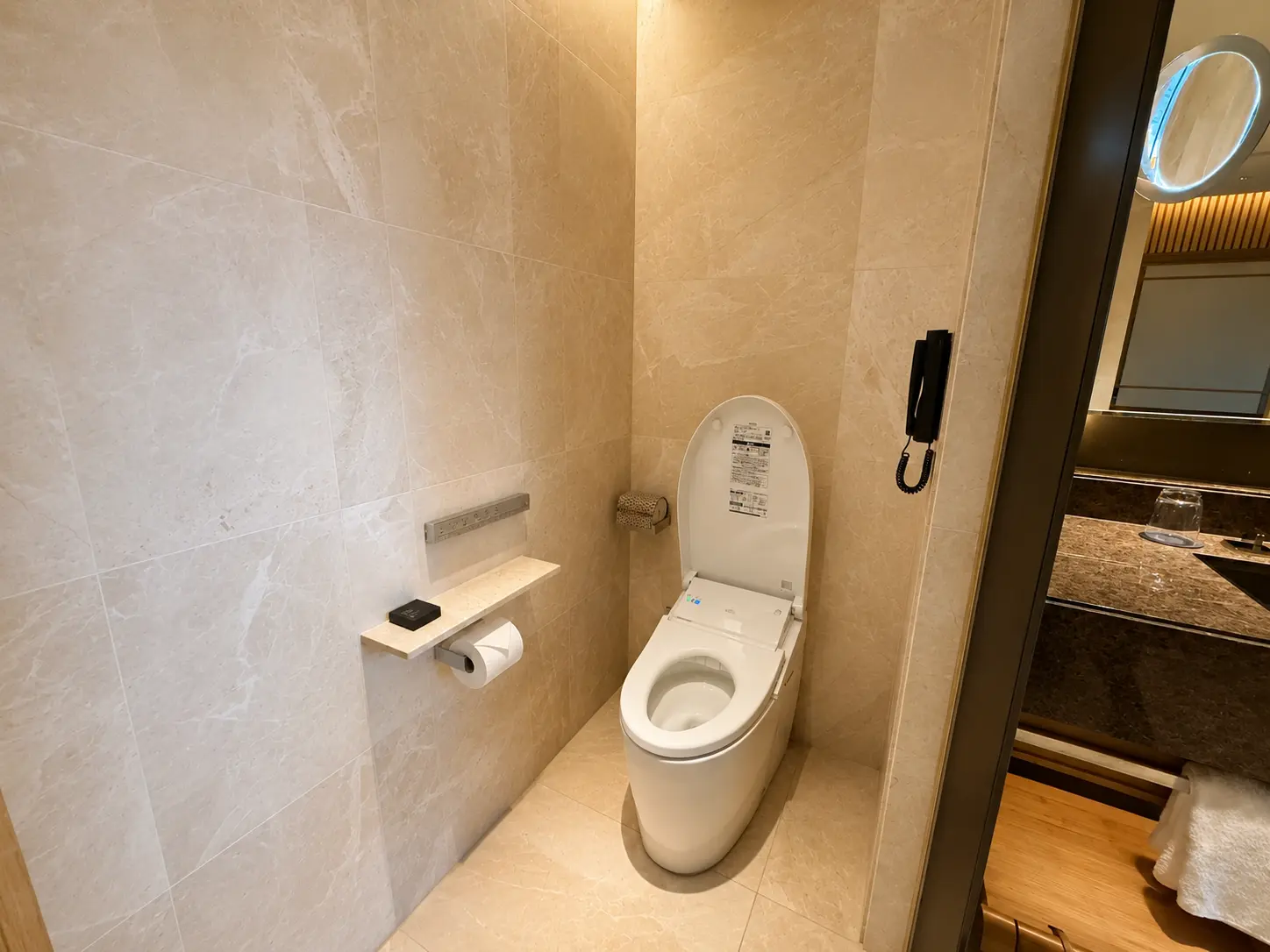
The pale stone continues throughout the bathroom, including around the bath and shower, while the vanity sits separately closer to the bedroom. The shower also has built-in shelves for the toiletries, which keeps the space looking fairly uncluttered.
In-Room Japanese Details
One thing I liked was that Four Seasons does not overdo the Japanese styling but still includes plenty of local detail.
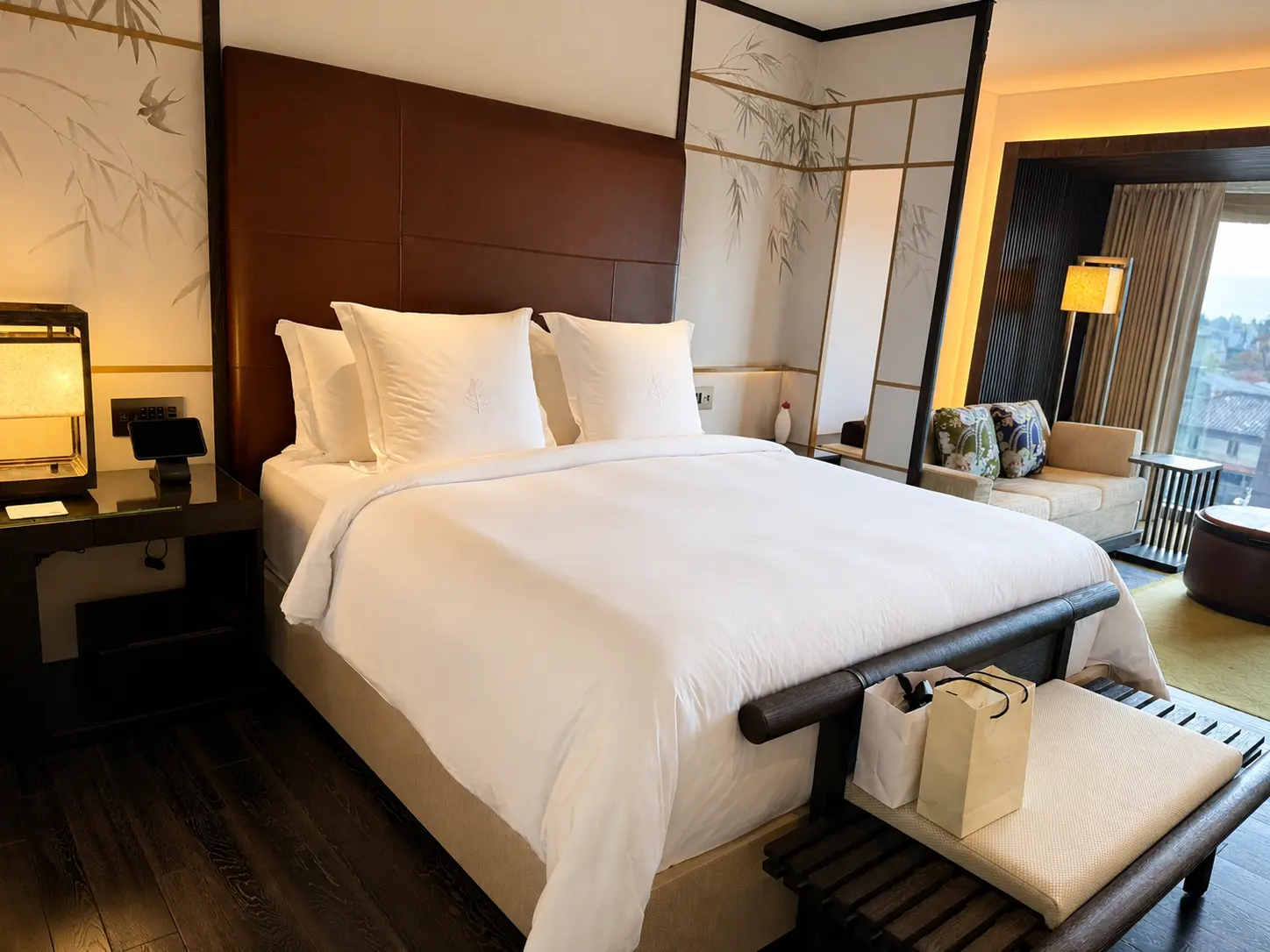
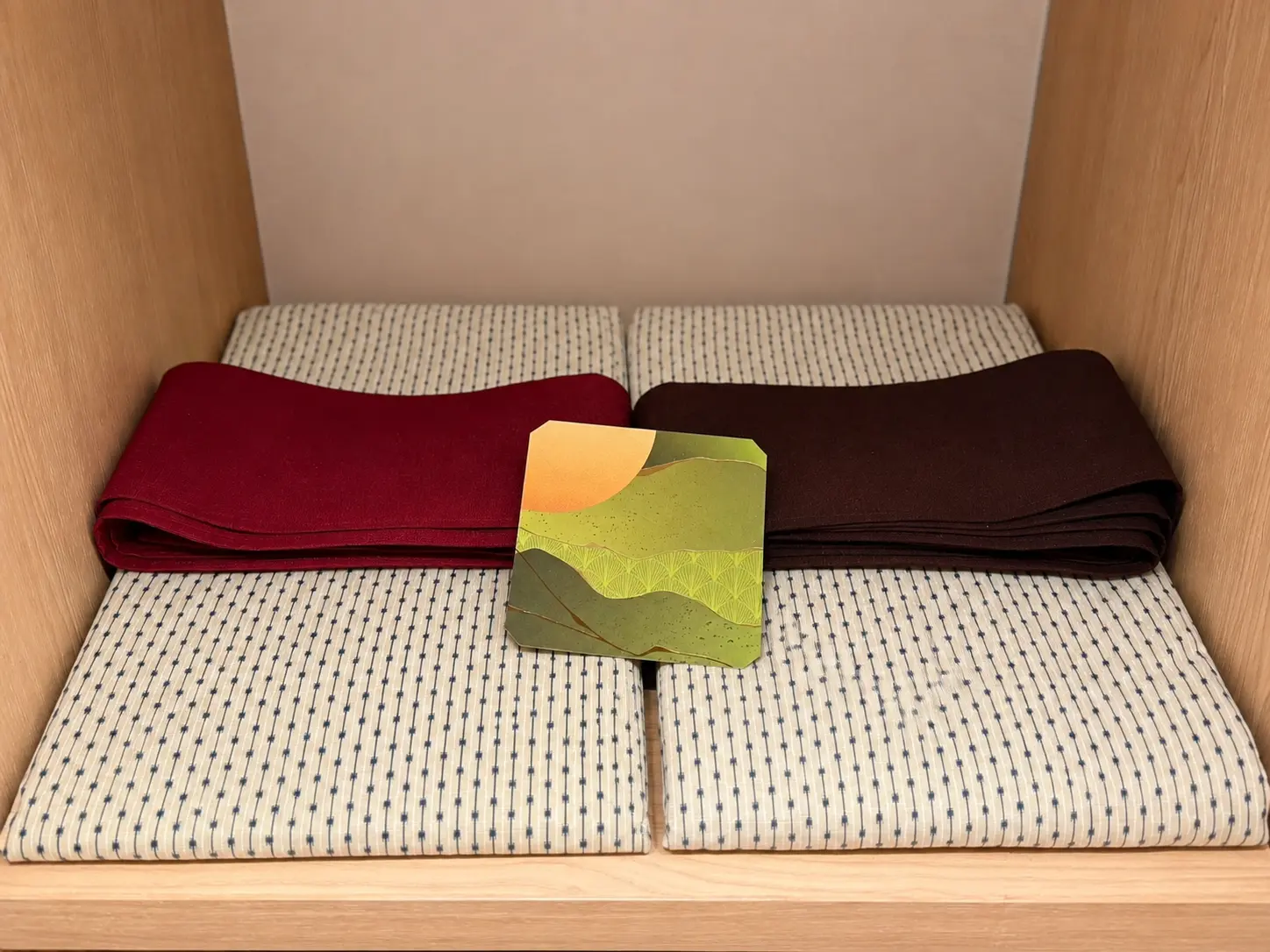
Yukata and Japanese-style clothing are provided in the room, while the timberwork, lighting and artwork add a quieter Japanese feel. The wall panels around the bed are especially interesting. They look almost like wallpaper, but are based on fusuma-e, the painted sliding screens used in traditional Japanese interiors, with seasonal scenes such as bamboo and birds.
The Minibar
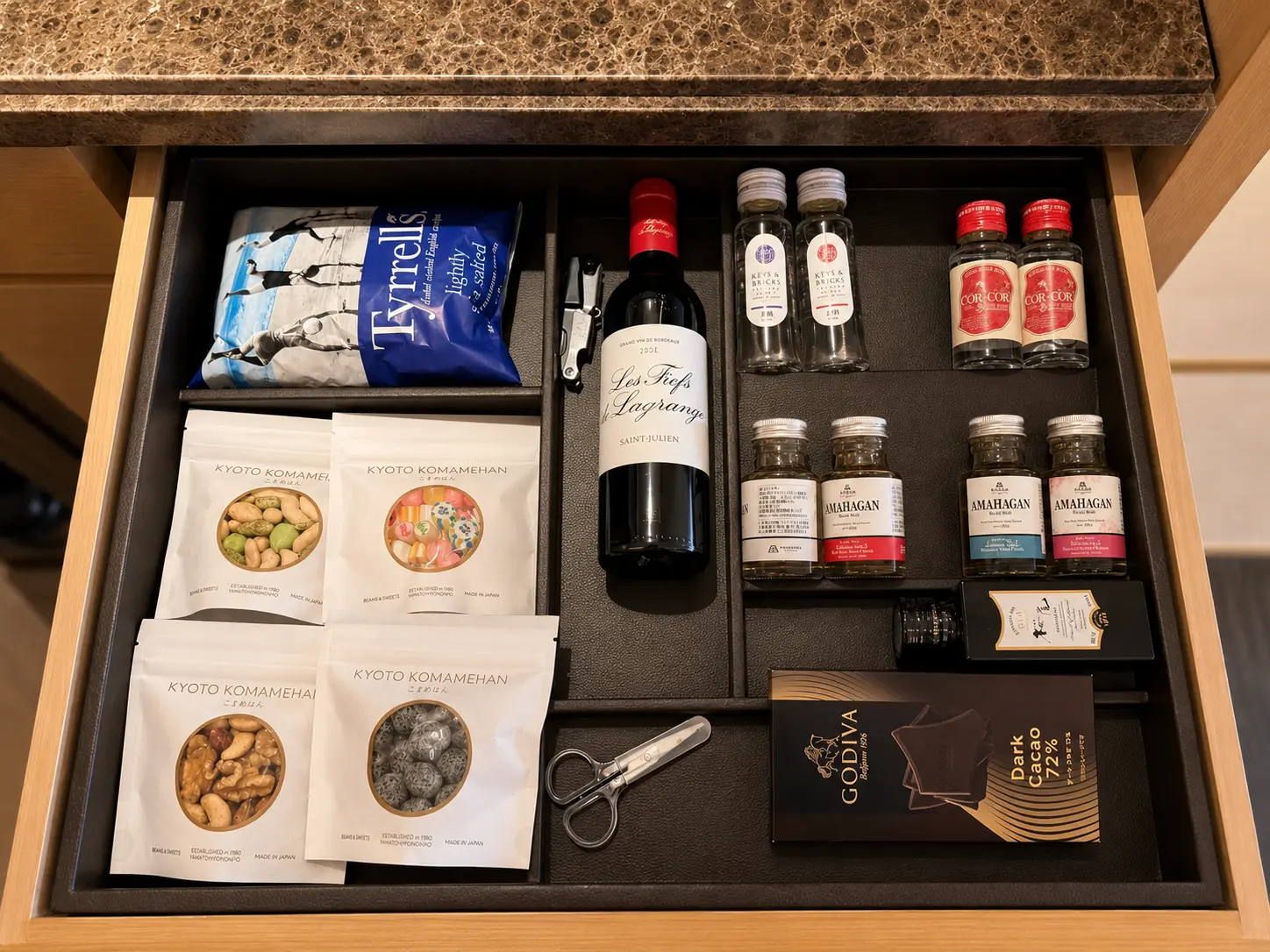
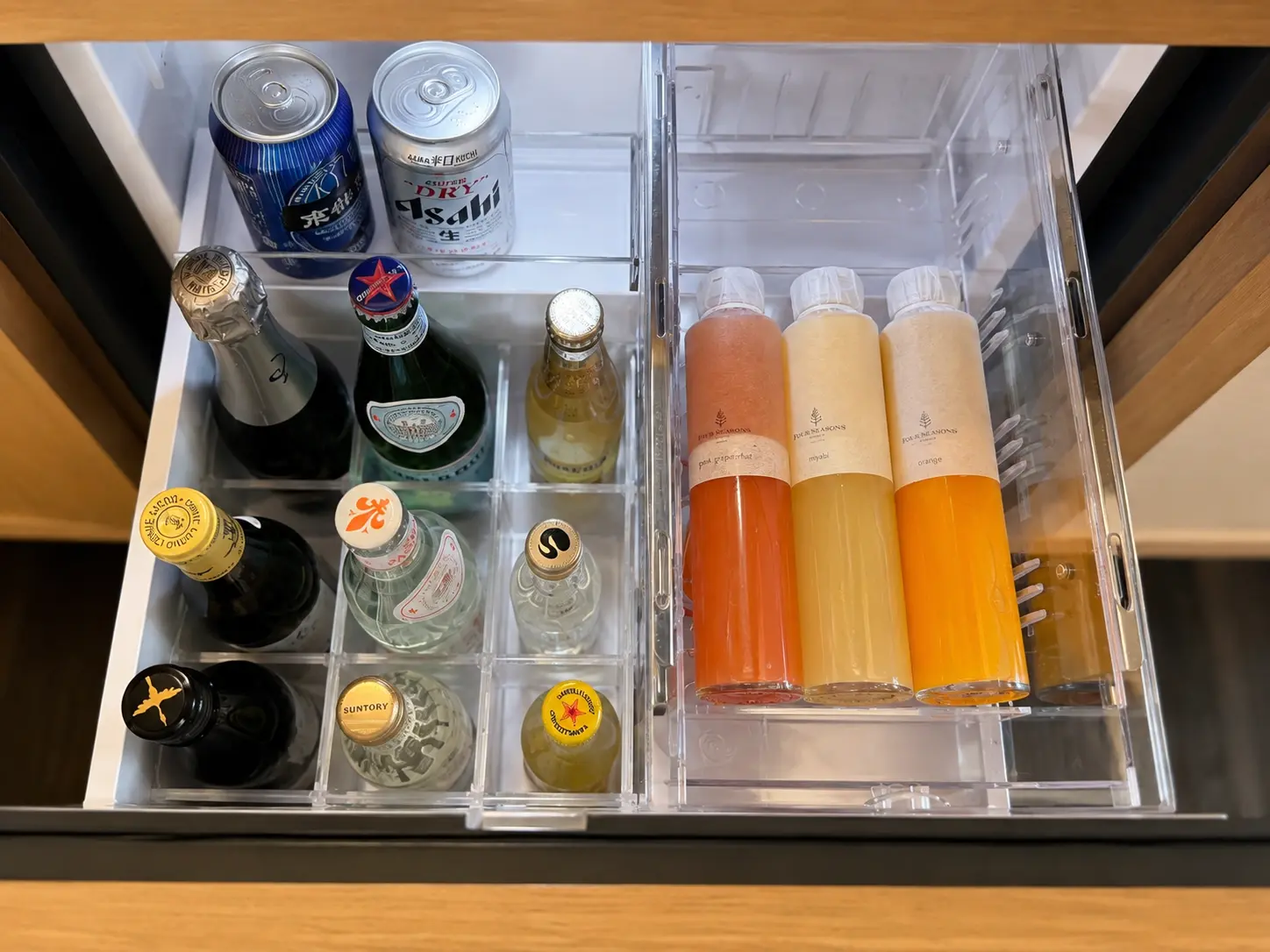
The minibar is unusually good and was one of the better setups I saw during this trip.
The dry minibar drawer is neatly divided into compartments with Japanese snacks, Tyrrell's crisps, Godiva dark chocolate, miniature Japanese whiskies and spirits, wine and the various tools you need for opening bottles.
The refrigerated section is equally well presented, with Japanese beers, sparkling and still water, wine, mixers and Four Seasons-branded bottled juices.
There is also a capsule coffee machine, electric kettle and tea facilities, so the room works well for guests who prefer having coffee or tea before going downstairs for breakfast.
Room Allocation Is Particularly Important
This was one of the more useful things I learned from visiting Four Seasons Kyoto in person.
Some rooms face the main entrance and arrival courtyard, and the level of privacy can vary depending on where the room is positioned. From outside the hotel, you can see directly toward some of the guest-room windows above the driveway.
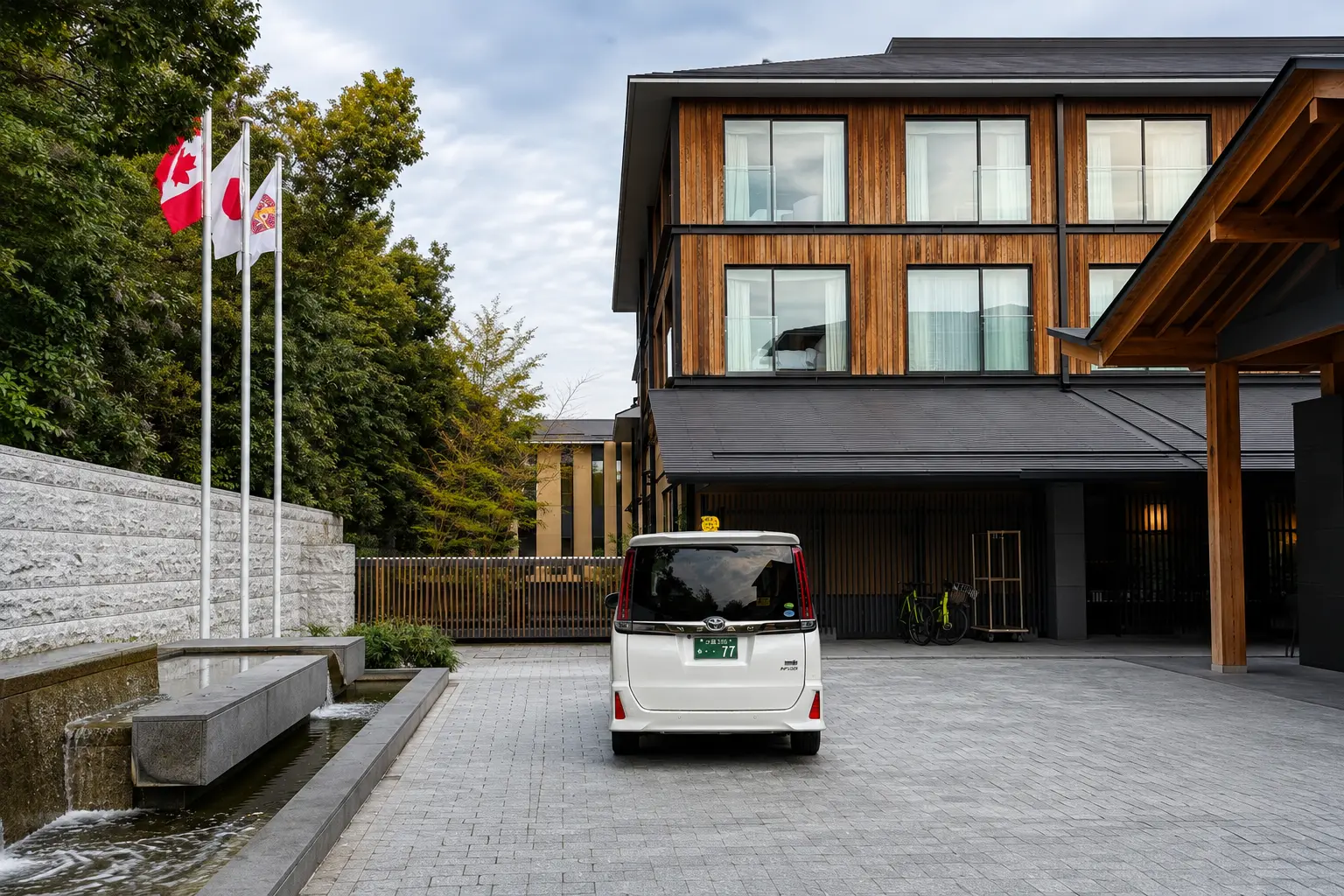
I would not avoid these rooms altogether. The interiors are the same, and some guests will not be concerned by the outlook. But if privacy is important, I would want to know where the room is likely to be before arriving.
The garden-facing side feels quite different, with more greenery and less activity immediately outside the windows.
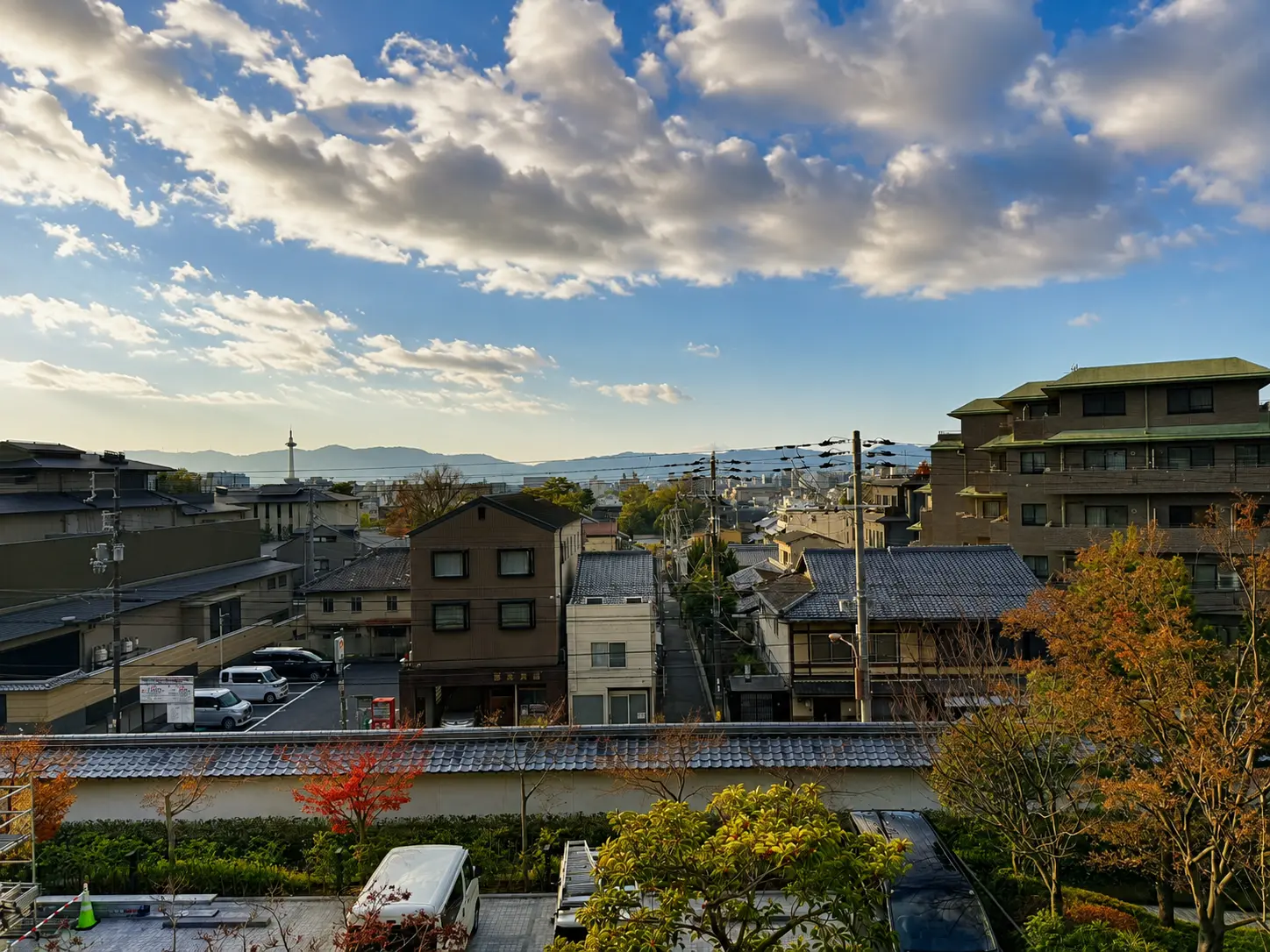
I would not describe those rooms as poor rooms. The interiors remain excellent, and some guests may not care at all. But if privacy is particularly important, I would want to know this before arrival.

This is one of the reasons room allocation is worth discussing when booking Four Seasons Kyoto. Having visited the hotel and seen the different room positions ourselves will allow us to better assist our clients with choosing the right category and requesting the best possible location for their stay.
We can speak with Four Seasons about privacy, outlook and preferred positioning rather than simply adding a generic request such as "quiet room." A particular room number cannot be guaranteed unless the hotel confirms it, but we can make a much more informed request based on the actual layout of the property.
Four Seasons Kyoto Residences
The residences are worth looking at for families or anyone staying in Kyoto for more than a few nights. They are not just larger hotel rooms. You get separate living and sleeping areas, a dining space, a fully equipped kitchen and washer/dryer facilities, which makes them much easier to live in during a longer stay.
There are five residence configurations. The One-Bedroom Residence starts at 83 sqm, while the One-Bedroom Heritage Garden Residence increases to around 104 to 107 sqm and gives you the garden outlook. For families there are three two-bedroom options: the 130 sqm Two-Bedroom Tatami Residence, the 150 sqm Two-Bedroom Heritage Garden Residence, and the Two-Bedroom Kyoto Residence, which is the largest at 160 to 180 sqm.
The Two-Bedroom Tatami Residence is the most Japanese of the group, with a bedroom with two double beds and a separate tatami room with a king-size futon. One thing to know is that it is on the first floor and faces the driveway, so I would choose this for the tatami setup rather than the view.
For the garden, I would look at the Two-Bedroom Heritage Garden Residence, which has two full bathrooms, a powder room, a private balcony and views over Shakusui-en. If space is the priority, the Two-Bedroom Kyoto Residence gives you up to 180 sqm, two full bathrooms, a powder room, two balconies and a dining table for six, with views across Kyoto.
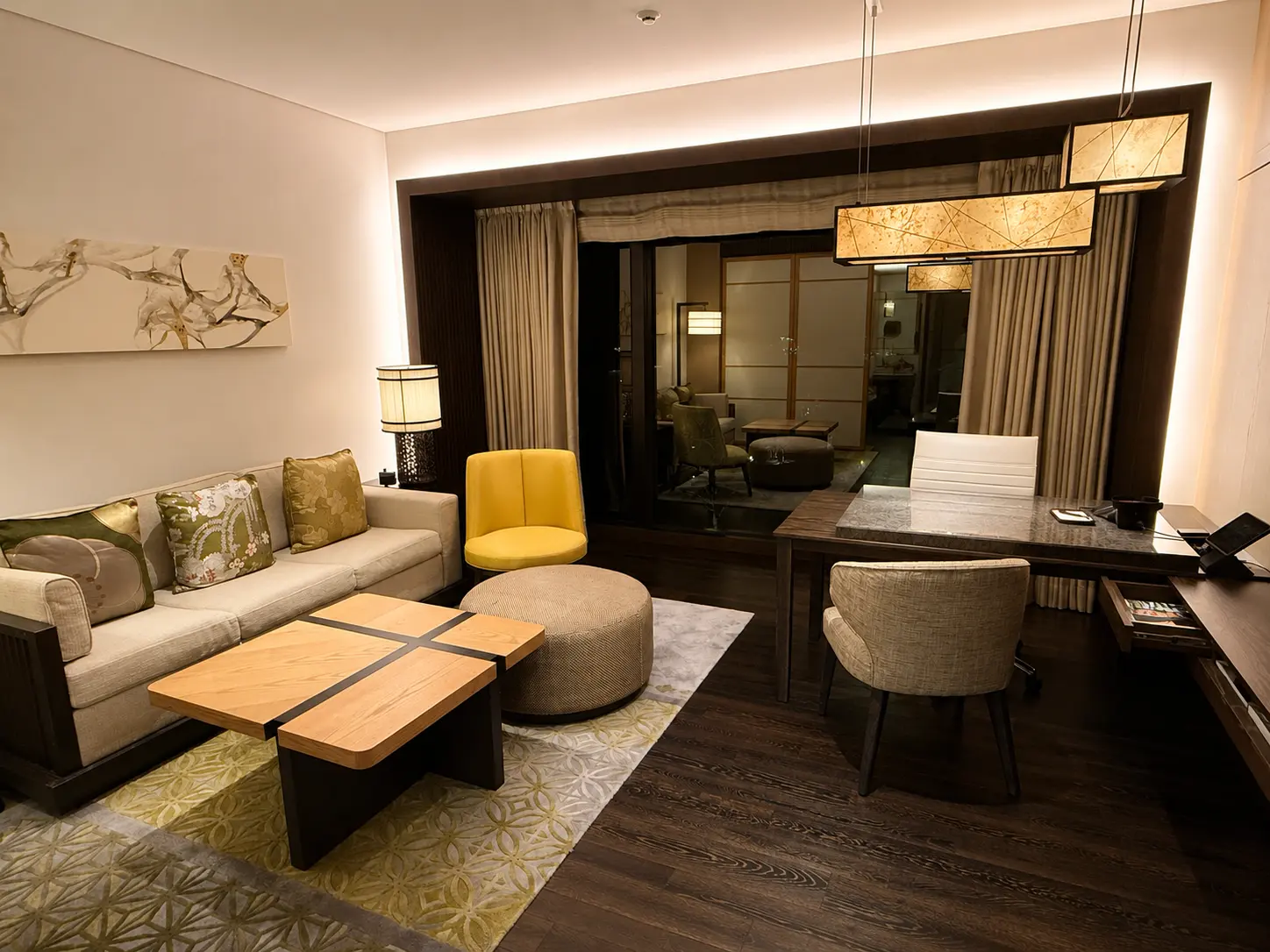
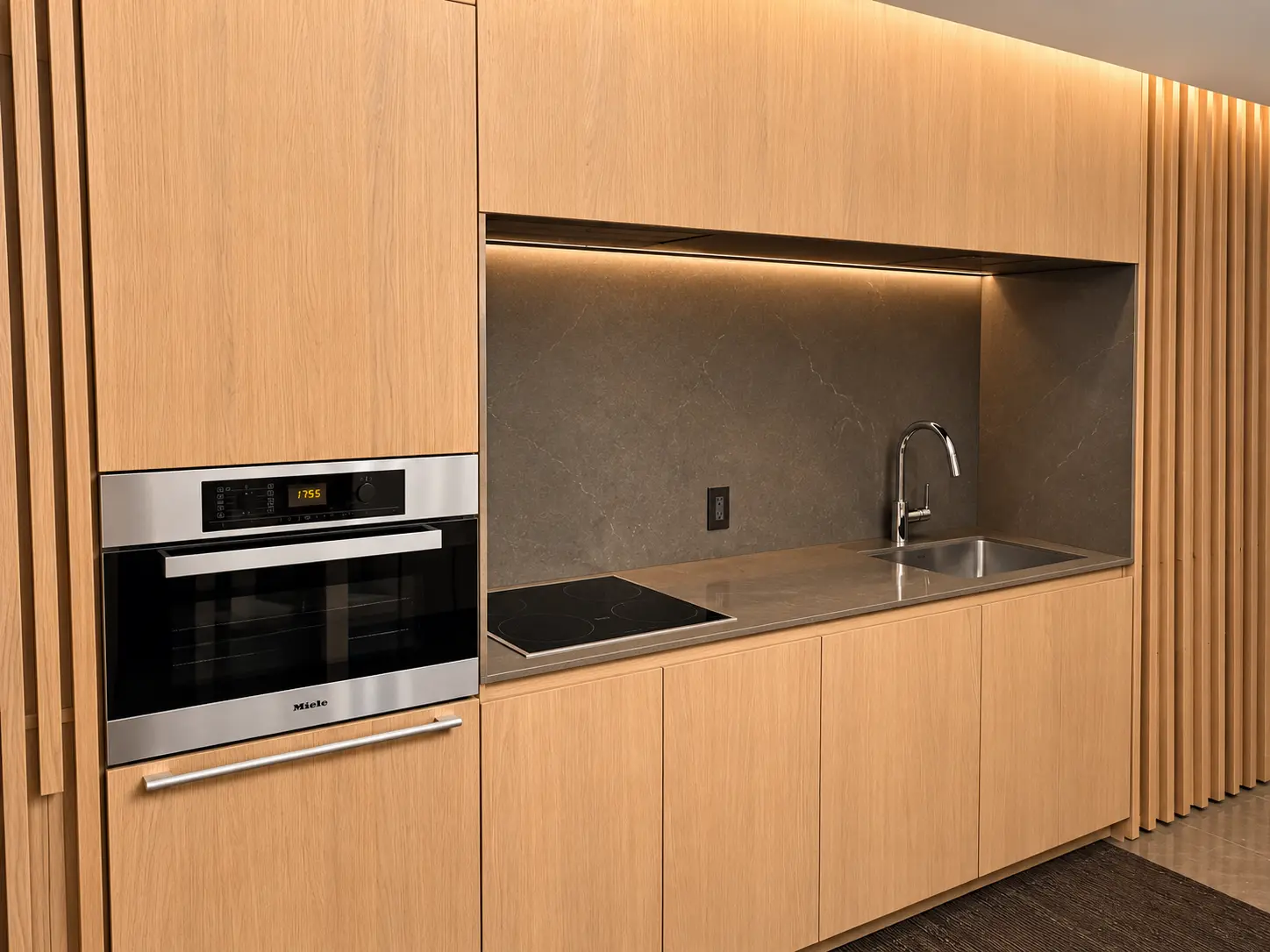
The washer and dryer sounds like a small detail, but if Kyoto sits in the middle of a two or three-week Japan trip, it becomes incredibly useful.
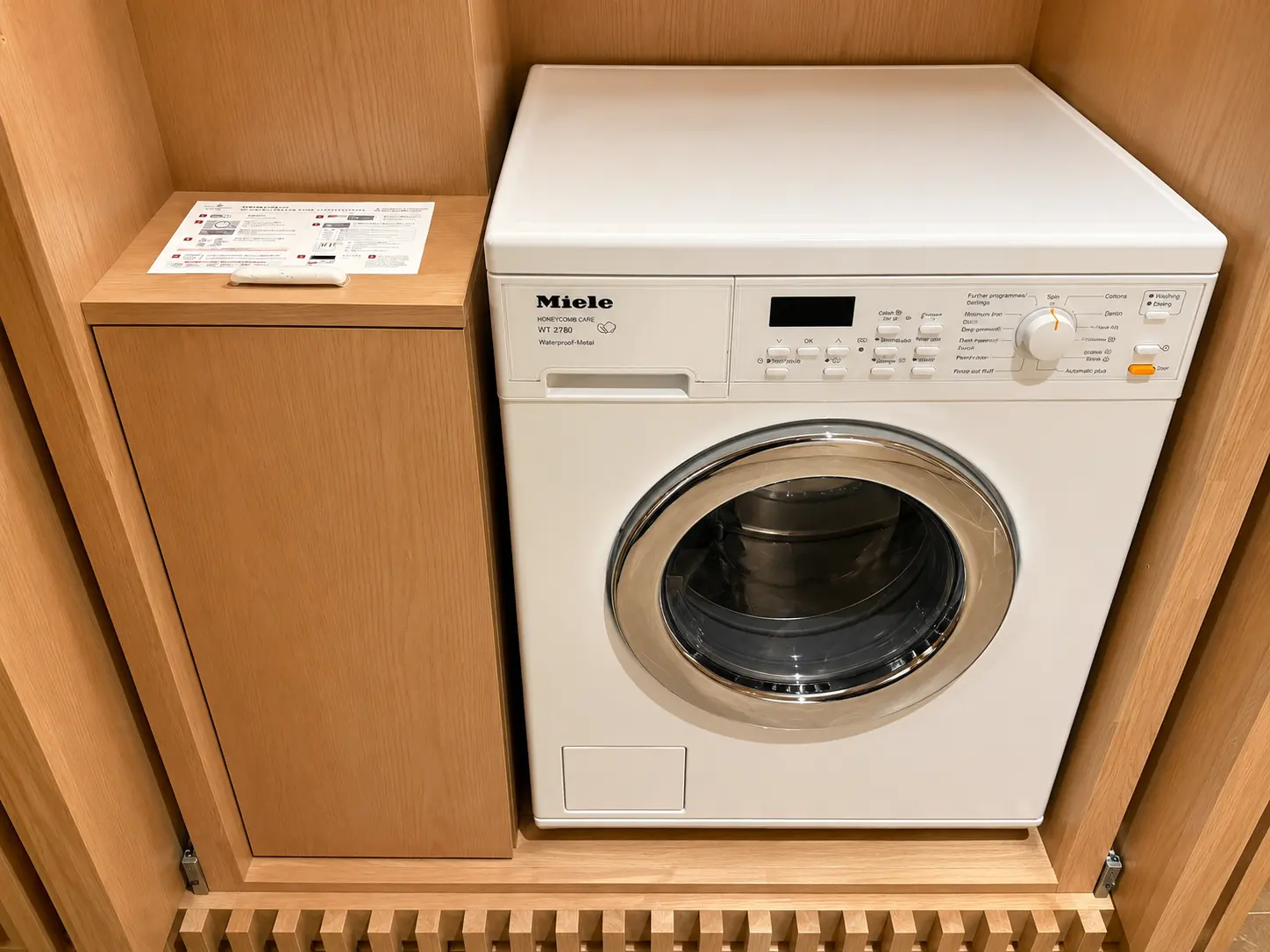
For families in particular, I would price a residence against taking two separate guest rooms. Depending on the dates, the extra living space, kitchen and laundry facilities can make the residence the more practical option.
Dining at Four Seasons Hotel Kyoto
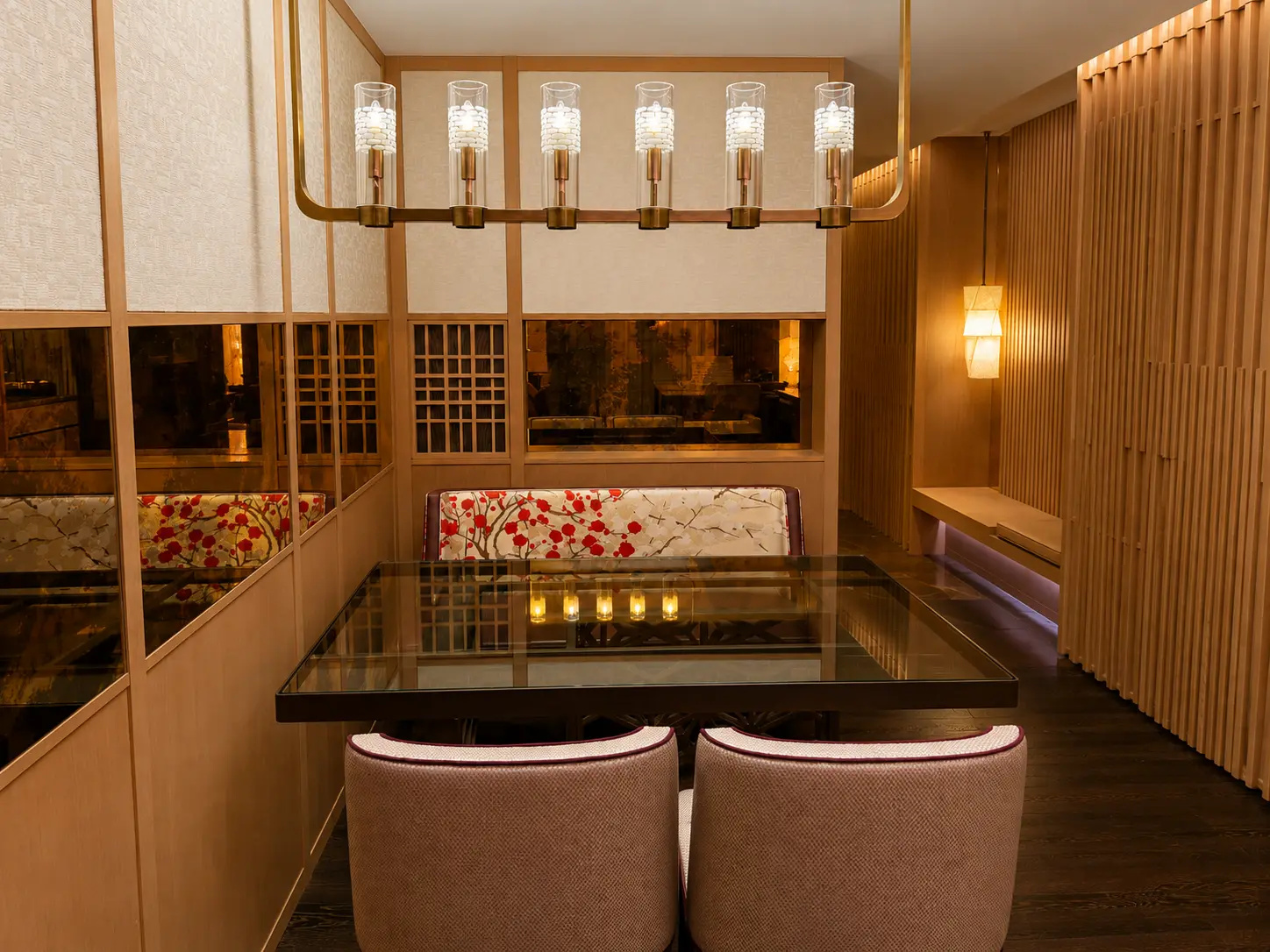
The main dining area at Four Seasons Kyoto is larger than it first appears, with more formal restaurant tables as well as lounge-style seating beside the tall windows overlooking the garden. During our December stay, the six-meter Christmas tree filled this part of the room and worked especially well with the double-height space. Four Seasons has used this area for its festive afternoon tea and seasonal dining in previous years.
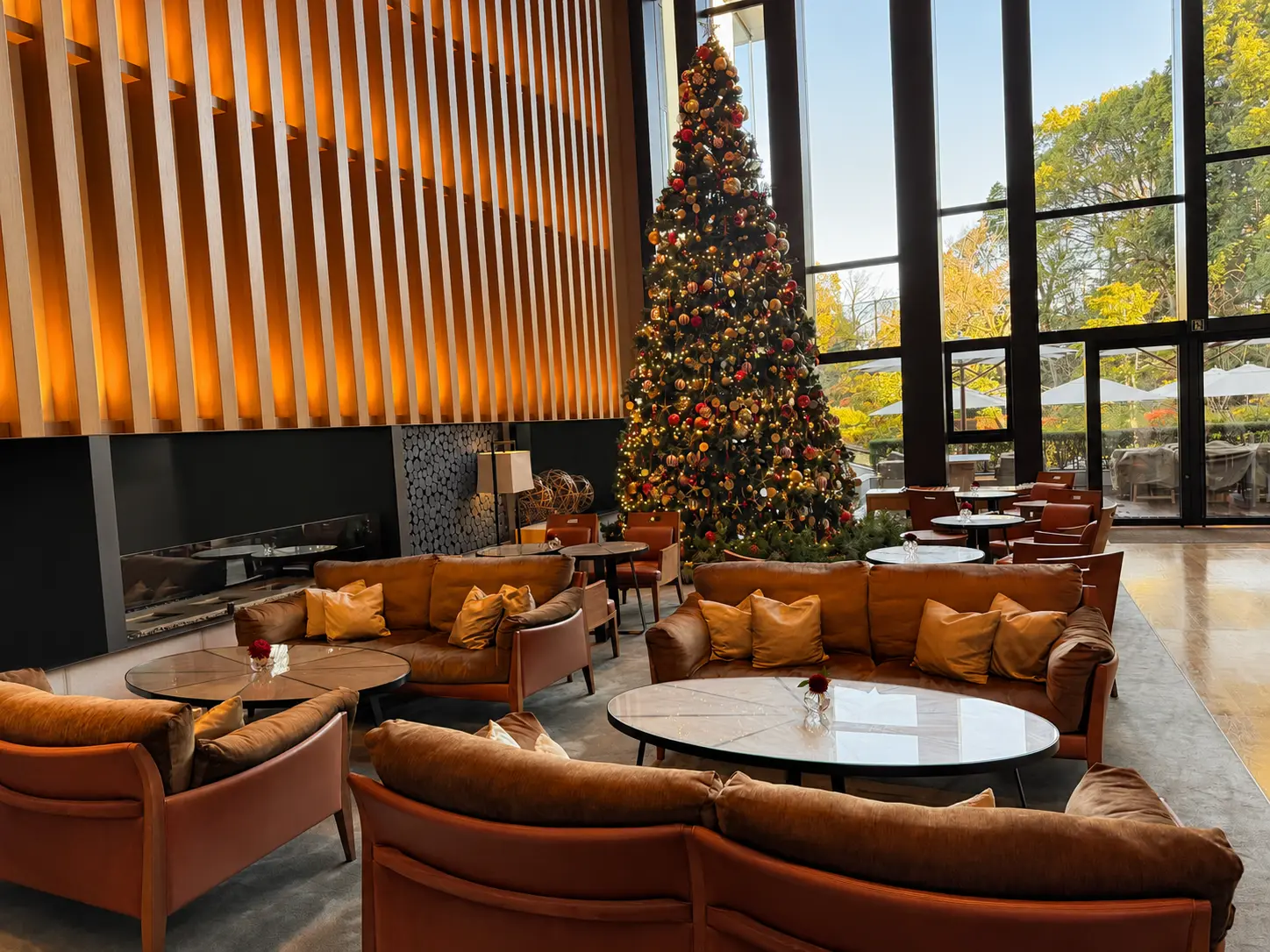
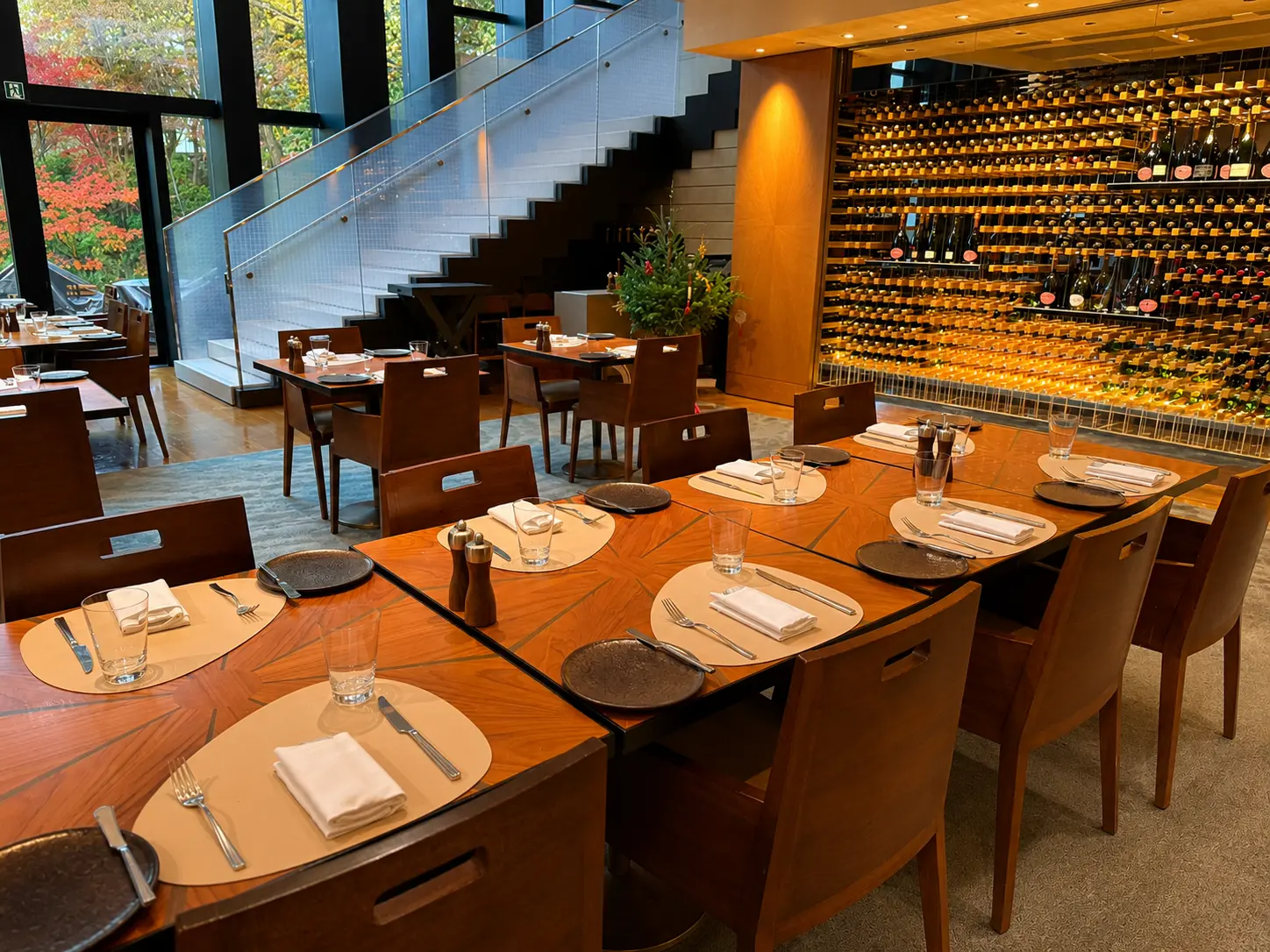
The main restaurant is EMBA Kyoto Grill, a 178-seat space designed by Kokai Studios. There are 106 seats inside and another 72 on the terrace beside Shakusui-en. The dining room itself is quite restrained, with a lot of timber, large windows and a substantial illuminated wine wall along one side.
Breakfast is served here each morning, with a large buffet alongside cooked dishes. There is a good mix of Japanese and Western food, so it works well if you are staying for several nights and do not want the same thing every morning.
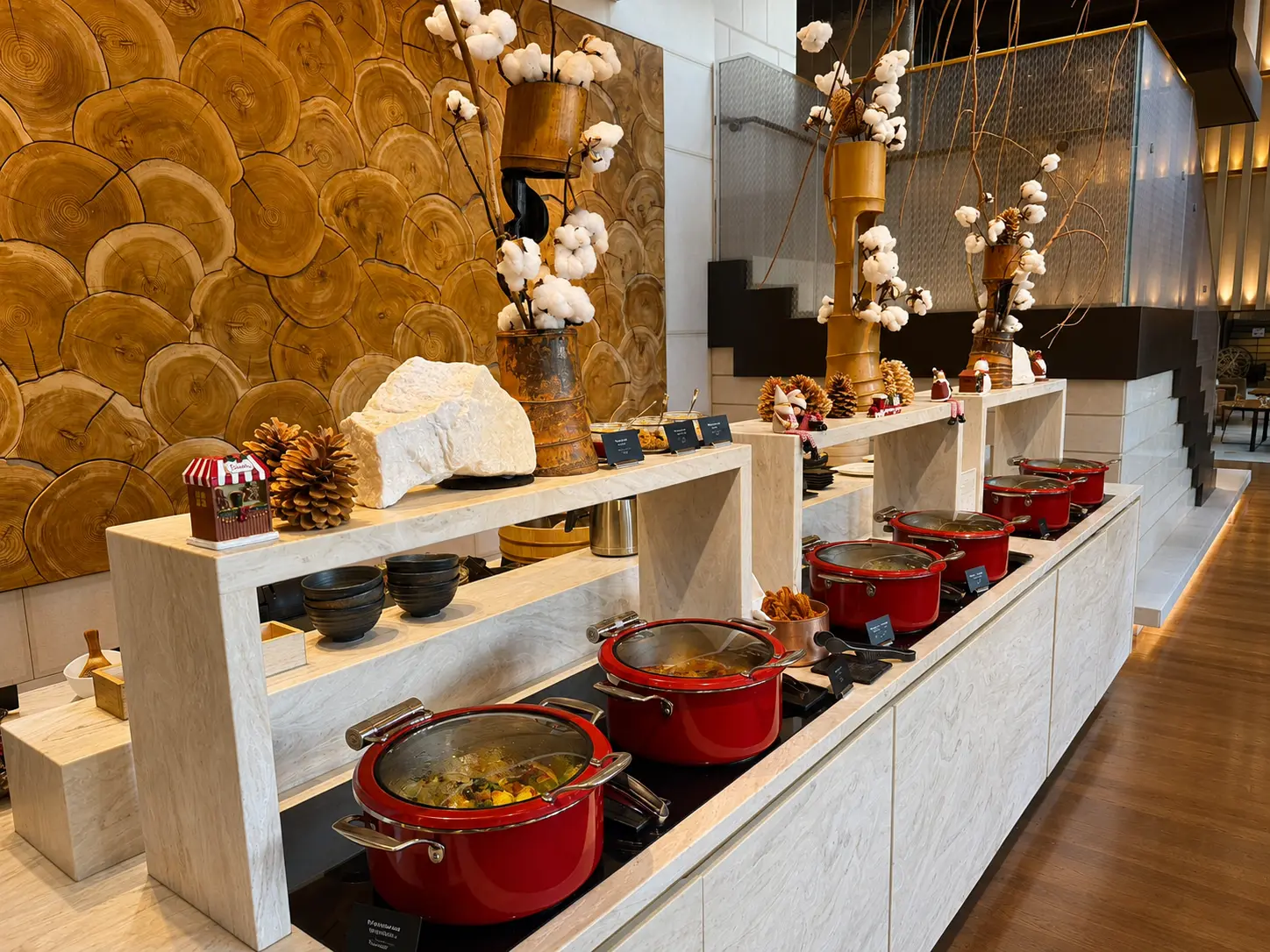
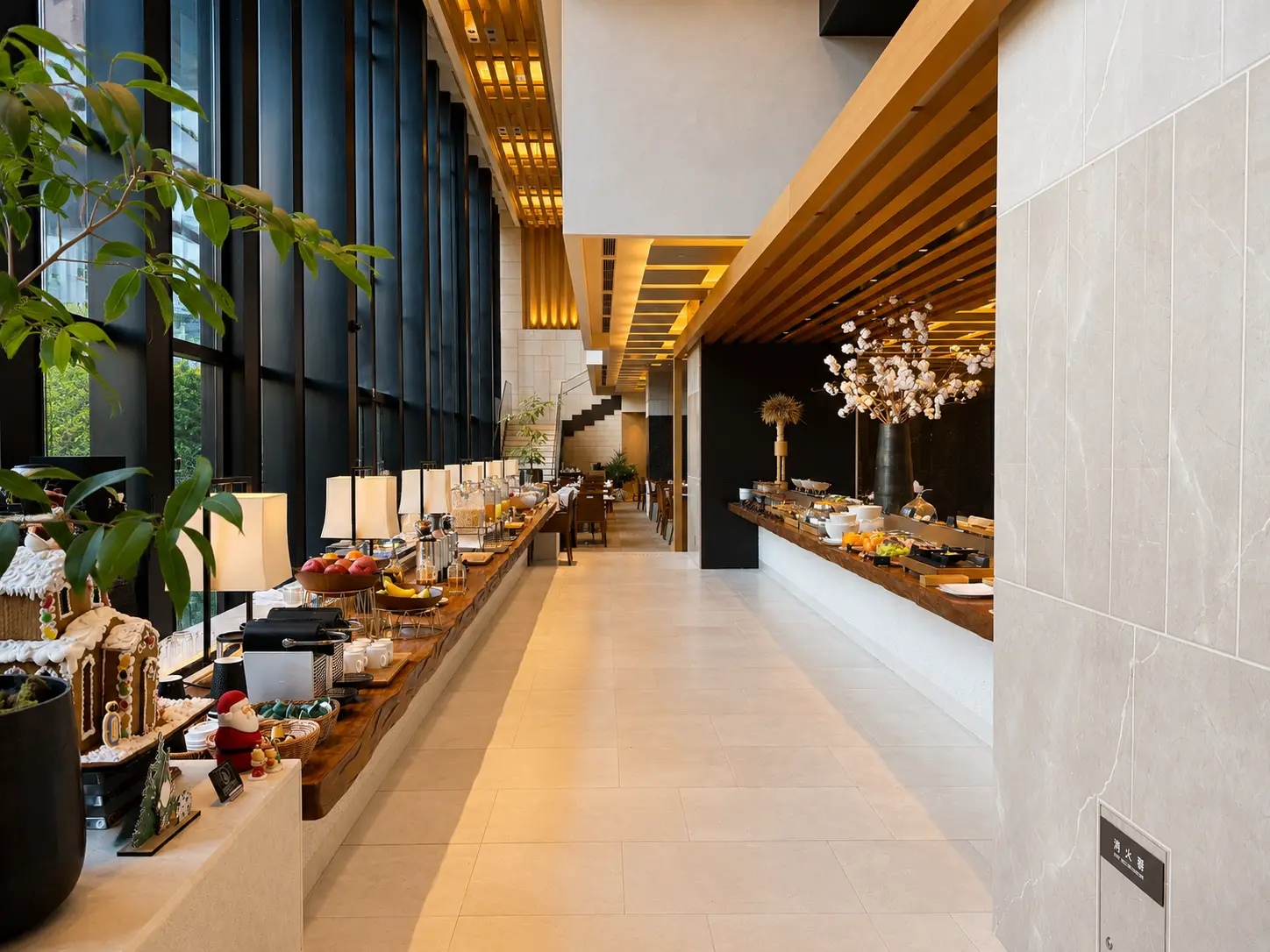
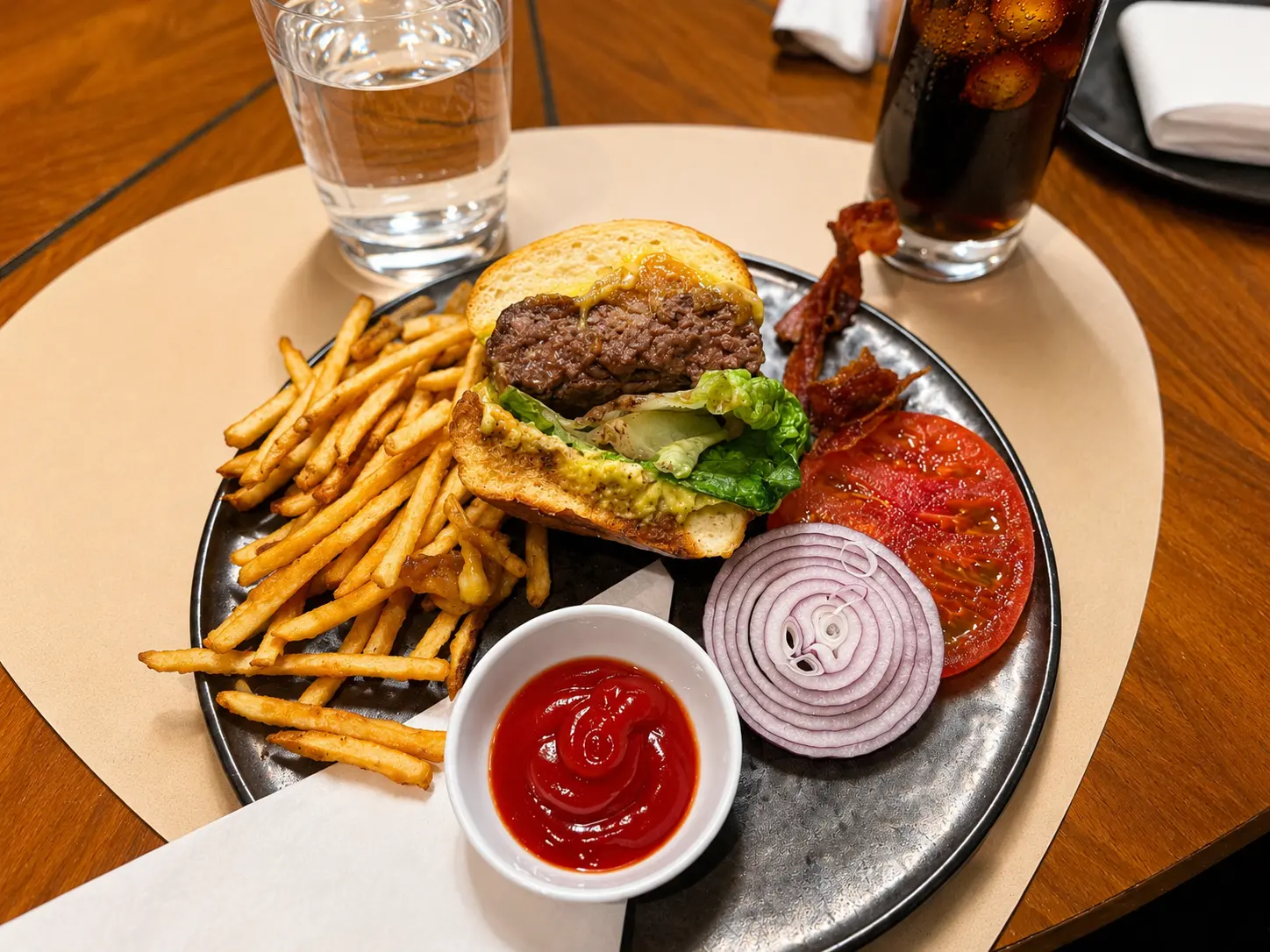
Later in the day EMBA becomes more of a grill restaurant, with Japanese wagyu, dry-aged beef, seafood and vegetables cooked over charcoal. We also tried the EMBA Signature Wagyu Burger, which comes with aged cheddar, Yamazaki whisky glaze, homemade onion jam and wasabi mayonnaise.
The burger is rich, but the whisky glaze and wasabi mayonnaise give it more character than a standard hotel burger. It is also a good option if you want something casual after a day sightseeing rather than sitting down for a full steak dinner.
Sushi Ginza Onodera
For something more formal, Four Seasons Kyoto is also home to Sushi Ginza Onodera, an Edomae-style omakase restaurant overlooking the Shakusui-en pond garden. It opened in 2024 and is the first Ginza Onodera location in western Japan.
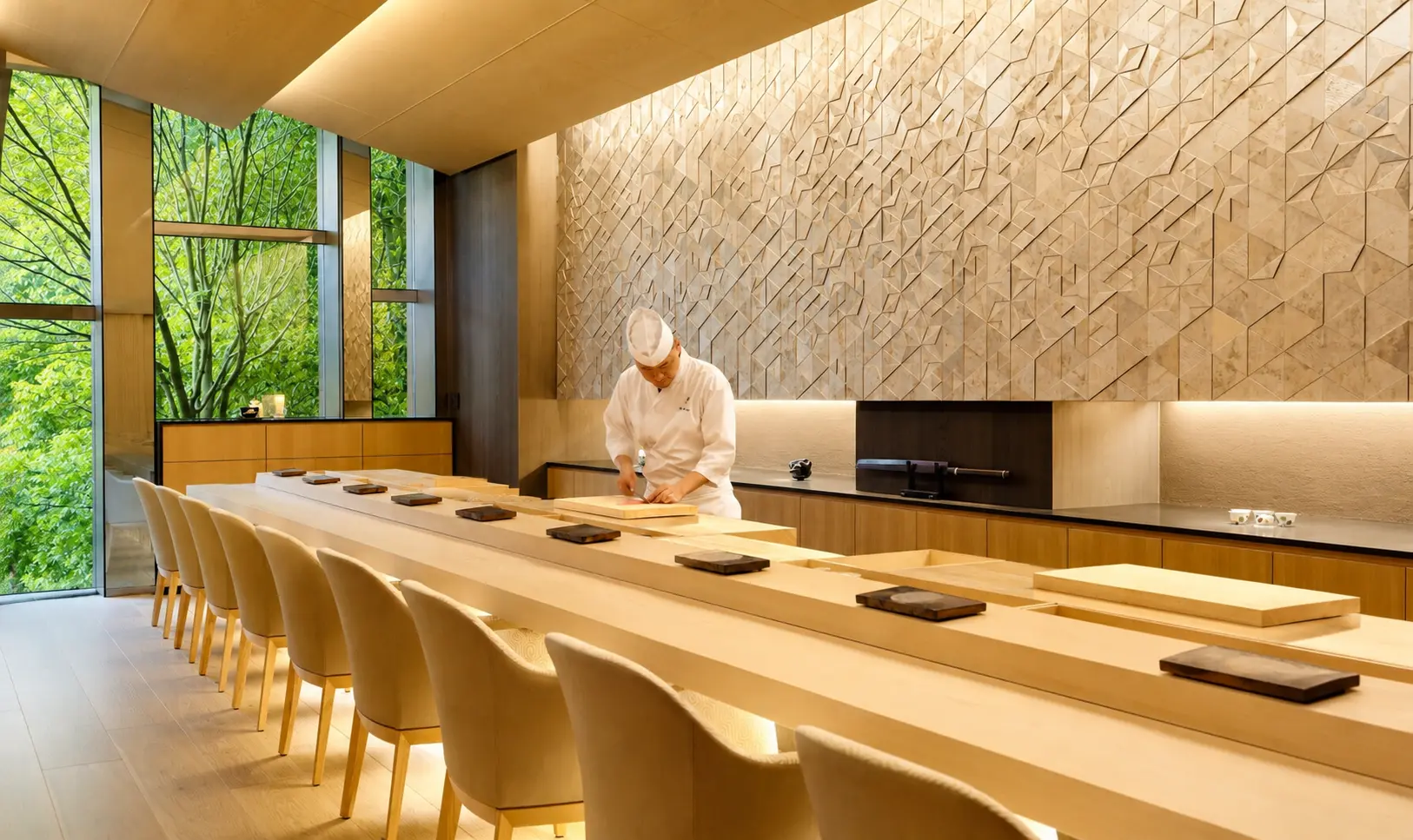
It is a very small setup, with just 10 seats at a counter made from 400-year-old Japanese cypress, plus two private dining rooms. The sushi uses seasonal ingredients sourced from Kyoto, Toyosu Market in Tokyo and Hokkaido.
This is very different from EMBA. It is somewhere I would book as one of your planned dinners rather than decide on at the last minute, especially given the limited number of seats.
SEY Bar at Four Seasons Hotel Kyoto
The bar on the lobby level was one of the places we ended up spending more time than expected. When we stayed, it was still called The Lounge & Bar. It was renamed SEY in April 2026, with a new concept influenced by Japanese izakaya culture.
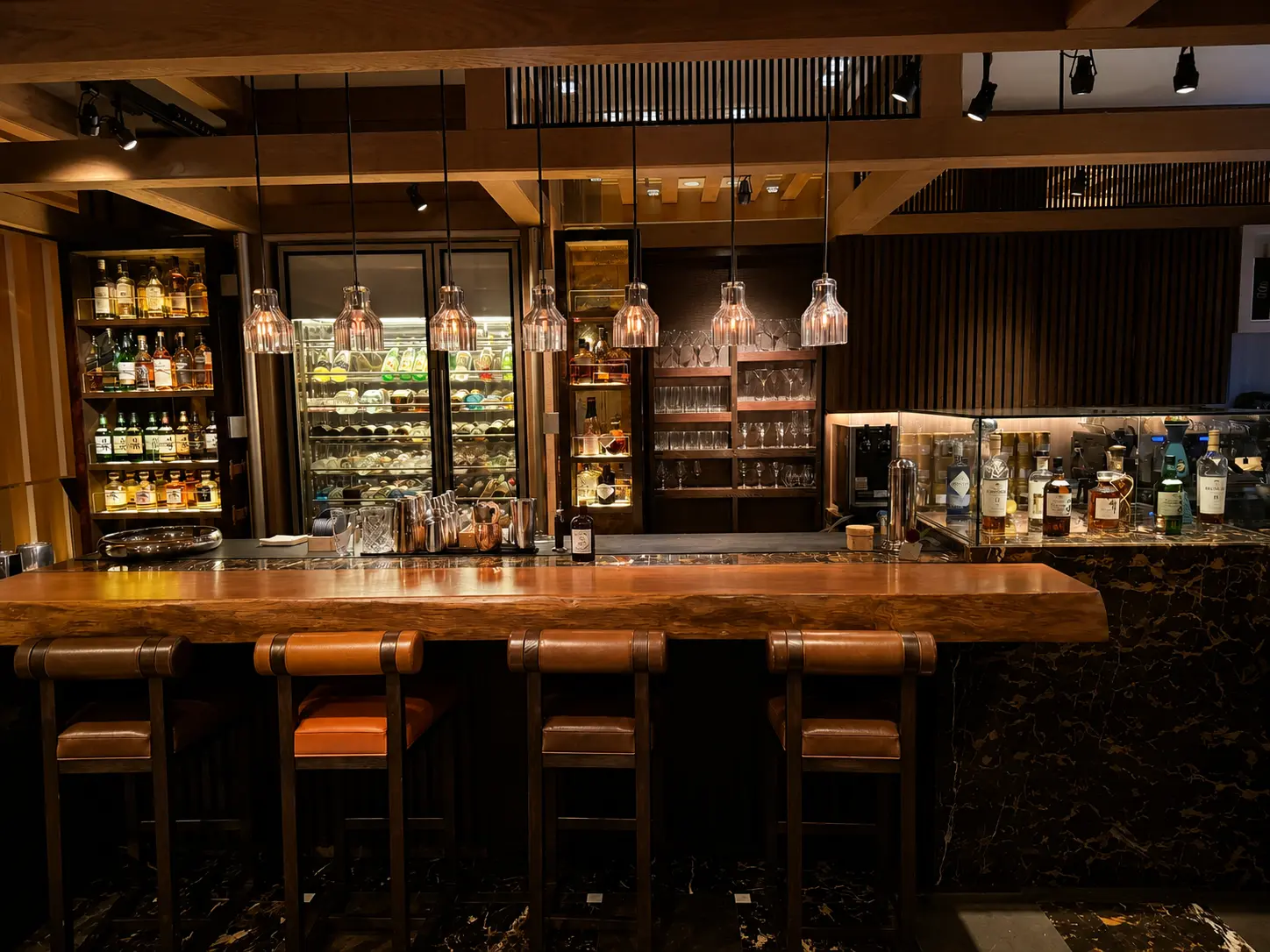
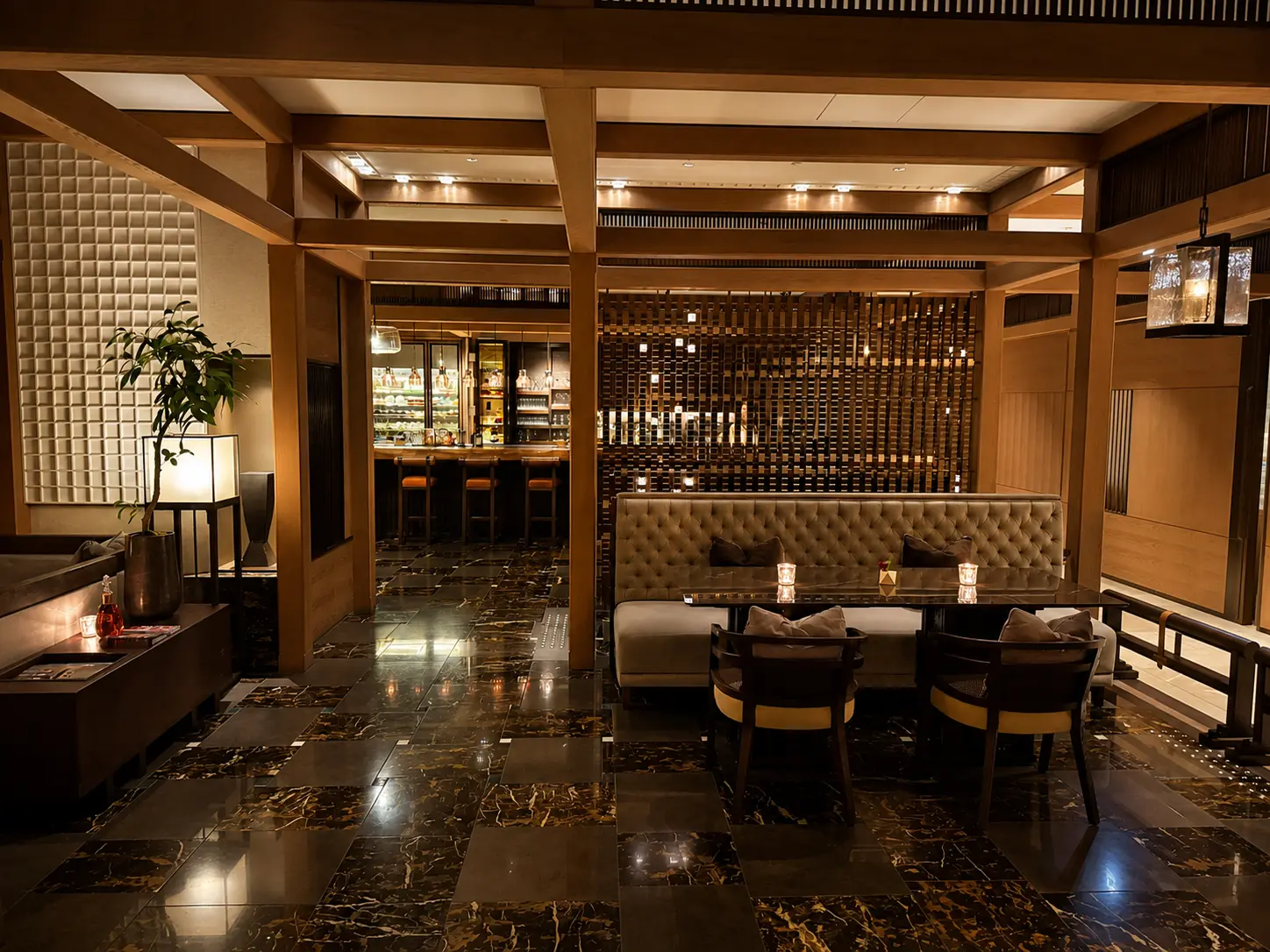
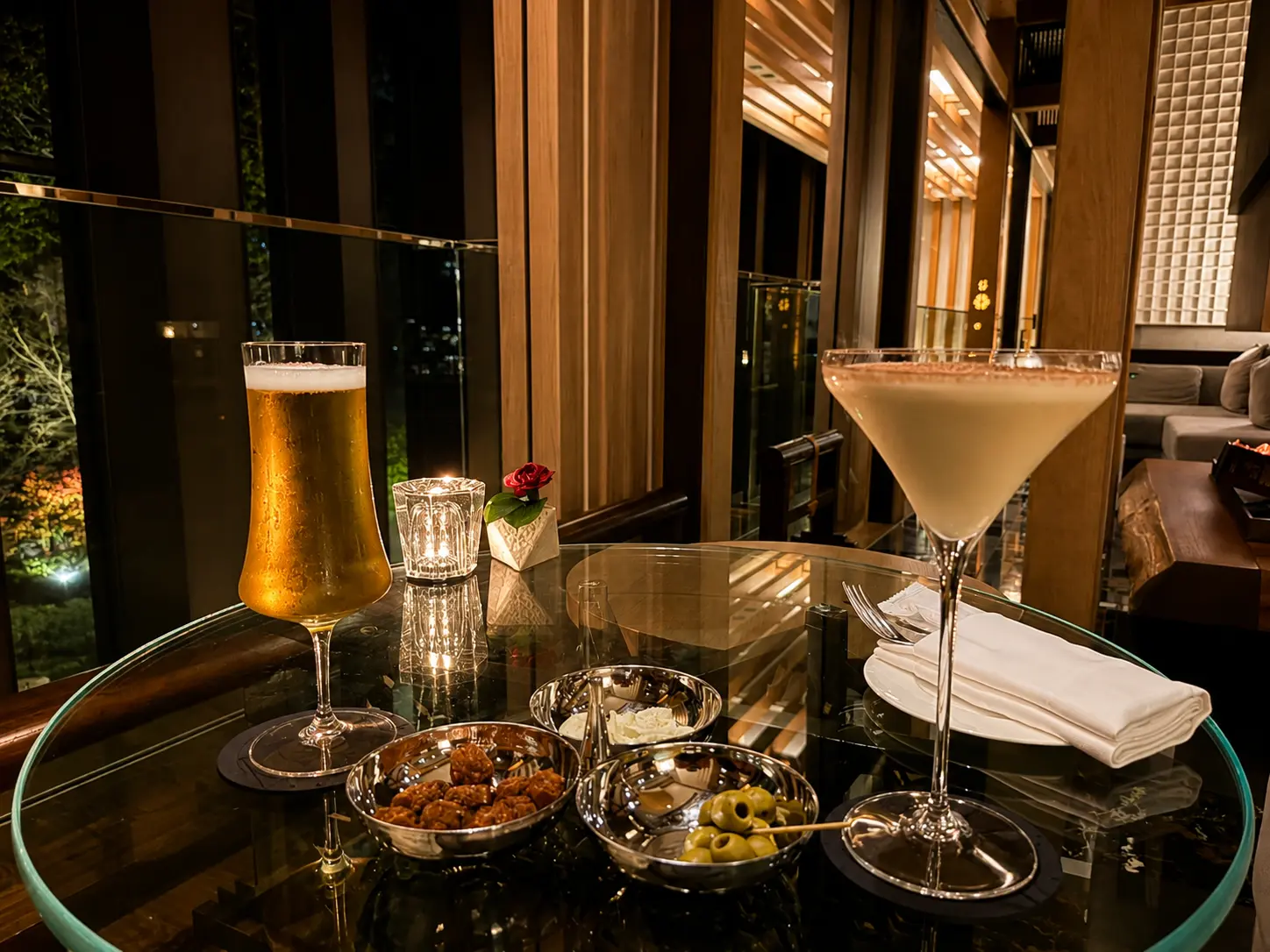
What we remember most was the staff. They were extremely friendly and happy to chat when the bar was quiet, and some of our most interesting conversations in Kyoto happened sitting here. We ended up talking about working life, family, food and everyday customs in Japan, and learned a surprising amount about Japanese life just from those conversations.
There was also live music every night during our stay, which gave the bar much more atmosphere in the evening without making it feel loud or overdone.
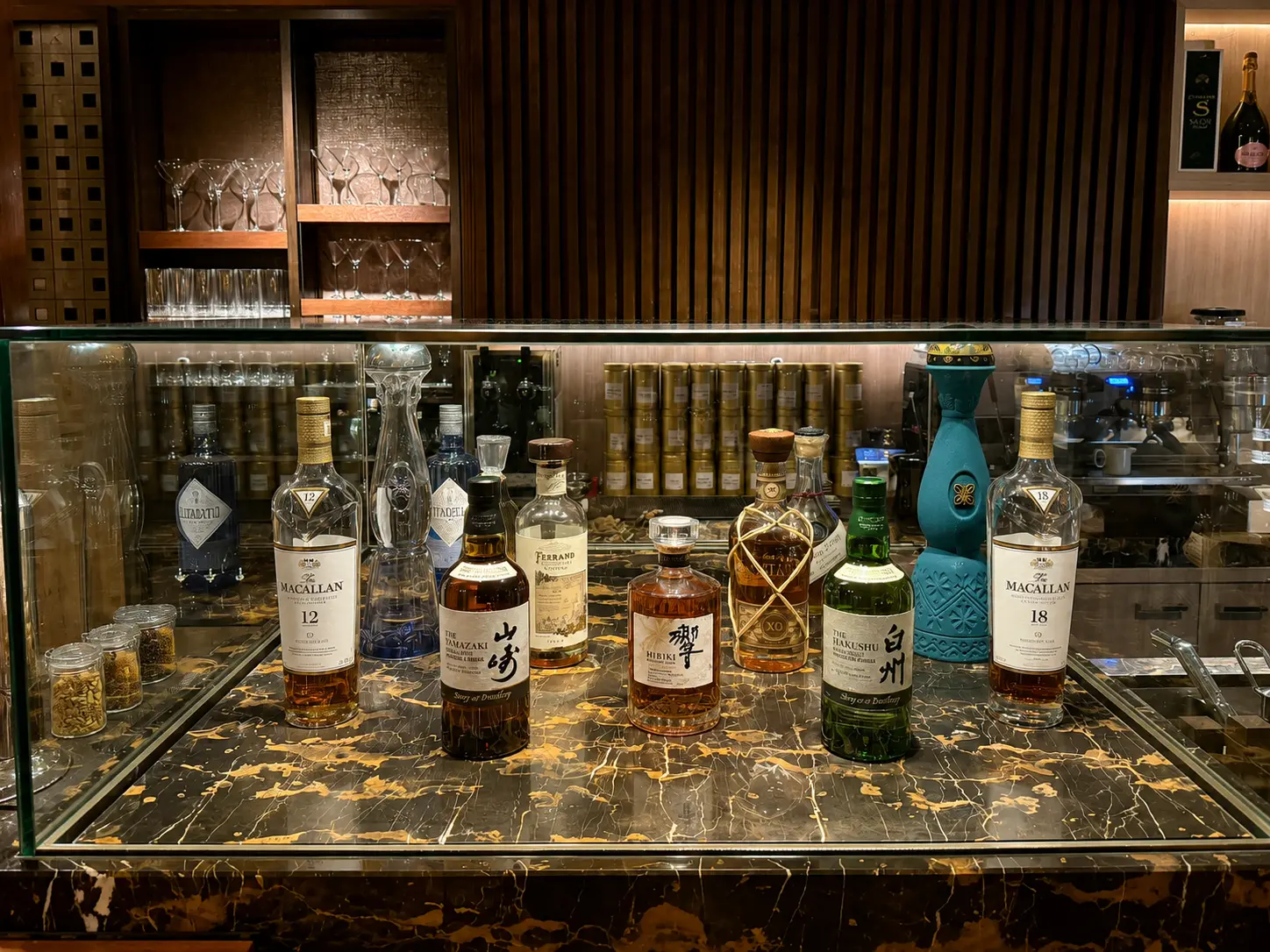
The whisky collection is excellent, with a very good selection of Japanese whisky alongside Scotch and other international bottles. There is bar seating if you want to talk to the bartenders, plus tables and lounge seating if you want somewhere quieter.
We ended up using the bar as somewhere to come back to after dinner for a whisky or cocktail rather than just somewhere to have one drink before going out.
FUJU Tea House at Four Seasons Hotel Kyoto
Set directly on the edge of the Shakusui-en pond garden, FUJU feels quite removed from the main hotel even though it is only a short walk across the grounds. Inside, the room is mostly timber with low seating and large windows looking straight across the water.
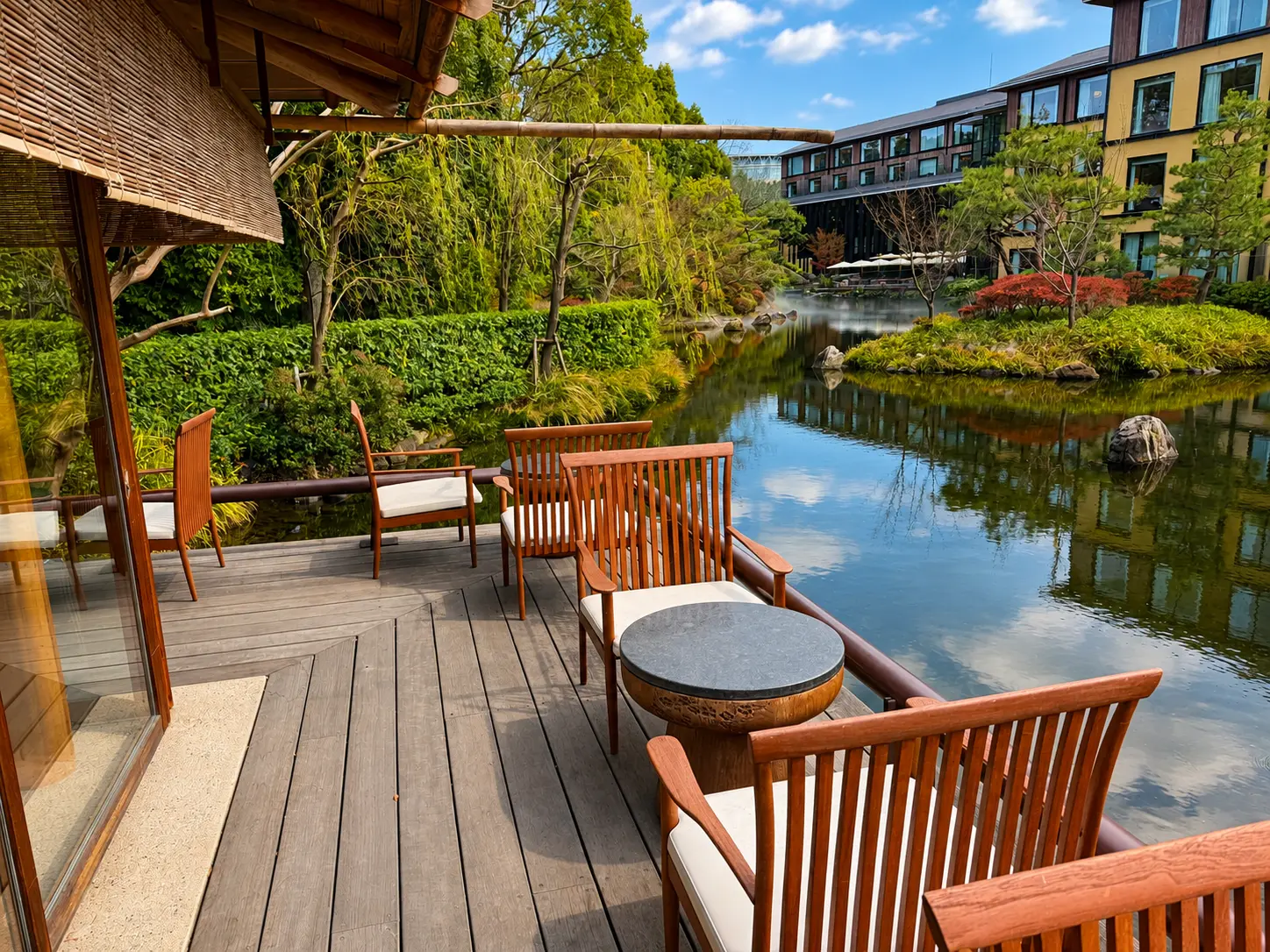
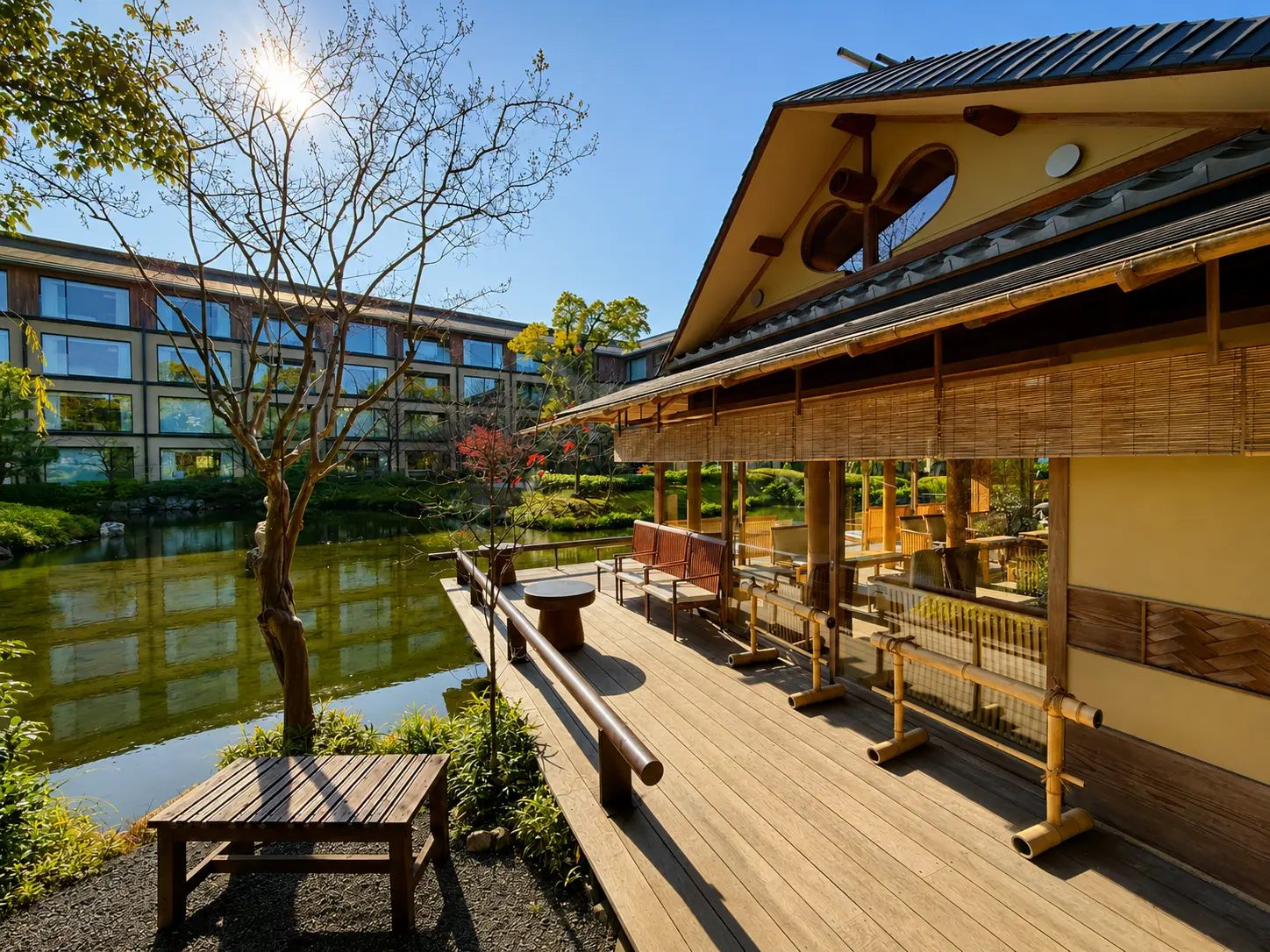

There is also an outdoor terrace running along the pond, which I preferred when the weather was good. From here you look back across the water toward the hotel and garden, and it is one of the quieter places to sit during the day.
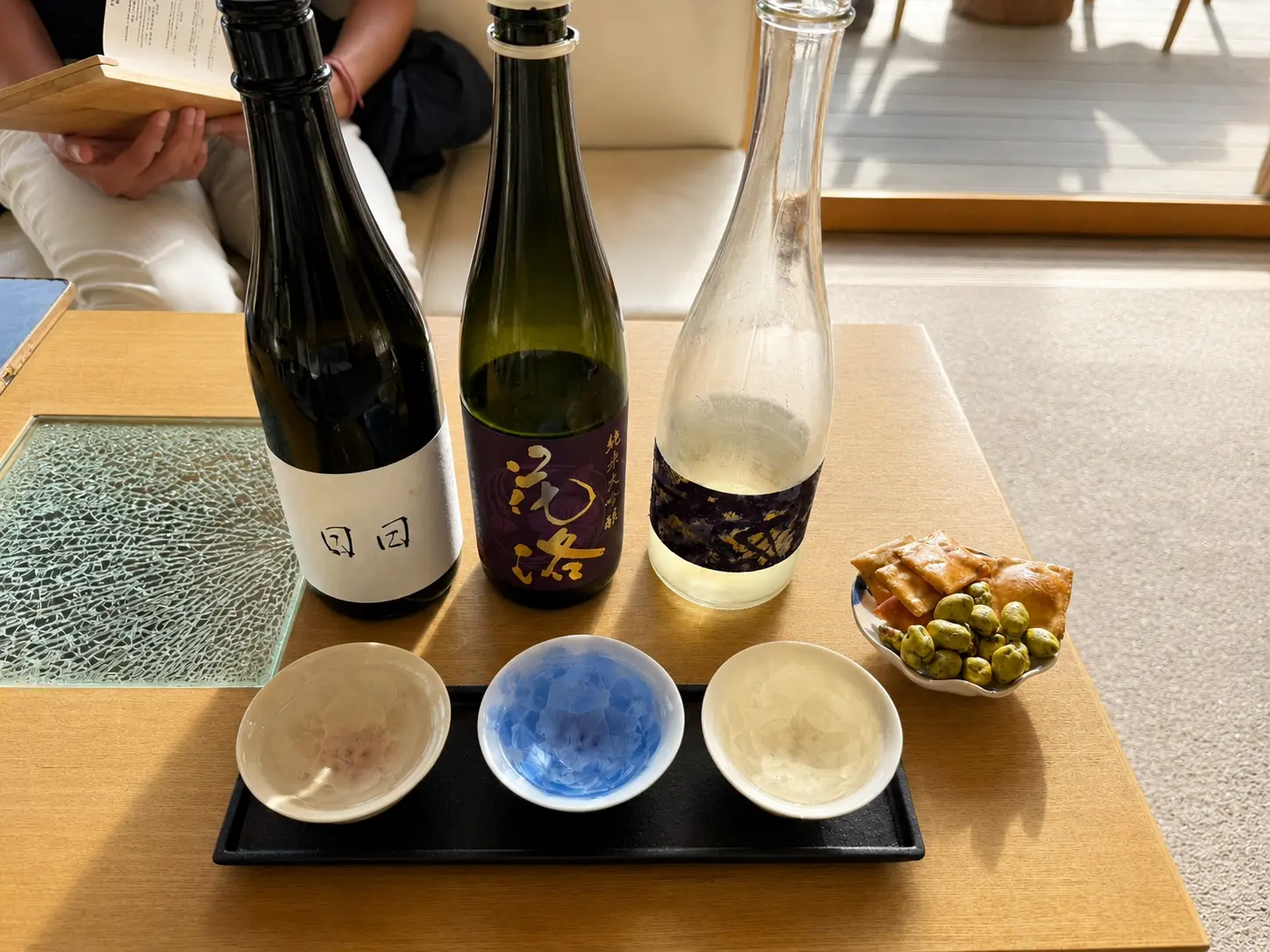
FUJU serves Japanese tea and sweets during the afternoon, while later in the day the menu includes sake and other drinks. We tried a sake tasting, including a Four Seasons Kyoto-labelled bottle, served with small Japanese snacks. It is a nice way to spend an hour at the hotel without turning it into a formal tea ceremony.
Is Four Seasons Kyoto Good for Families?
Very much so. Four Seasons has managed to create a hotel that feels sophisticated enough for couples while still being extremely easy for families.
There is a dedicated children's area with toys, books and climbing equipment rather than the token children's corner you sometimes see at luxury hotels.
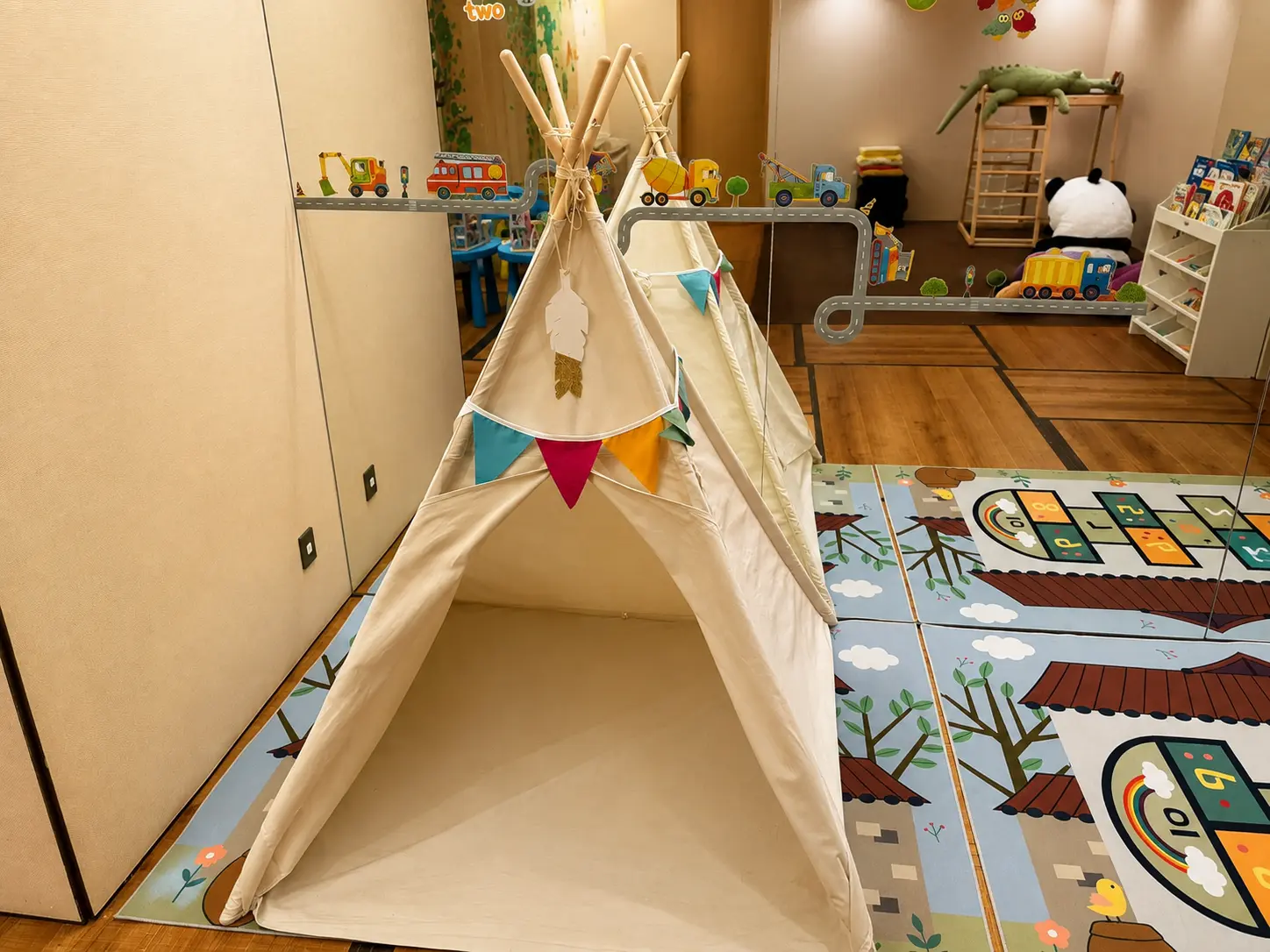

Children can also feed the koi in the garden, use the indoor pool and participate in selected cultural activities.
Combine that with large rooms, connecting options, residences, the pool and the way Four Seasons generally handles younger guests, and I think this is one of Kyoto's easiest luxury hotels to recommend for multigenerational travel.
Pool, Spa and Fitness Center at Four Seasons Hotel Kyoto
The wellness facilities at Four Seasons Kyoto are much more extensive than I expected from a city hotel. They occupy two floors and include the spa, indoor swimming pool, whirlpools, Japanese baths, saunas, relaxation areas and a large fitness center.
The Indoor Pool
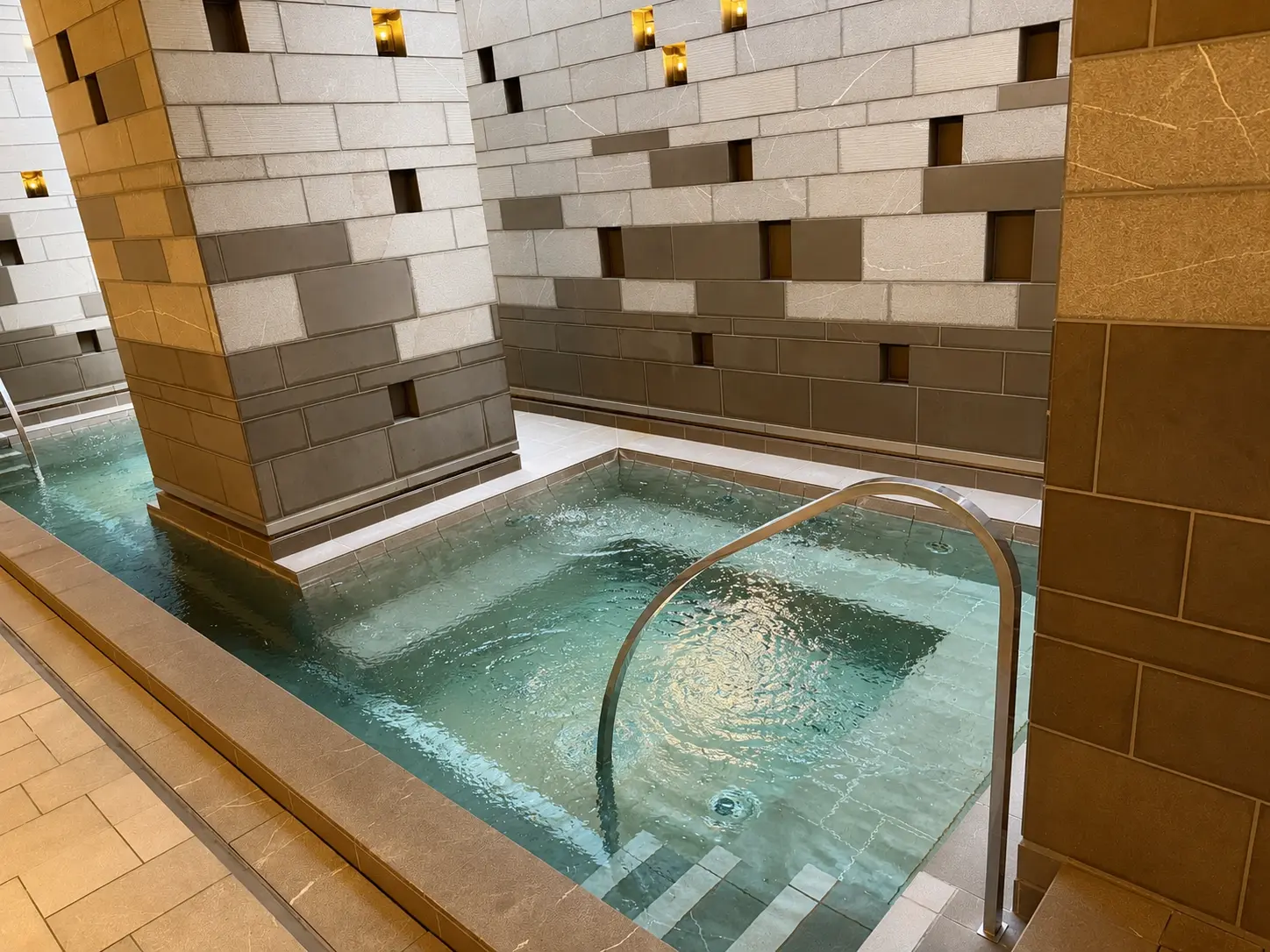
The indoor pool is 20 metres / 65 feet long, so it is large enough for laps rather than being a small hotel pool intended mainly for sitting around. There are also two whirlpools built into the pool area and plenty of loungers along the side.
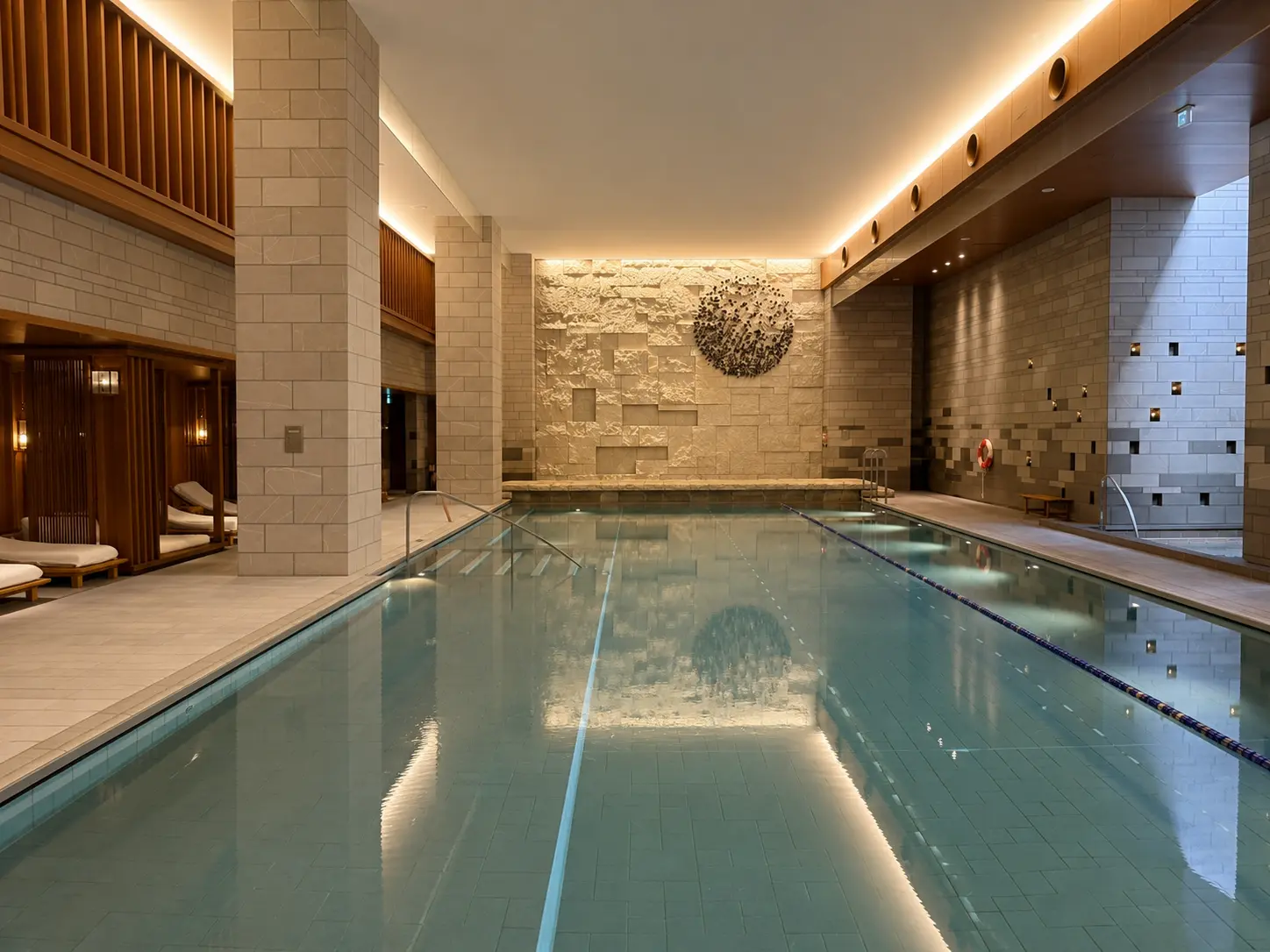
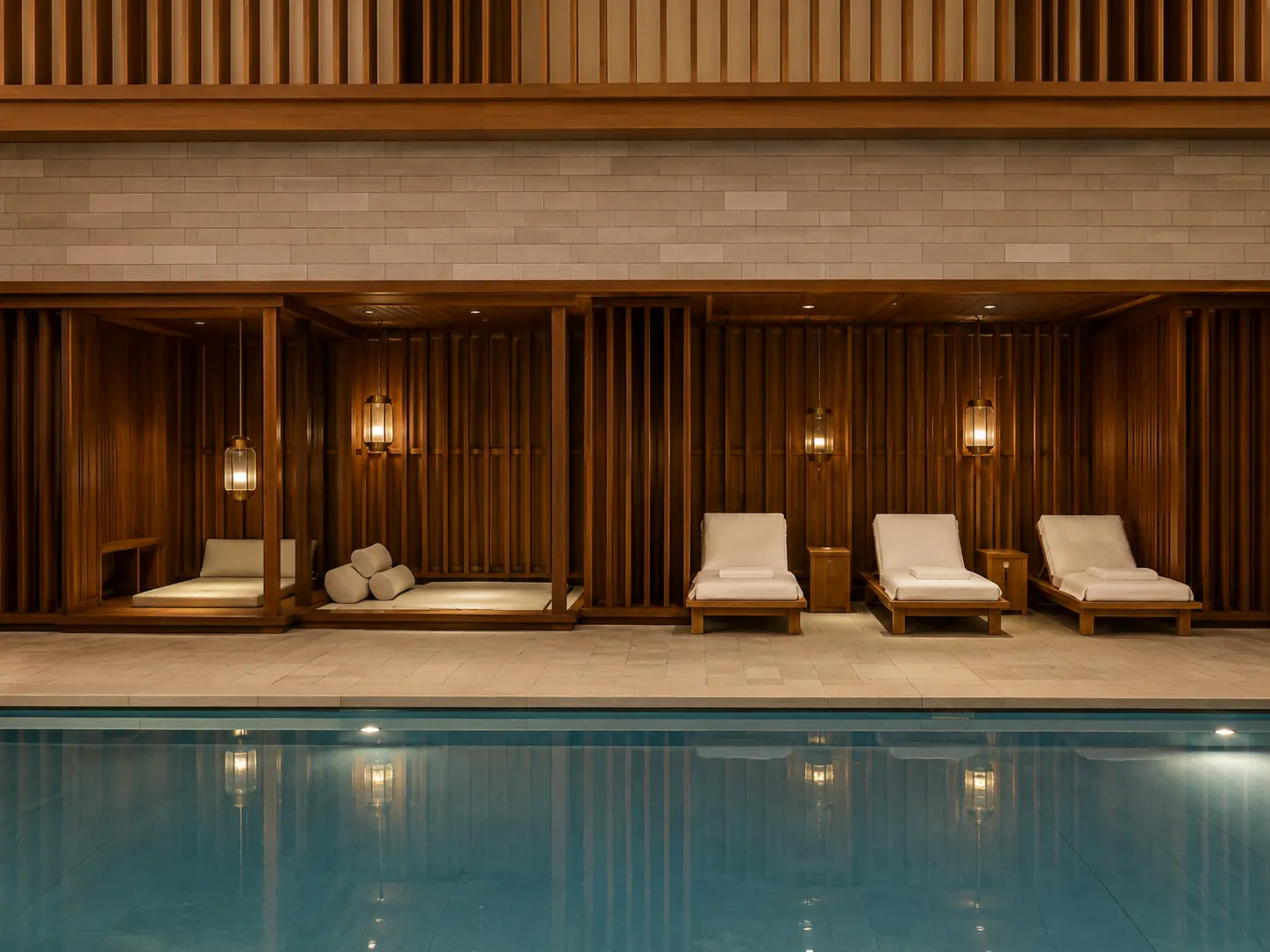
The whole area has a lot of timber and stone, with cabana-style daybeds running along one side of the pool. We visited during winter, when having a large indoor pool like this was particularly useful.
The Spa
The spa itself has seven treatment rooms, including five individual rooms and two couples' suites. The couples' rooms have their own bath, shower and bathroom.
Treatments draw quite heavily on Kyoto and Japanese ingredients and techniques. One of the more distinctive options is the Kyoto Green Tea Therapy, while other treatments use bamboo, roasted Uji green tea and Japanese bathing rituals. Four Seasons also offers treatments using products from brands including Biologique Recherche, Tatcha, Sodashi and Kyoto-based Kotoshina.
One detail I liked is that the spa does not feel disconnected from the rest of the hotel. The emphasis on Japanese bathing, tea and local ingredients ties back into the wider Kyoto theme rather than making it feel like an international spa that could be anywhere.
Changing Rooms, Hot and Cold Baths
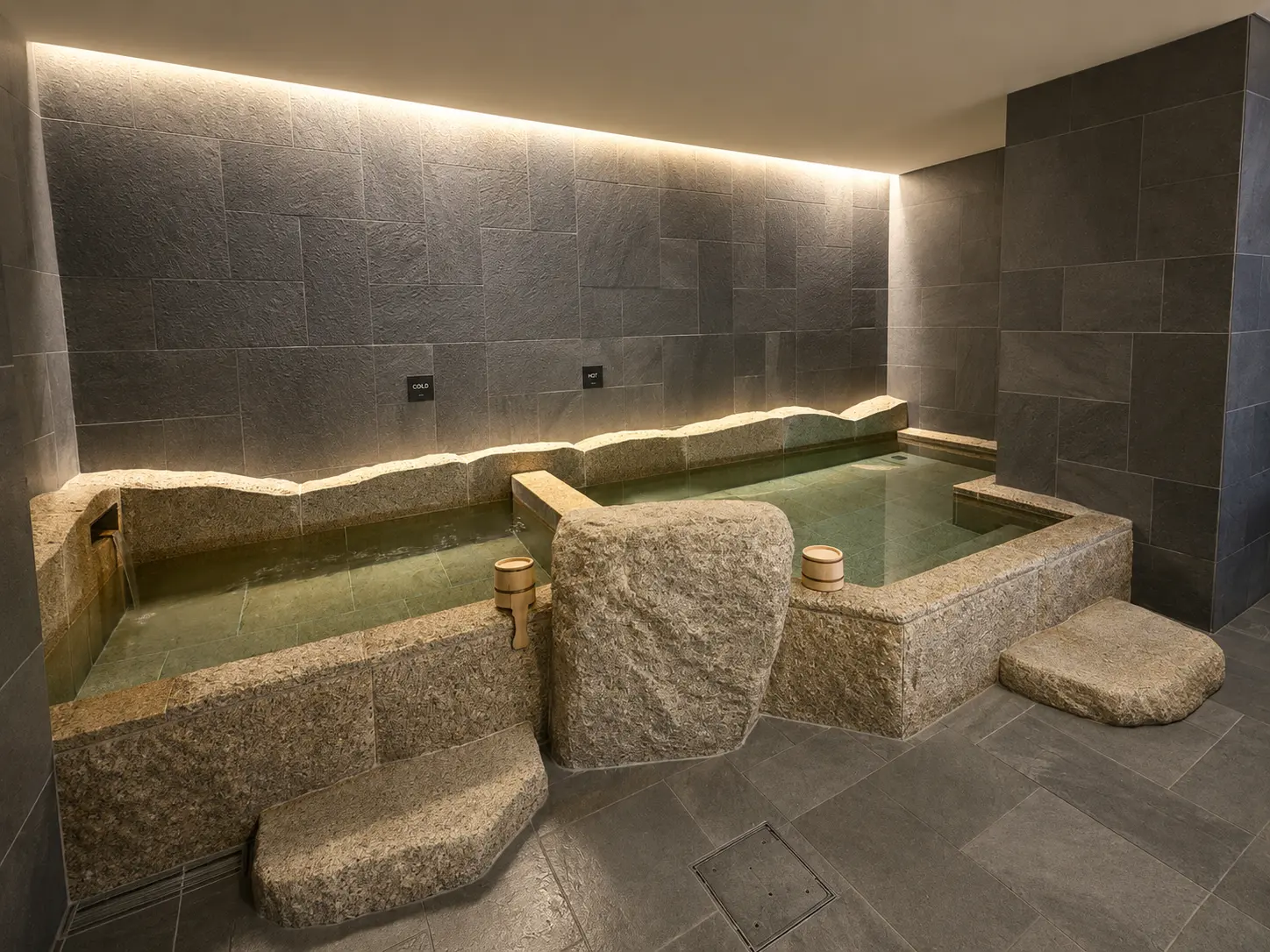
The changing rooms are much more extensive than a normal hotel locker room. In the men's area there are separate hot and cold Japanese-style baths, along with the sauna, showers and lockers. The hot and cold baths were especially good after a long day walking around Kyoto or after using the gym. Guest reports also consistently mention the hot and cold bathing setup, while Four Seasons currently describes the area as its ofuro, sauna and relaxation lounge.
There is then a separate relaxation room with individual curtained daybeds that are almost like sleep pods. Each has enough privacy to lie down properly after using the baths or sauna, rather than having to sit in a standard changing-room chair.
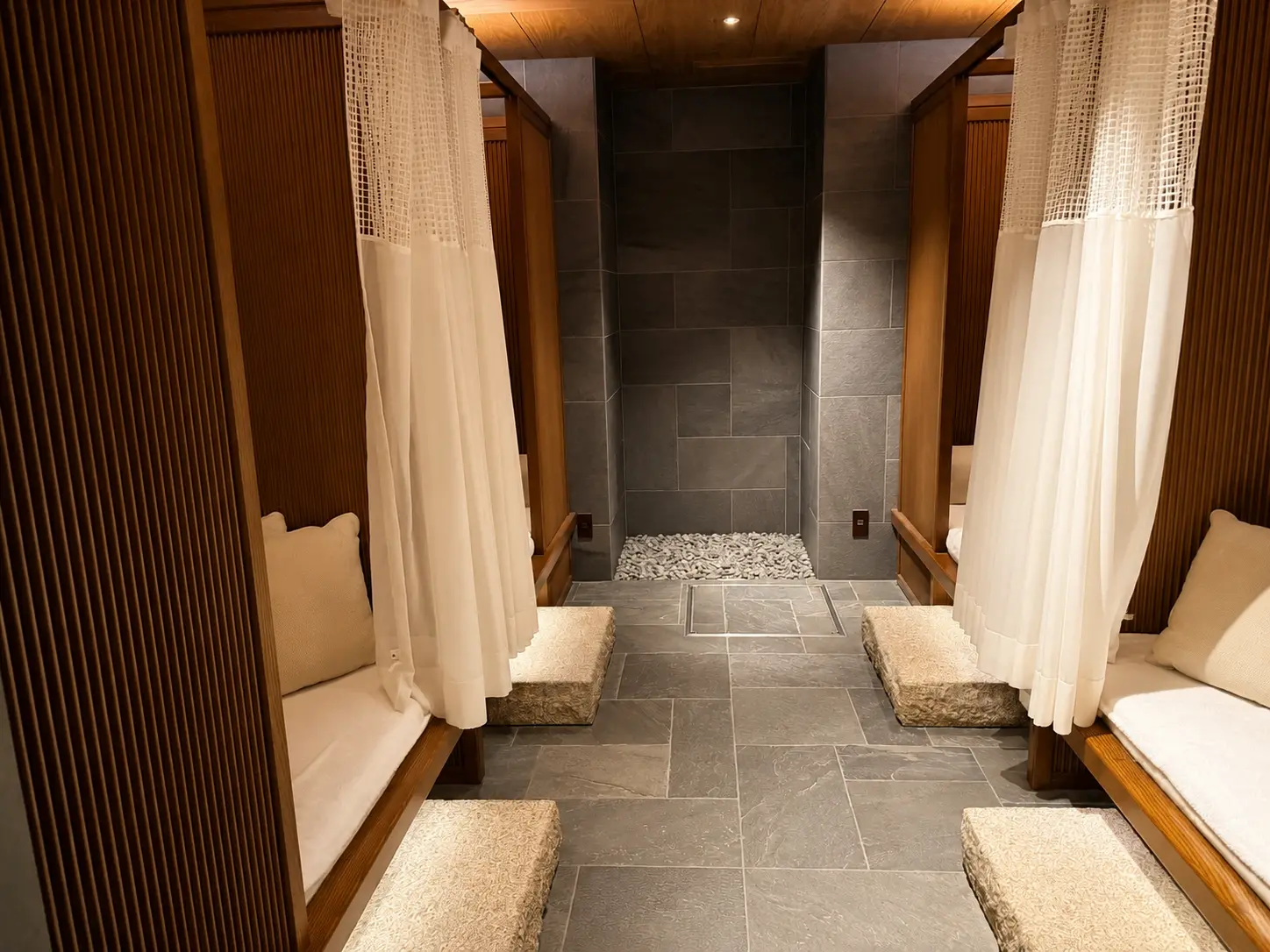
I spent some time here and thought this was one of the better parts of the wellness area. Between the hot and cold baths, sauna and private daybeds, you could easily spend an hour here without even using the main swimming pool.
The changing area also has showers, private lockers, towels and grooming facilities, so you can shower and get changed here rather than returning to your room immediately. Four Seasons also has two family changing rooms.
Fitness Center
The gym is also considerably larger than I expected. Four Seasons lists the fitness center at 306 sqm / 3,294 sq ft, and it is open 24 hours a day for hotel guests.

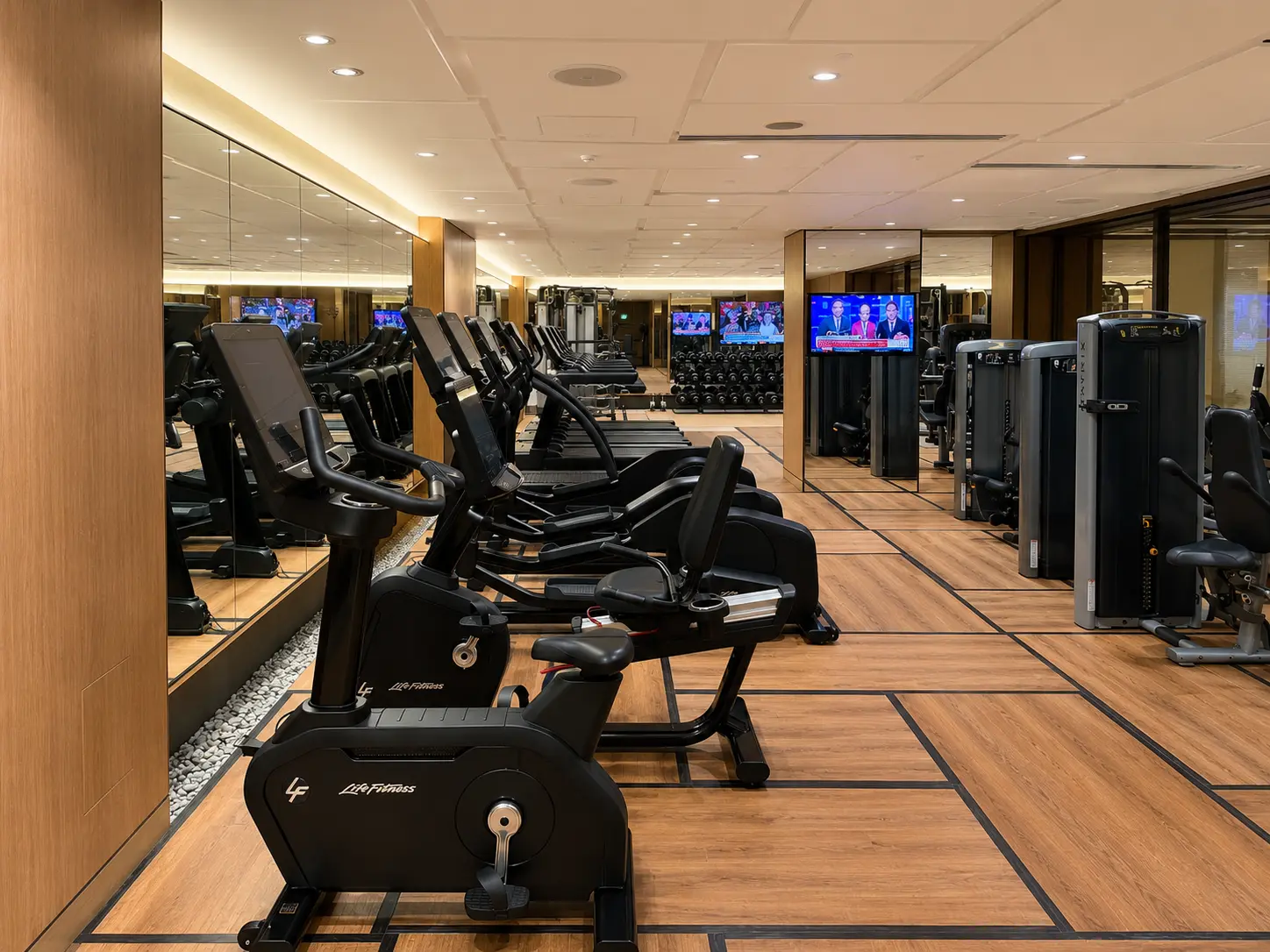
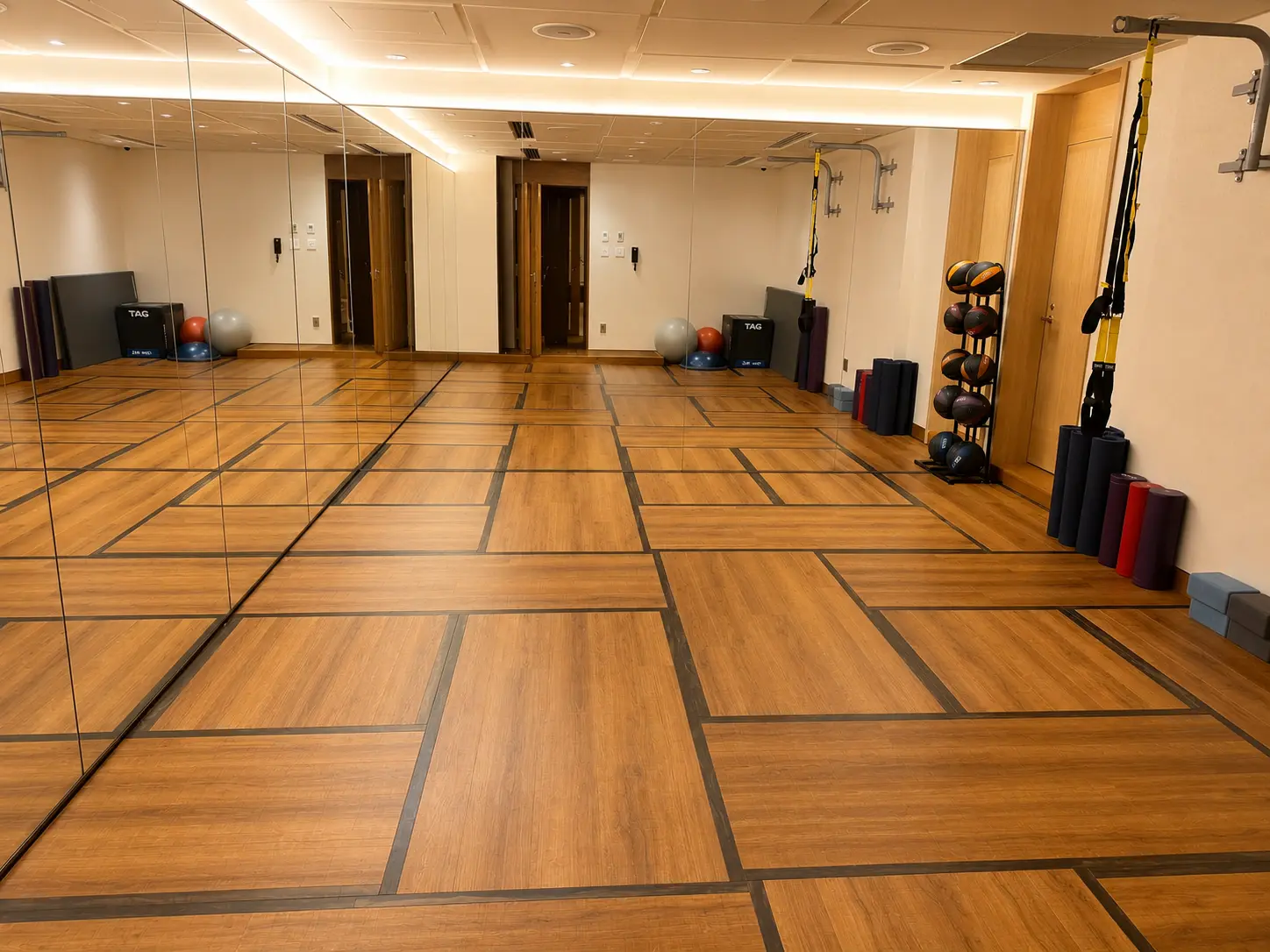
For me, the size of the wellness facilities changes how I would plan a stay at Four Seasons Kyoto. If you are going to leave the hotel at 7:00 every morning and return late every night, you are paying for a large part of the hotel that you will never use.
I would leave at least some downtime in the itinerary for the pool, ofuro, sauna or garden. Kyoto involves a lot of walking, and coming back here for a swim or bath after sightseeing was one of the advantages of staying at a hotel with facilities on this scale.
Cultural Experiences at Four Seasons Kyoto
Four Seasons Kyoto does a good job of bringing Japanese culture into the stay without making it feel forced.
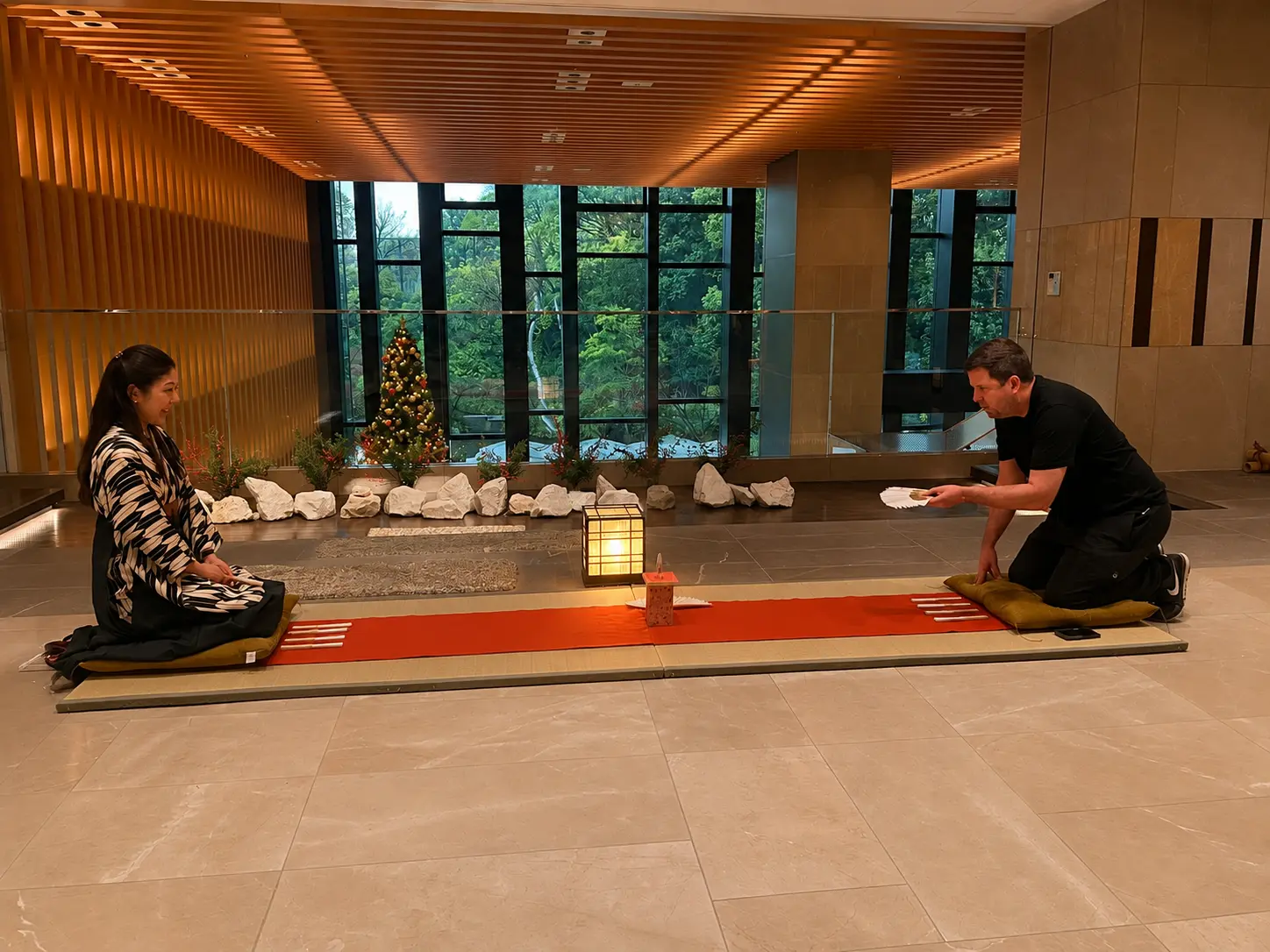
The hotel has a Cultural Ambassador, and we joined one of the sessions during our visit. It was relaxed and easy to get involved in, with traditional Japanese games and other small cultural activities rather than anything too formal.
The hotel also hosts maiko performances on selected evenings, including traditional dance. This is one of those experiences that is very easy to enjoy because you do not need to build an entire evening around it. You can watch the performance at the hotel, meet the maiko afterward and still head out for dinner.
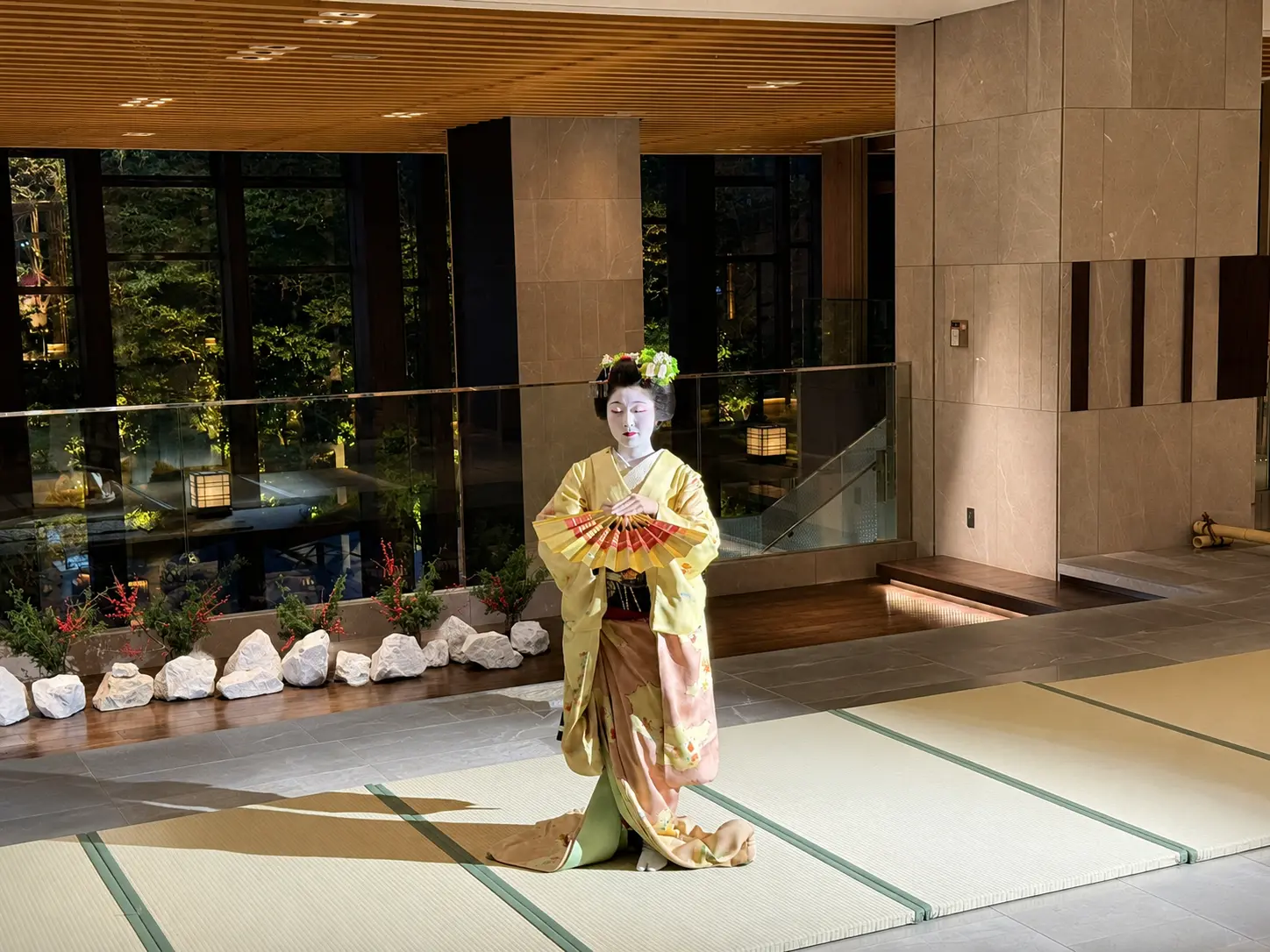
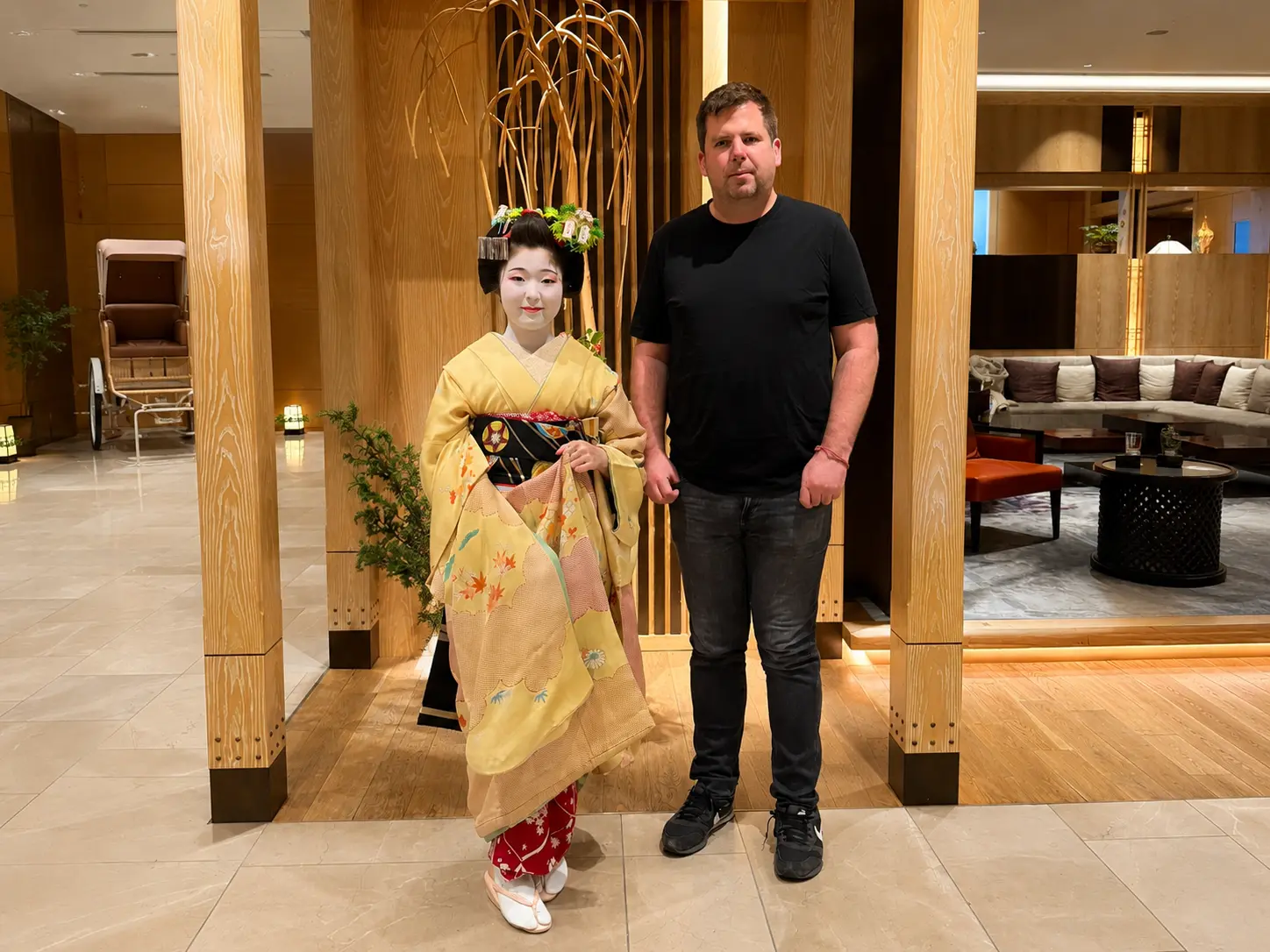
I think this works particularly well for families and first-time visitors to Japan. Children can join in with the games, see the koi in the garden and watch the maiko performance without every cultural experience becoming a long excursion.
Chishakuin Temple Visit
One of the other experiences worth knowing about is the complimentary Chishakuin Temple visit.
This is exactly the type of inclusion that can be overlooked when comparing hotel rates online, but it adds considerably to the experience of staying here.
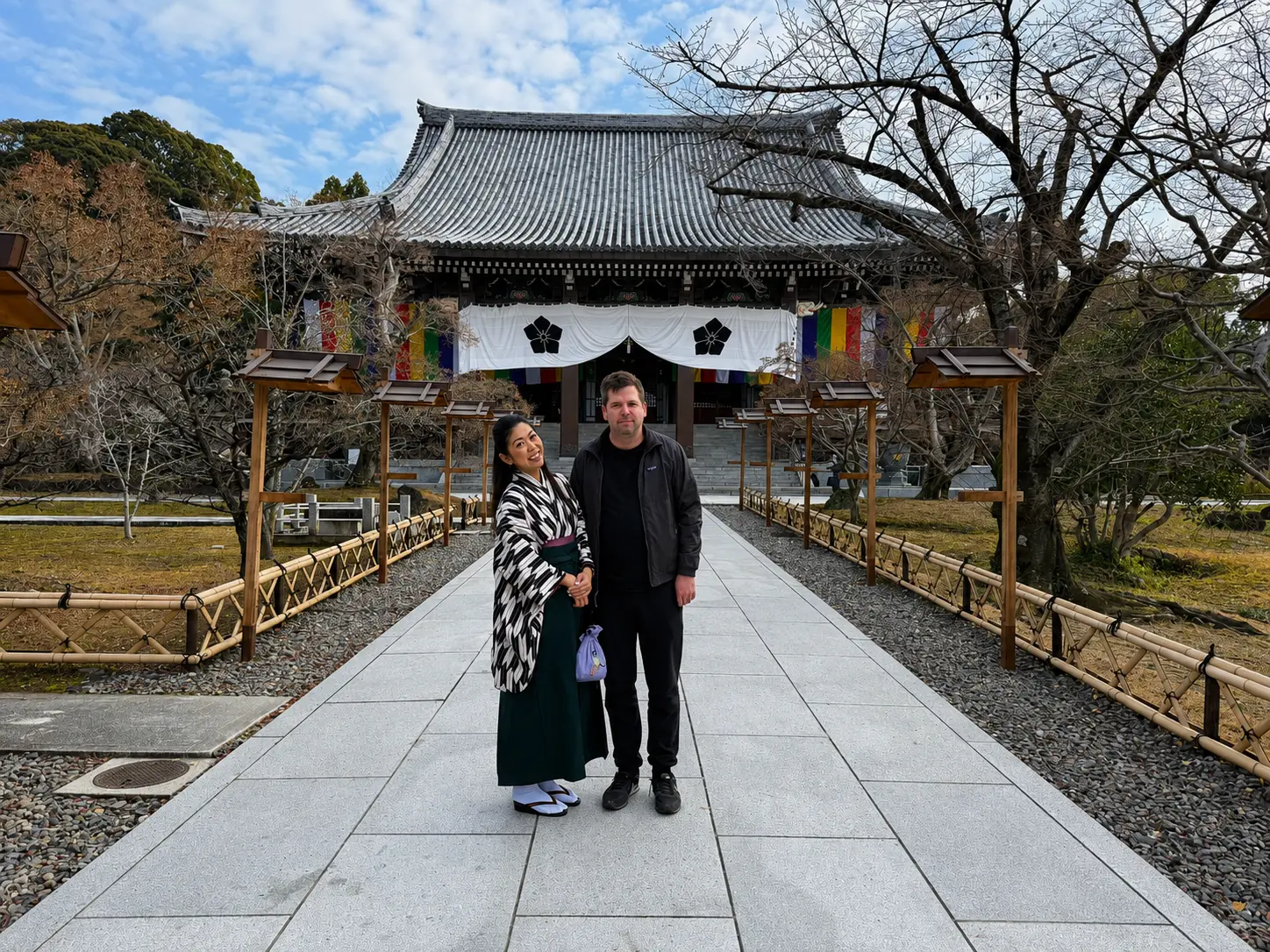
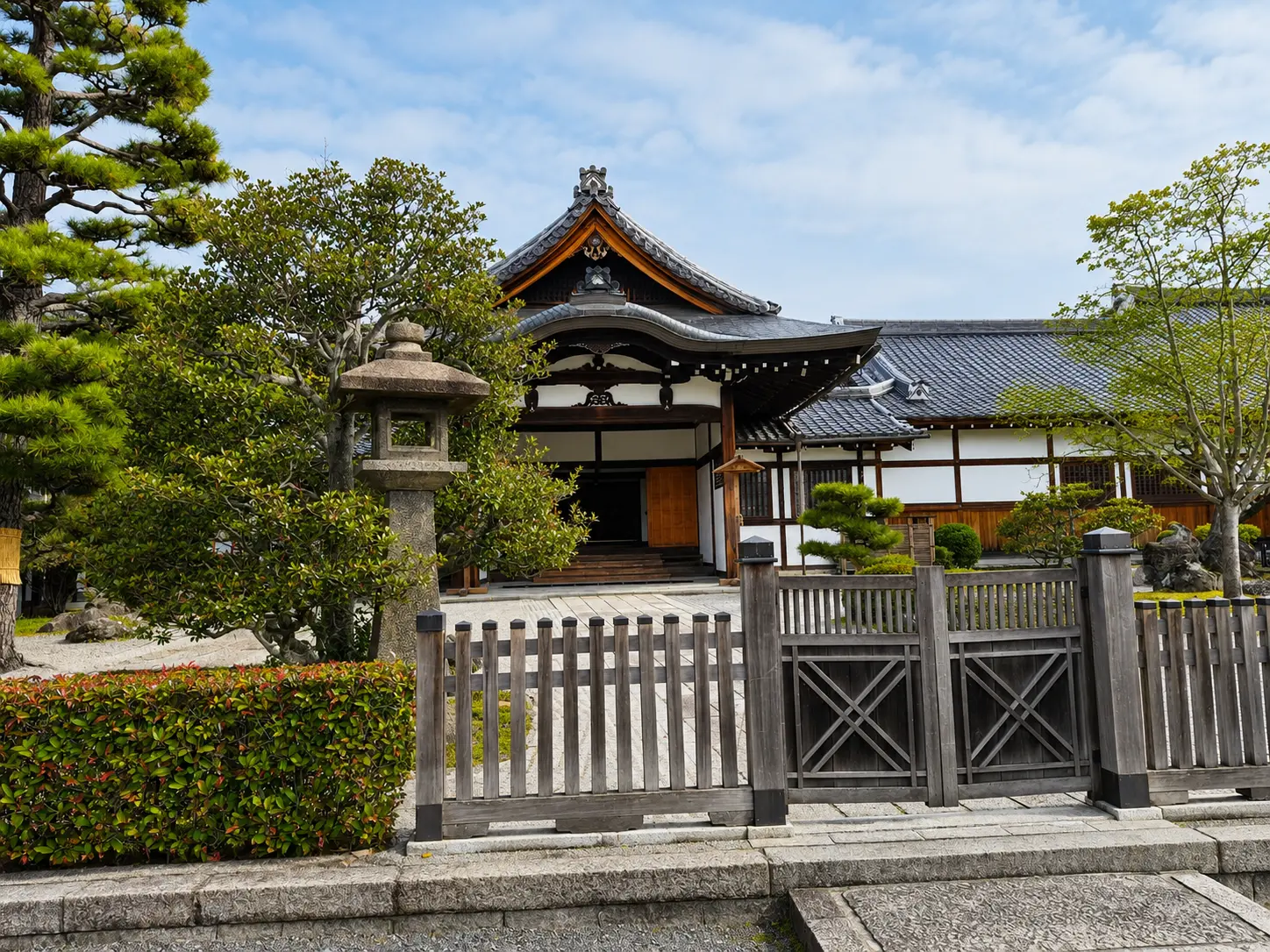
For me, this also helps answer the criticism that the hotel itself is not "Japanese enough." Four Seasons is not trying to replace Kyoto with a themed hotel interior. Instead, it gives you a modern Japanese hotel and then helps connect you with the real cultural sites and traditions around it.
Shakusui-en Garden
The Shakusui-en pond garden is what gives Four Seasons Kyoto much of its character. The garden is around 800 years old and was here long before the hotel, with the modern buildings positioned around the pond rather than replacing it.
There are mature trees, moss, carefully shaped pines, stonework and koi throughout the garden. We stayed in late autumn, so there was still quite a bit of color in the trees. In the mornings the hotel also creates a light mist across parts of the pond, which changes the look of the garden again.
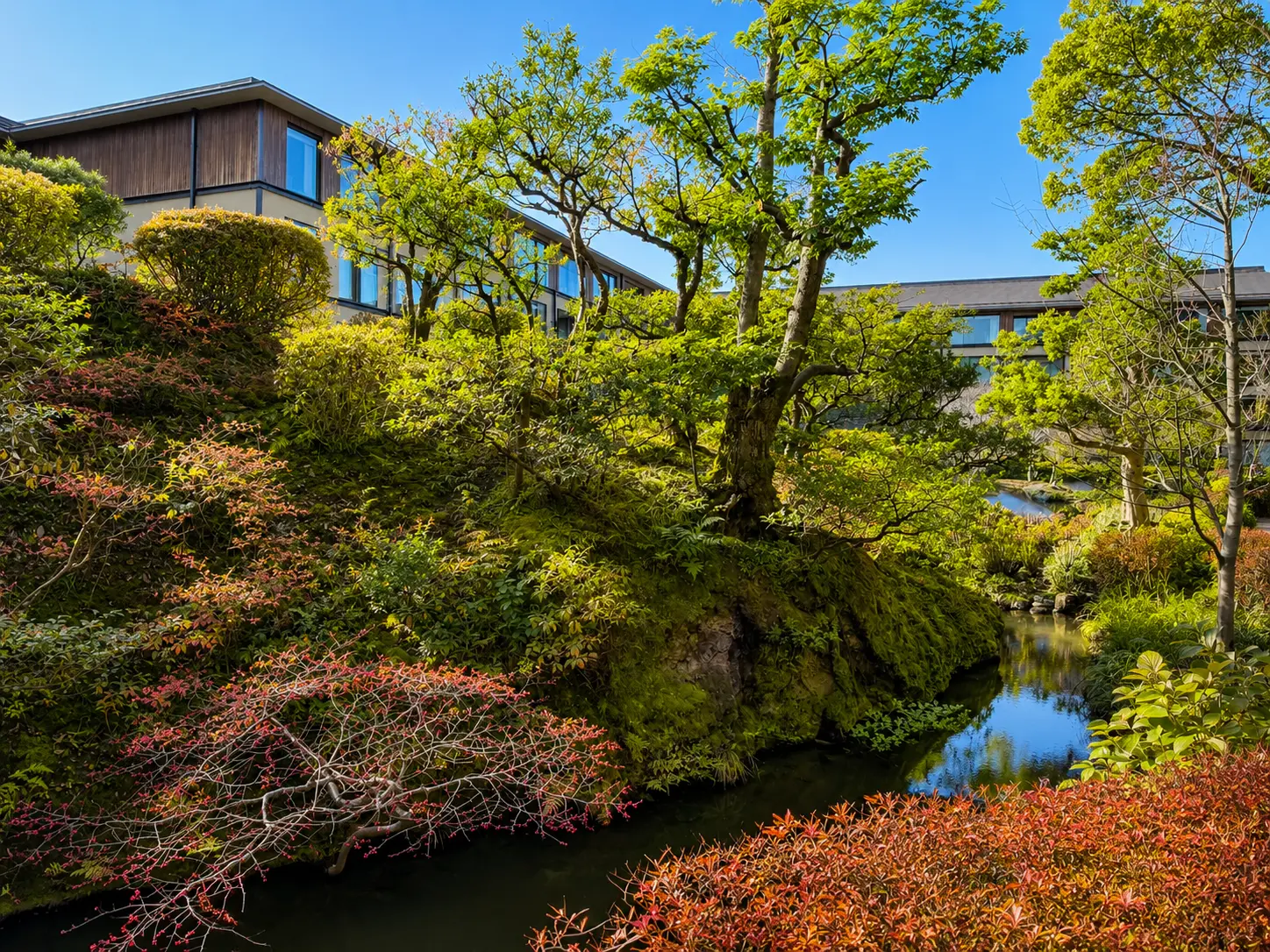
One of the things I liked is that you can walk through the garden rather than simply look at it from the hotel. Paths take you around the pond and toward FUJU Tea House, and there are plenty of places where you can stop without feeling as though you are in the middle of a city hotel.
The garden also changes the feel of the rooms and restaurants that face it. Looking across water and mature trees is very different from looking across a normal hotel courtyard, which is one of the reasons I would consider paying more for a garden-facing room if the difference in price is reasonable.
Walking across the garden to FUJU was something we did several times during our stay. It is one of those parts of the hotel that you end up using rather than simply photographing once and moving on.
Dining and Evenings in Kyoto
Kyoto has changed considerably since our first visit in 2018. On that first trip, I came away slightly underwhelmed by the dining and evening options. Kyoto has always had extraordinary traditional Japanese restaurants and serious kaiseki dining, but outside that world I found the city surprisingly quiet at night compared with Tokyo or Osaka.
That was noticeably different on this visit.
There are now far more interesting whisky bars, cocktail bars and speakeasy-style venues scattered around the city, and several we visited were very good and a lot of fun. Kyoto still feels more restrained than Tokyo or Osaka, but there is now much more to do after dinner than I remembered from 2018.
I would therefore no longer worry about Four Seasons being slightly removed from a major nightlife district. We found it very easy to take an Uber into Gion or central Kyoto, have dinner, visit a whisky bar or one of the newer speakeasies and then return to the hotel.
For Kyoto's better-known restaurants, reservations remain important and some can book out a long time in advance.
Concierge and Experiences
Kyoto is one of those cities where a good concierge can make a noticeable difference, and Four Seasons has a very capable team.
The hotel can arrange private guides, restaurant reservations, trips to Nara, kimono experiences, photography sessions and a wide range of cultural activities.
For Clements Travel clients, we can start coordinating with Four Seasons before arrival. We can also speak with the hotel about celebrations, children, dietary requirements, transfers and room allocation.
I always prefer doing this before the guest arrives rather than relying on everything being arranged after check-in.
Our View
I came away from Four Seasons Hotel Kyoto more impressed than I expected to be.
The historic garden gives it far more character than I had anticipated, the rooms are excellent, the residences are extremely useful, the pool and fitness facilities are among the best I saw in Kyoto and families are particularly well looked after.
The cultural side of the hotel was another positive. Between the Cultural Ambassador, Japanese games, maiko performances and dancing, Shakusui-en garden, tea house and temple experiences, I never felt that the hotel lacked a sense of place. It simply expresses Kyoto in a contemporary way rather than pretending to be a traditional ryokan.
The criticisms are relatively easy to manage. Breakfast can become busy when occupancy is high, and some rooms are considerably more private than others. Getting around Kyoto itself is not a drawback of this location, as you are likely to use Uber or taxis regardless of where you stay because the city's major temples, gardens and sights are spread across different areas.
The room allocation point is the one I would pay the most attention to.
Having visited the property ourselves, we know what to look for and can speak directly with Four Seasons about preferred room allocation, privacy and outlook.
Overall, I think Four Seasons Hotel Kyoto is one of the best all-round luxury hotels in Kyoto, particularly for families, first-time visitors, longer stays and travelers who want a peaceful base without giving up the facilities of a full-service luxury hotel.
Booking Four Seasons Kyoto Through Clements Travel
Clements Travel can book Four Seasons Hotel Kyoto with Four Seasons Preferred Partner benefits, normally using the same qualifying rates available directly from Four Seasons.
You still pay Four Seasons directly and there is no additional booking fee.
The difference is that we can help you decide which room or residence category is worth paying for, speak directly with the hotel about room positioning and privacy, and assist with upgrades, connecting rooms, children, celebrations, restaurant reservations and other pre-arrival requests.
If you are considering Four Seasons Kyoto, send us your dates and we can compare the available Preferred Partner rates and room categories and tell you which option we would book. Contact us today for a complimentary quote.