Europe is one of the most rewarding places in the world to travel. Nothing beats arriving in Venice by boat, driving along the French Riviera, spending a summer evening in a small Italian town or staying in a grand hotel that has been welcoming guests for generations. On top of all that, the food and wine can be exceptional and often become some of the most memorable parts of the trip.
But Europe can also frustrate travelers, especially if you arrive expecting everything to work the same way it does in the United States. Rooms can be different, service can feel more restrained, summer prices can be extreme and the busiest destinations can struggle under the weight of demand.
None of these are reasons not to go. They are just things worth knowing before you arrive.
1. Luxury hotels in Europe can feel overpriced
Luxury hotel pricing in Europe can be a shock, particularly during summer. In destinations such as the French Riviera, Amalfi Coast, Greek islands and parts of Italy, the main season can be remarkably short. Some hotels have only a few months, roughly June through late August or September, when demand is at its highest and they have the opportunity to make a large portion of their annual revenue.
When everyone wants to travel at the same time, hotels can charge what the market will accept. Spending $1,000 or more per night does not automatically mean you are getting an enormous suite, extraordinary service and a hotel that feels like the Palace of Versailles. Sometimes you are getting a very nice room in a great location during one of the most expensive weeks of the year.
And if you really do want to stay at Versailles, you can. Airelles Le Grand Contrôle sits within the grounds of the Château de Versailles, and rooms can run from several thousand dollars per night into five figures depending on room category and date.
In peak-season Europe, a large part of the price can be the destination, the date and the demand.
2. Service can feel much more understated
Even at very expensive hotels, service in Europe can feel calmer and less performative than what many American travelers are used to. That does not mean the service is worse. Often it is just more discreet.
We had a client at the Hôtel du Cap-Eden-Roc who ordered a very expensive bottle of wine. The waiter thanked him, brought the wine over, opened it and poured it. That was it.
In the United States, a purchase like that might receive considerably more attention. The waiter may comment on the bottle, congratulate you on the choice or make more of an occasion out of it. At many traditional European luxury hotels, the approach is more restrained.
The same can apply to restaurant service generally. Staff may check on you less often, conversation can be more reserved and the meal can move at a slower pace. It is a cultural difference, not necessarily a reflection of the quality of service.
3. The “it” destination may disappoint you
Every year, one destination seems to take over social media. Last year Mallorca got a huge amount of attention. This year everyone seemed to go, and in my view some of the luxury hotels struggled badly under the strain.
A hotel having 200 rooms does not mean it performs equally well when all 200 rooms are occupied. When a property is running close to full capacity, you can feel it everywhere: slower breakfasts, crowded pools, stretched housekeeping, harder restaurant reservations and less personal service.
Next year, my prediction is Sardinia. There is nothing wrong with Mallorca or Sardinia, but when social media suddenly sends huge numbers of travelers to the same place, at the same time, during a short summer season, even very good hotels can struggle.
A luxury hotel at 65% occupancy can feel very different from the same hotel at 98%. Sometimes the better trip is the one that is not following the destination everyone else is talking about.
4. Spending too much time at the hotel can leave you feeling like you missed Europe
Luxury hotels in Europe can be incredible, but it is easy to spend so much time enjoying the hotel that you barely experience the destination itself. Some of the best memories often come from getting out and interacting with local people. Take a cooking class in Italy, visit a vineyard in France, join a tapas tour in Spain or spend a morning at a local market.

If you only move between the hotel, pool and restaurant, you may come home feeling like you stayed somewhere very nice but did not really experience the place you traveled to see. For me, the best luxury trips balance great hotels with experiences that give you a real connection to the local culture.
5. Two rooms in the same category can be very different
This is one of the biggest differences between newer American luxury hotels and historic European hotels.
Take a modern, purpose-built luxury hotel in the United States. Rooms within the same category are often almost identical. The corridors are symmetrical, elevators are where you expect them to be, there are relatively few stairs and one Deluxe Room is generally going to look very similar to another Deluxe Room.
Many of Europe’s great hotels occupy old palaces, villas and grand historic buildings that were never designed to contain hundreds of identical hotel rooms. Room sizes, layouts, ceiling heights, views and even the route from the elevator to your room can vary enormously.
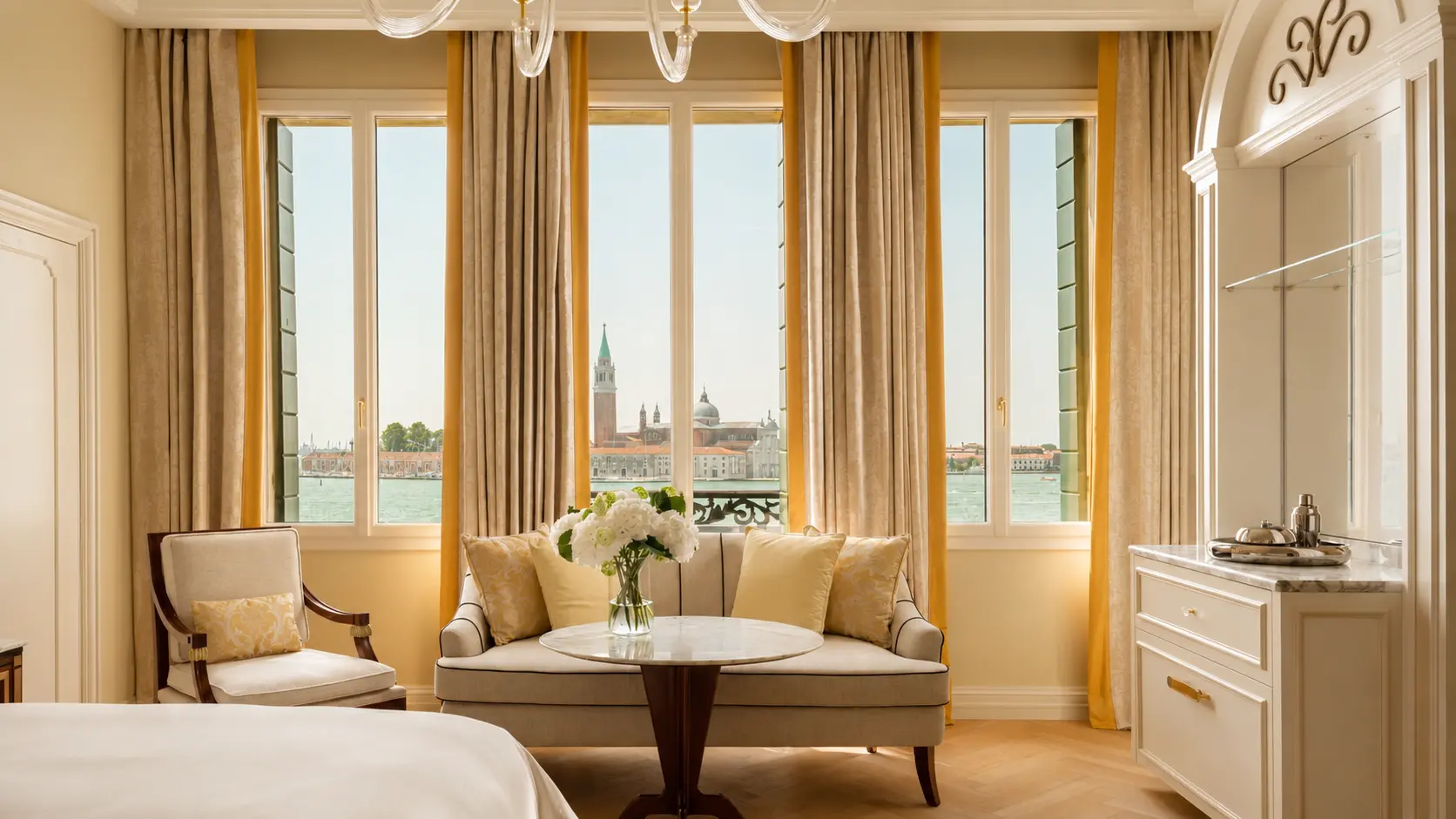
Hotel Danieli, Venice, A Four Seasons Hotel is a good example. A Premium Lagoon-View Room can range from 33 to 49 square meters, or 355 to 527 square feet. Two people can book exactly the same room category and receive quite different rooms.
This is one reason booking through an agency with a relationship with the hotel can help. At Clements Travel, we can speak to the hotel before arrival about room allocation, preferences and upgrades. When several rooms are available within the same category, you want the hotel thinking about which one they allocate to you.
The same issue applies to families. A room having two beds does not always mean four people can stay in it, and European occupancy rules can be much tighter than travelers expect.
6. Air conditioning is one of the biggest complaints we hear
We get a lot of complaints about air conditioning in European hotels, including at the luxury end of the market.
A hotel saying that a room has air conditioning does not always mean it will cool the room to the temperature you are used to at home. Historic buildings can be difficult to cool, systems may be centrally controlled and some hotels limit how low the temperature can be set.
This becomes a much bigger issue during summer, particularly during a heat wave. You can be paying well over $1,000 per night and still find yourself sleeping in a room that feels too warm.
In saying that, hotels are getting much better with this. New systems are being installed, renovations are improving cooling and luxury hotels increasingly understand how important this is to international guests.
If you sleep badly in a warm room, tell us. We would rather ask the hotel very specific questions before you arrive than find out once you are there.
7. Airport queues can be a real problem
At major airports in Spain, France and Italy, immigration and arrival queues can be long, particularly during summer. After an overnight flight, standing in another queue for an hour is not how most people want to start a vacation.
.webp)
This is one area where I think spending a little extra is worth it. For a couple of hundred dollars, a meet-and-greet service can take a huge amount of fatigue and frustration out of the arrival. Someone meets you at the airport, guides you through the arrival process and gets you moving toward your transfer as quickly as possible.
At the main airports in Spain, France and Italy during peak season, I would seriously consider adding it. Compared with what you may already be spending on the trip, it can be one of the better-value additions.
8. Sometimes spending more on the transfer is worth it
Some European transfers look manageable on a map but can become exhausting in peak summer traffic.
Nice to Saint-Tropez is a good example. A private helicopter can cost around €2,500, but it can save hours of sitting in peak-summer traffic and remove a huge amount of stress from the day. When you are already spending heavily on the trip, this can be a far better use of money than another room upgrade. The same thinking applies to longer drives. If you are traveling from Nice to Tuscany, I would not necessarily try to do the entire journey in one hit. Break it up with a night around Portofino or Santa Margherita Ligure, have a good dinner, sleep and continue the next morning.
Sometimes the helicopter, boat transfer or extra hotel night changes the whole pace of the trip.
9. Booking late can leave you with the bottom of the barrel
Europe is not somewhere I would leave until the last minute if you are particular about where you stay.
The best rooms often go first. By the time you book, you can find yourself choosing between the least desirable rooms in your preferred hotel or spending far more because only suites and higher categories remain.
This is particularly noticeable at smaller luxury hotels. A property may have 50 rooms, but perhaps only six have the view you want and only three are in the category that works for your family. Once those are gone, they are gone.
Peak summer makes this even harder. You can end up paying more not because the hotel has become better, but because everyone else booked the lower categories months ago.
For July and August, I would much rather have a client book early on a refundable rate and change it later than start looking in May or June and discover that most of the good options have disappeared.
10. Use a preferred partner program where you can
One of the easiest ways to add value to a luxury hotel stay is to book through a preferred partner program.
At many hotels, these bookings can include benefits such as daily breakfast for two, hotel credit, upgrade priority, early check-in, late checkout and additional recognition from the hotel. The rate is often the same as booking directly, but the stay comes with more attached to it.
At Clements Travel, we also have a dedicated Guest Experience team that works with clients before arrival at no extra cost. They help fine-tune the stay, including transfers, restaurant reservations, special occasions, room preferences and other requests.
When you are spending several thousand dollars on a hotel stay, there is no reason not to make the booking work harder for you.
Ready to Plan Europe Without the Frustration?
Clements Travel can help you choose the right hotels, secure preferred partner benefits, improve your chances of better room allocation and upgrades, arrange airport meet and greet, private transfers and local experiences, and fine-tune the details through our dedicated Guest Experience team at no extra cost.
You tell us where you want to go. We’ll help make the trip work.